Introduction
As African countries move from REDD+ readiness into implementation, and increasingly towards results-based finance and carbon markets, the bar for demonstrating genuinely inclusive stakeholder engagement has risen.
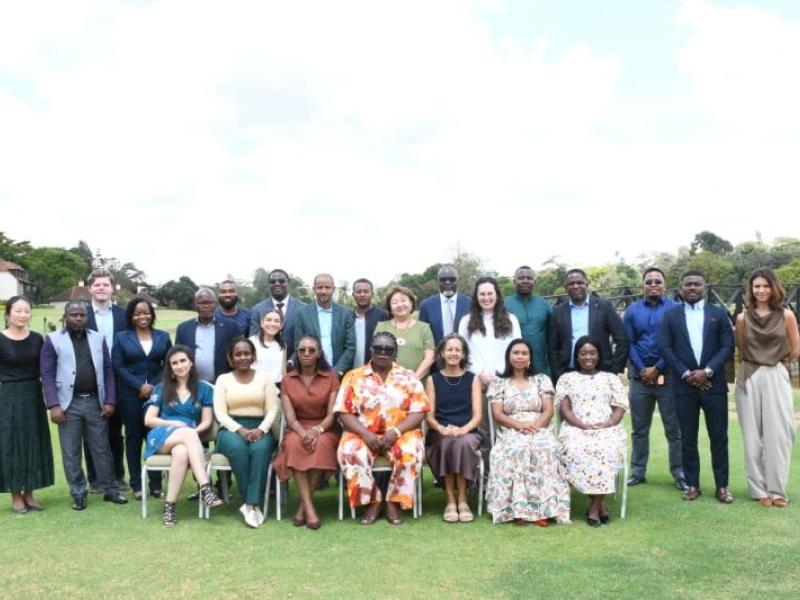
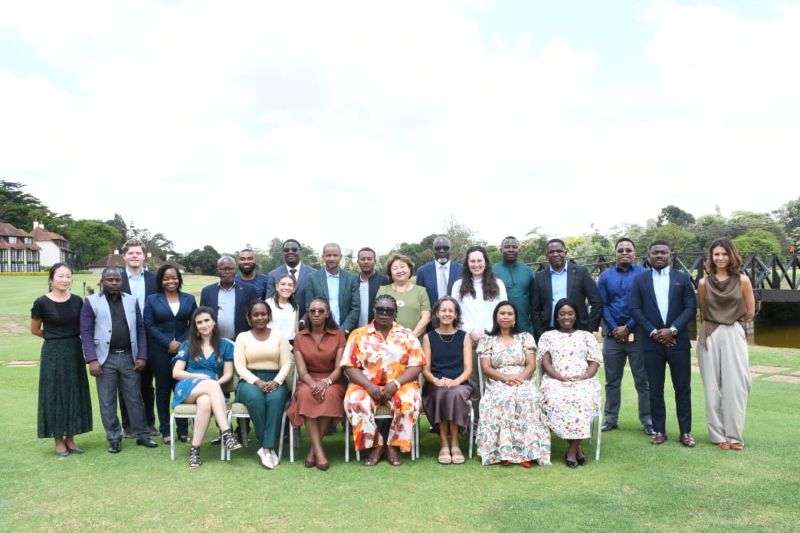
From 27 to 29 October 2026, the UN-REDD Programme’s Safeguards and Integrity Working Group (SIWG) for Africa brought together 25 participants from 9 countries in Nairobi, Kenya, for a three-day regional workshop on stakeholder engagement and social inclusion in jurisdictional REDD+.
Coordinated by UNEP, the workshop was organised with UNDP, the World Bank and the Architecture for REDD+ Transactions (ART) and held in English and French. The workshop gathered government safeguards and REDD+ teams from Côte d’Ivoire, the Democratic Republic of the Congo, Ethiopia, Ghana, Kenya, Madagascar, the Republic of Congo, Uganda, Zambia and Mexico, as special guests from Latin America.
The Cancún safeguards give countries a common baseline, including the full and effective participation of relevant stakeholders, in particular Indigenous Peoples and local communities. Beyond that baseline, countries follow different pathways: some have worked with World Bank results-based programmes under the FCPF or ISFL, some are transitioning to ART’s TREES 3.0 standard, approved in June 2026, and others are still in readiness. The workshop responded to countries’ call for practical, peer-to-peer problem-solving, and served as a pilot for the upcoming World Bank and UN-REDD Knowledge Partnership.
A three-day arc and a country template
The workshop followed a simple arc: Day 1: Diagnose (where do countries stand?), Day 2: Design and anchor (what does good look like, and how is it held in place?) and Day 3: Demonstrate and sustain (how do countries show it and keep it going?). Each country team worked through a single country template across the three days, so that each session built on the last, ending in a concrete action plan.
Day 1: Diagnose
UNDP opened with the building blocks of an effective social inclusion and gender approach in REDD+, presenting the UN-REDD Learning Journal on Social Inclusion and Gender.
Country teams then mapped stakeholders and rights-holders for a shared scenario, an update of their national safeguards information system, placing each group on an impact and influence matrix to see where marginalised groups risk being left out. ART then provided a common foundation on TREES 3.0, its evolution from version 2.0, the transition from FCPF and, in particular, its safeguards requirements. The day closed with a UNEP-led diagnostic in which teams inventoried the policies, laws, regulations and instruments that guide engagement in their country, placed each on a line from project-only to government-level, and examined how predictably their core functions are funded.
Day 2: Design and anchor
The World Bank opened the second day on anchoring engagement in law and policy. Teams used the PRISMA Diagnostics of Country Systems checklist to score the political, legal, institutional and technical conditions for accessing carbon markets.
ART then led a practical exercise in which groups represented five regions of a hypothetical country and had to agree on a benefit allocation, working through representation, access to information, decision rules and consent. In the afternoon, the World Bank’s Proceeds and Resources: Impactful Sharing Mechanism (PRISMA) session looked at the purposes for which resources and carbon proceeds should be allocated and the channels through which they should flow. UNEP closed the day by asking what each country’s Safeguards Information System (SIS) currently shows on engagement, social inclusion and gender, with teams checking their own systems and recommending improvements
Day 3: Demonstrate and sustain
ART opened the final day with non-carbon benefits and how communities can take part in monitoring them, showing how participatory monitoring itself generates evidence of meaningful engagement.
Country teams then turned their templates into action plans for the next six to twelve months, each action linked to a gap they had identified, with a named lead, a date and a first step, and tested them with a peer country at a similar stage. The World Bank and UNEP closed the workshop with final remarks and reflections from countries.
Key highlights and outcomes
According to our survey, participants found the workshop highly relevant to their work, particularly for understanding where their countries stand and for leaving with concrete next steps.
The hands-on exercises were among the most valued parts of the programme, especially the group exercise on agreeing a benefit allocation, which many saw as directly applicable to designing inclusive processes at home. Participants also found PRISMA a useful way to assess their country’s readiness for carbon markets and to plan next actions, with strong interest in further training.
Each country team left Nairobi with a completed country template: a stakeholder map, a diagnosis of its country system, recommendations on policy and resourcing, and a short action plan with named leads.
Participants also left connected with peers from countries at a similar stage, with whom they can continue to exchange through the Working Group. The presentations, country template and other workshop materials are available on Howspace: Safeguards Working group | REDD+ Academy
|
Participants |
Countries represented |
Workshop length |
|
25 participants |
9 countries |
3 days |
About the Working Group
The Safeguards and Integrity Working Group in Africa is a space created by and for practitioners and experts working on the design, implementation and monitoring of REDD+ safeguards across the region. This Working Group is coordinated by UNEP in the context of the UN-REDD Programme. Its objective is to share experiences, good practices, common challenges and lessons learned, with a view to improving the implementation, monitoring and reporting of safeguards, and strengthening the environmental and social integrity of REDD+ in Africa.
If you are interested in joining this Working Group, please contact Sarah Beard ([email protected]) and/or Sofia Arocha ([email protected])