Credit: © R. Heinrich
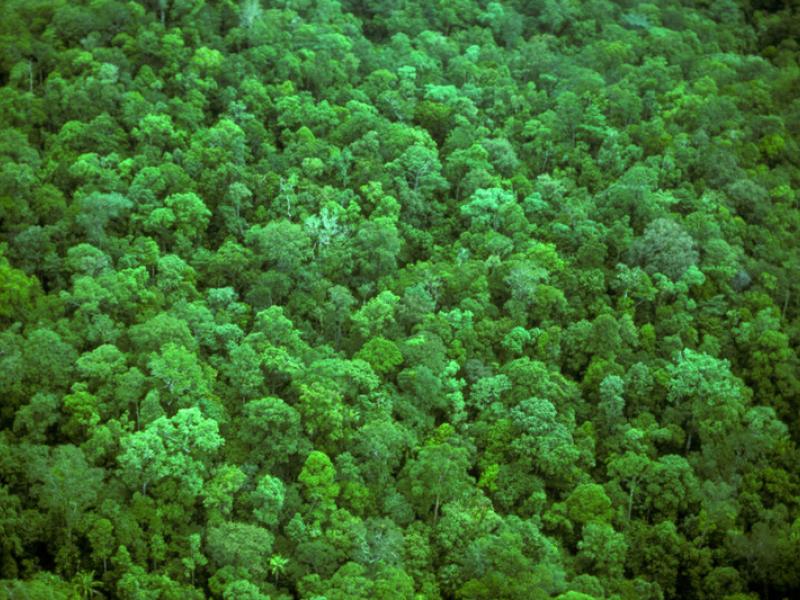
The Asia-Pacific region is an agricultural powerhouse. Countries in the region produce more than half of global agricultural output, and the agricultural sector generates income for more than 40 per cent of people in Asia and nearly 20 per cent in the Pacific. Underpinning agricultural productivity are the region’s vast natural resources, and, in particular its forests, which cover 21 per cent of the total land area (in South and Southeast Asia, even more than a third).
Forests regulate the climate and the region’s water and nutrient cycle, control agricultural pests and diseases, and provide pollination services – all upon which the agricultural sector depends.
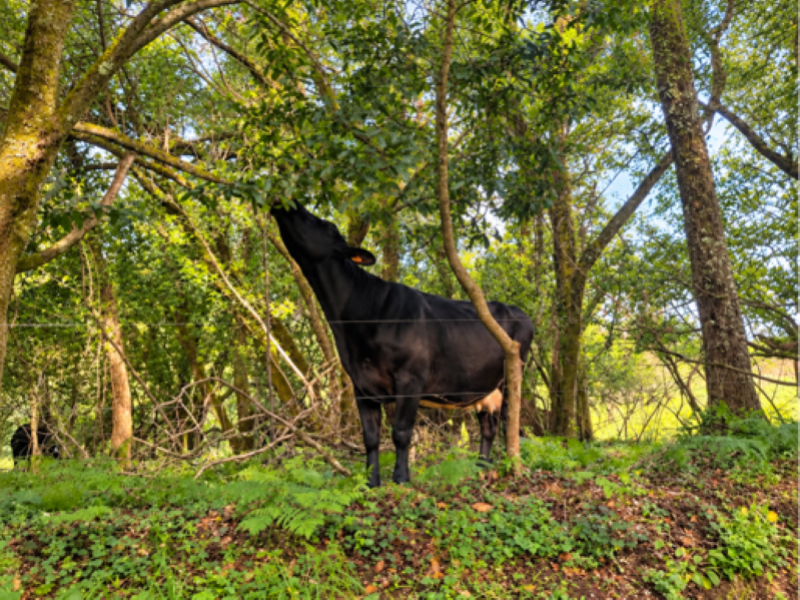
Yet, despite their importance and progress in recent years, which has led to a falling deforestation rate, Asia and the Pacific still lose 2.5 million hectares of forests annually, which marks 23 per cent of the global deforestation rate. The region lives a paradox in which the very economic system that forests support also contributes to driving their decline, with approximately 86 per cent of deforestation linked to unsustainable agricultural expansion for commodities such as oil palm, natural rubber, coffee, rice, maize, cassava, cashew, coconuts and cattle meat, and with half of commodity-driven deforestation linked to exports.
Countries and stakeholders in Asia and the Pacific strengthen collective action to turn the tide on forest loss
In recognition of this critical dualism, public and private stakeholders are acting, individually and collectively, to turn the tide on deforestation while continuing to strengthen agriculture as a central axis of national and regional economic development. Many of the region’s governments have made commitments to halt and reverse forest loss and land degradation by 2030 under the Glasgow Leaders’ Declaration on Forests and Land Use. Several companies have likewise committed to removing deforestation from their supply chains, recognizing not only the environmental and biodiversity value but also the economic and financial values of forests for responsible and sustainable economic development.
Yet, the reality is that to deliver on these commitments, renewed, bold cross-sectoral collaborative action is needed to halt forest loss at scale.
That is why more than 120 representatives from governments (Ministries of Agriculture, Forestry and Environment), industry associations, civil society, and smallholder organizations from 10 Asia-Pacific countries, as well as regional and international experts, have come together to develop a shared Asia-Pacific Roadmap on Decoupling Agricultural Value Chains from Deforestation, providing elements for a joint regional vision to chart a forest-positive future.
The regional dialogue, at which the roadmap was developed, was convened by FAO and the Team Europe Initiative on Deforestation-free Value Chains, supported by the UN-REDD Programme, the Japan-funded BiG-CHANCE project, the Aim4Commodities initiative, and the Southeast Asia and the Pacific Forests Integrated Programme.
Stakeholders have identified six key action areas to strengthen the positive linkages between the agricultural sector and forests, and to enhance rural livelihoods, accelerate climate resilience, and secure a sustainable future for present and future generations:
- Strengthen land governance: securing community land and forest rights, harmonizing forest definitions, and scaling participatory land-use planning.
- Scale sustainable agricultural production models: expanding capacity development, agroforestry, regenerative agriculture, and rehabilitation of degraded lands.
- Increase consumption and trade of responsibly produced commodities: enacting public procurement policies, strengthening public-private partnerships, and supporting preparedness for market requirements such as the EU Deforestation-free Regulation.
- Create incentives to maintain forest integrity: strengthening benefit-sharing and payment for ecosystem services mechanisms, REDD+ results-based finance, and group certification.
- Enhance data for decision-making: developing interoperable national traceability systems, promoting low-cost tools for geolocation data collection, and developing data ownership protocols
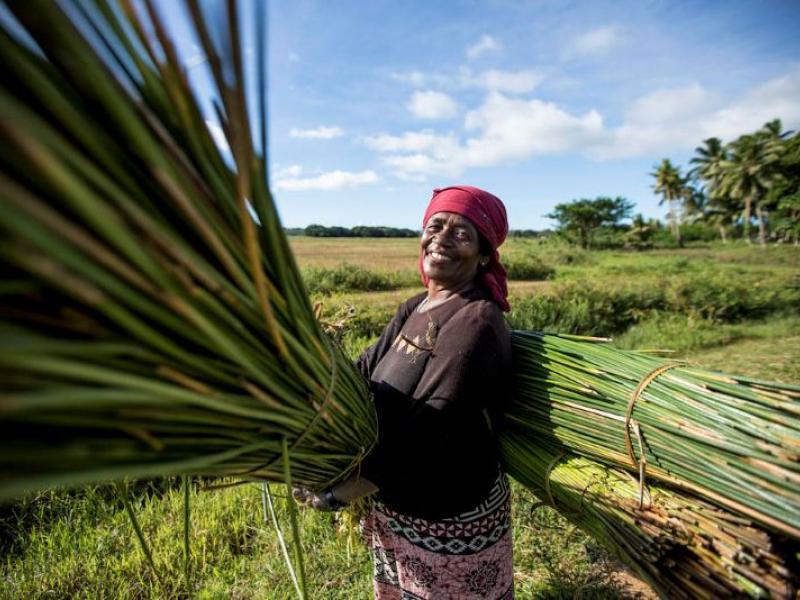
- Improve livelihoods and promote equity and inclusion: supporting stronger producer organizations, fair access to financial incentives, and equal opportunities for women and youth.
These six action areas also align with FAO’s agrifood systems transformation framework for halting deforestation, the FAO Solutions-tree advanced with the financial support of Japan-MAFF and in collaboration with UN-REDD – and recognized as one of the tools to support countries in identifying national measures across different forest dimensions in the recently launched COP 30 Presidency roadmap on Enhancing Efforts Towards Halting and Reversing Deforestation and Forest Degradation by 2030
Moving from regional ambition to implementation
While the actions are non-binding, participants stressed the need and opportunity in jointly working towards implementing them by 2030, for example through the development of regional principles for collaboration and the establishment of a regional multi-stakeholder partnership on sustainable commodities, including under the GEF-8 Southeast Asia and the Pacific Forests Integrated Programme. Participants also agreed to annually review progress against the roadmap.
Some governments also recognized the importance of turning the roadmap’s regional ambition into nationally adapted action plans and establishing cross-sectoral coordination platforms. Several processes have since been initiated to kick off joint work, for instance in Lao PDR, with national-level workshops foreseen for the end of 2026 and the first half of 2027, with the ambition to strengthen capacities to turn commitments into measurable progress.
Charting a shared path forward
What these collective efforts show is that countries and stakeholders from across the Asia-Pacific region have not only recognized the importance of addressing agriculture-linked deforestation but are now moving decisively towards shared solutions that decouple agriculture from deforestation.
This shift will benefit the region’s vast forests while also strengthening the long-term sustainability and resilience of agricultural production and supporting the millions of people who depend on forests and their ecosystem services for their livelihoods.
Reflections and approaches emerging from the Asia roadmap, together with related work in Africa and Latin America, in fact have already extended beyond regional boundaries, feeding into cutting-edge exchanges, including on de-risking and financing forest-positive supply chains, and contributing to a broader global agenda that increasingly recognizes the need to connect action across sectors, actors and geographies. This direction closely aligns also with the recently launched COP 30 Presidency roadmap, which – among other things – calls for mobilizing stakeholders beyond those traditionally engaged in the forest agenda, including ministries of agriculture, commodity producers, traders and buyers, and investors, to jointly act on halting forest loss.
Contact information:
Bjorn Dupong
Halting Deforestation Specialist
Serena Fortuna
Forestry Officer