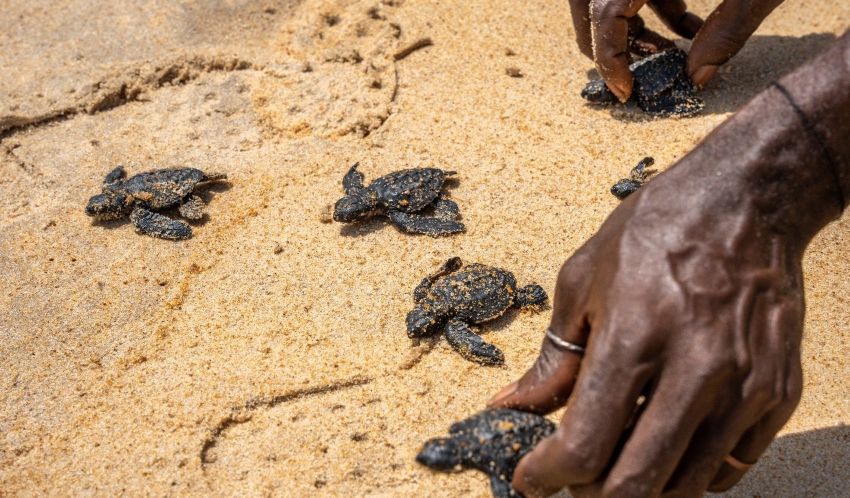
Release of turtles from the protection fenced areas by the community of Côte d’Ivoire. ©FAO / Maryia Kukharava
In the south-west of Côte d’Ivoire, coastal and mangrove forests meet the Atlantic Ocean in the San Pedro region - one of Côte d’Ivoire’s top tourist destinations, known for its wide, quiet beaches and proximity to protected areas.
Tourists visit for the scenery, the wildlife, and the chance to see marine turtles lay eggs at night. These natural features make the region both ecologically and economically important.
But the balance has been fragile. Environmental pressures linked to human activity have put pressure on the very ecosystems. Protecting them requires action rooted in the knowledge and leadership of the communities that depend on them.
In the community of Gabiadji, local people took the lead in creating what is now known as the Dodo Voluntary Nature Reserve. The work has been implemented in partnership with the Food and Agriculture Organization of the United Nations (FAO) and the NGO Conservation des Espèces Marines (CEM), under the regional initiative "Global Transformation of Forests for People and Climate: a focus on West Africa," which aimed to scale up community-based forest management across 15 countries.
The initiative is rooted in the idea that conservation and livelihoods must go hand in hand. With support from FAO and CEM, the community began to restore degraded mangrove and forest areas and build a system of protection based on local leadership. Mangrove replanting has become a central activity. Communities have been trained in techniques to improve seedling survival, and in some sites, they report a 100 percent success rate. Villagers are now able to identify ideal planting conditions and take responsibility for monitoring young trees to ensure growth.

Mangrove seedlings prepared for planting. ©FAO / Maryia Kukharava
Alongside ecological restoration and community engagement, a critical part of the process has been the legal and governance guidance. Through technical assistance and field-based accompaniment, FAO has supported the community and its NGO partner CEM in developing a governance model for the reserve, including a reserve management committee and locally agreed rules for conservation and sustainable use. While the reserve has not yet been officially recognized, the groundwork for legal recognition and long-term sustainability is well underway.


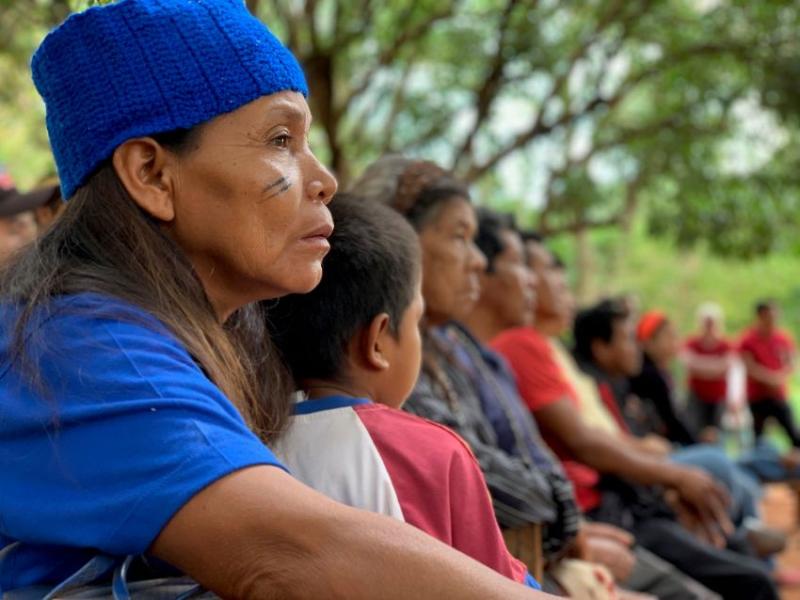
Community members meet to discuss the establishment of the reserve. ©FAO / Maryia Kukharava
Tourists board boats for a guided tour through the mangrove reserve. ©FAO / Maryia Kukharava
Another key component of this system is the training and deployment of local youth as eco-guards. These young people now patrol the beaches, protect turtle nesting sites, guide visitors, and raise awareness.
"We realized that the turtles that used to come and that we didn’t value before have become a source of income. So, we, the youth, have to protect them," said one eco-guard. "They come to lay eggs, we watch over them, we release the hatchlings, we raise awareness among people, and even tourists are interested in it."
The eco-guards conduct regular patrols along the beaches, especially during nesting season, monitor the nesting sites, and accompany visiting researchers and tourists. They also engage in sensitization activities with schoolchildren and residents.
"It is the youth of the community who are trained to be eco-guards, who protect the sensitive zones and accompany visitors, said Alexandre Dah, Président, Conservation des Espèces Marines (CEM). It is through them that we give value to the initiative, the reserve, and its benefits."


Information sign about a marine turtle hatchery. ©FAO / Maryia Kukharava
Volunteers guide newly hatched sea turtles toward the ocean for their first journey to the sea. ©FAO / Maryia Kukharava
Their efforts are starting to show real results. According to CEM and community members, more turtle hatchlings are surviving and returning to the ocean. Illegal tree cutting has decreased. There is a growing interest among tourists, particularly during the nesting season, and the community is now exploring how to build simple, sustainable tourism infrastructure.
For the youth involved, the impact is personal. Eco-guards are now seen as protectors of biodiversity, but also as emerging leaders in their communities. They are playing a role in reducing environmental threats while helping the village imagine new ways to generate income.
The Dodo Voluntary Nature Reserve is still in its early stages. But it offers a powerful example of what is possible when communities take ownership of conservation. With the right support, they are equipped to protect nature while building a future that combines ecological integrity with economic opportunity.
More about the initiative can be found
- in English: https://storymaps.arcgis.com/stories/ffb2d39013f748e8ad63d6b519589982
- in French: https://storymaps.arcgis.com/stories/3a97a5815b394a01be24bbbe003b8b84
- in Portuguese: https://storymaps.arcgis.com/stories/519b681961d2422eb4e5eb4f9ee3588a
Representatives from the Gabiadji community and CEM also shared their efforts in conservation and community-based mangrove restoration during a South-South exchange organized in Praia, Cabo Verde, in May 2025. The exchange brought together practitioners from across West Africa to share experiences on community-based forest management and restoration.
The event was supported by the Swedish International Development Cooperation Agency (Sida) and the UN-REDD Programme, helping amplify local solutions and facilitate learning among communities working to protect forests and coastal ecosystems across the region.