The Democratic Republic of Congo hosts one of the world’s most extensive tropical forest landscapes, with forests covering about 70% of its territory.
Small-scale agriculture, reliance on charcoal and demographic pressures continue to shape land-use patterns, making environmental degradation a persistent concern.
As UN-REDD’s analyses have shown, the country remains a high-forest, low-deforestation nation, yet still loses primary forest at the highest rate in Africa and second only to Brazil globally.
In this context, diversifying rural economies and strengthening local enterprises is increasingly recognised as part of the broader strategy for forest conservation. Enterprise development, when rooted in sustainable value chains, has the potential to become a practical tool for climate policy.The factory pilot in Bukavu was developed with this perspective in mind.
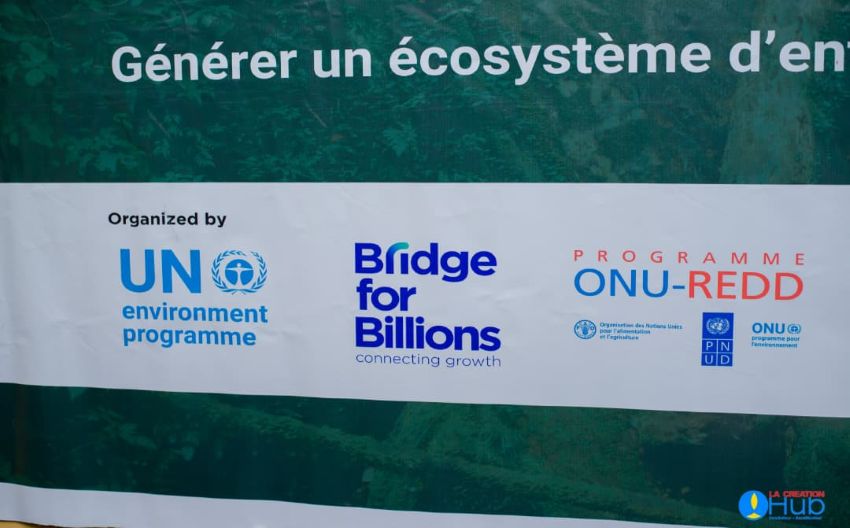
The programme was designed and delivered through a partnership between UNEP, UN-REDD, Bridge for Billions and La Création Hub. UNEP and UN-REDD ensured alignment with the national REDD+ strategy and restoration efforts; Bridge for Billions provided an online incubation platform and methodology, and La Création Hub anchored the program locally, leading outreach, selection, and day-to-day support for the cohort.
Designing and delivering the Programme
The pilot began with a scoping study to understand conditions in South Kivu, identify local actors and adapt the methodology to the region. The findings helped shape the recruitment strategy for the local incubator and the entrepreneurs while providing useful information to inform the curriculum. Before the incubation started, after the local entrepreneurship support organisation (ESO) was recruited, Bridge for Billions led a multi-session train-the-trainers programme to prepare La Création Hub to co-manage the incubation.
The training plan introduced La Création Hub to the full architecture of the programme, combining an overview of objectives and beneficiary profiles with co-designed recruitment strategies, marketing approaches and selection processes. Bridge for Billions also delivered pedagogical training on the incubation methodology and its eight modules, alongside technical onboarding to the digital platform. The sessions included operational preparation for welcome calls, matching, group facilitation and weekly coordination routines. This mix of structured instruction and co-creation enabled the local team to shape delivery with contextual knowledge while establishing the collaboration practices that continued throughout implementation.
The entrepreneurs' recruitment combined online tools, in-person sessions and local radio outreach, resulting in 114 applications, of which 50 entrepreneurs were selected. They were matched with 42 mentors using the matching platform developed by Bridge.
The six-month incubation was delivered through Bridge for Billions’ digital platform and supported by La Création Hub. The curriculum guided entrepreneurs step by step through the core building blocks of an early-stage venture: shaping a clear value proposition, analysing customer needs, mapping competitors and partners, structuring a business model and defining marketing channels. It also introduced practical tools for pricing strategies, cost and revenue modelling, and financial projections, followed by dedicated modules on articulating environmental impact and preparing realistic growth plans.
Each module was designed for a hands-on application, encouraging entrepreneurs to iterate their ideas directly on the platform. Weekly mentor meetings provided personalised guidance, while group sessions and expert talks—covering themes such as green finance, carbon markets and forest-friendly value chains—reinforced the learning experience and created space for peer exchange.
Entrepreneurs taking shape
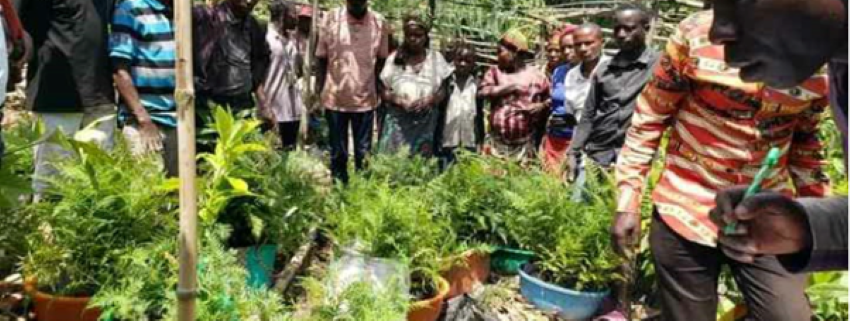
The cohort gathered a range of entrepreneurs working on sustainable agriculture, agroforestry and forest-friendly value chains—areas central to reducing land and forest pressure in the Eastern DRC. One example is Alfafood, an agroforestry initiative expanding tree-based production systems across Bushumba, Lugendo and Ishungu. Its model integrates fruit, legume and forest species into existing farms to stabilise soils, reduce erosion and support food security.
The team’s growth plan anticipates the installation of high-capacity nurseries able to produce up to 60,000 seedlings annually, paired with training for farmers and technical follow-up to ensure high survival rates. By strengthening local value chains for agroforestry products, Alfafood aims to restore degraded hillsides while improving household incomes. Another venture, Suf Kivu Vert, which is active in the cohort, focuses on seedling production and delivery for reforestation and climate-smart agriculture.
This enterprise responds to a recurring challenge for farmers, cooperatives and NGOs: reliable access to quality plant materials during critical planting periods. Its solution centres on locally cultivated, climate-adapted seedlings delivered on time and directly to clients, reducing delays and improving the success of reforestation and land restoration activities. By combining nursery management with proximity services, the business supports more efficient reforestation efforts and provides rural communities with the means to rehabilitate their land while increasing agricultural productivity.
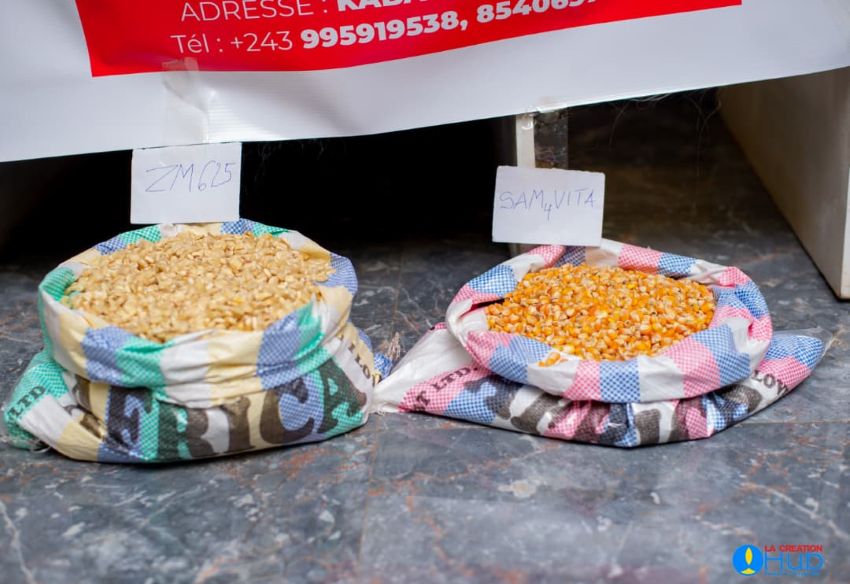
A third illustration comes from Ets Emet Initiatives, a Goma-based sustainable agriculture initiative that promotes agroecological production and short-cycle supply chains. The enterprise addresses the dual pressures of declining soil fertility and limited access to affordable nutritious food. Its model blends farmer training, diversified crop systems and direct-to-consumer distribution channels, offering families healthier food options and helping growers secure more stable revenues. By improving soil management, supporting climate-resilient techniques and reducing reliance on imported food, the venture contributes both to household resilience and to reduced pressure on surrounding forest areas.
Together, these examples reflect the diversity of approaches emerging from the cohort: ventures that seek to strengthen food systems while maintaining or restoring tree cover; others that promote forest protection and improve reforestation logistics; and initiatives that help farmers adopt more climate-resilient practices. They illustrate how early-stage enterprises can play a constructive role in land restoration and rural development across eastern DRC—an area where environmental challenges and economic needs are closely intertwined.
The final event in Bukavu and the road ahead
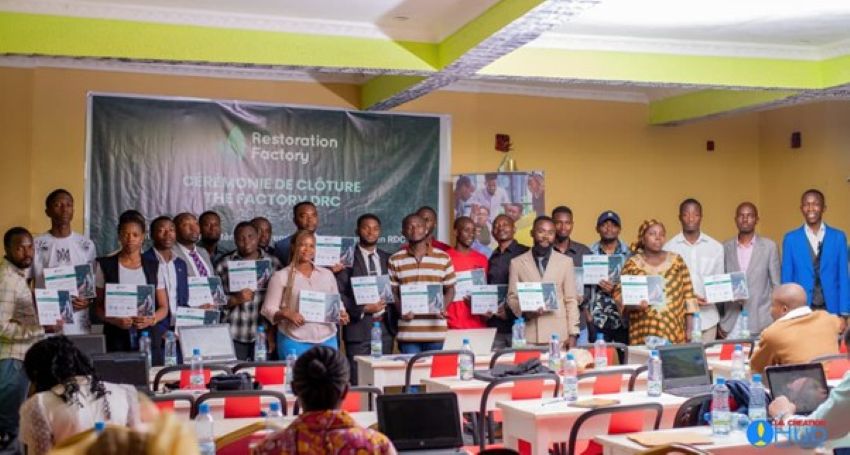
The programme concluded on 30 October 2025 with a final event held in Bukavu. Organised by La Création Hub, Bridge for Billions, UNEP and UN-REDD, the event brought together local authorities, partners, investors and the full cohort of entrepreneurs. It featured testimonies from participants, a presentation of programme results, an exhibition space for business prototypes and a certificate ceremony for both entrepreneurs and mentors. The gathering provided a platform for visibility and networking and marked the end of the pilot cohort’s structured support cycle.
As this is the first in a series of articles, upcoming posts will explore the role of local support organisations, the links between early-stage green enterprises and REDD+, NbS, and nature and carbon markets, and lessons for future cohorts in the Congo Basin.