Virtual session held on 2 July 2026, coordinated by the United Nations Environment Programme (UNEP)
Introduction
On 2 July 2026, the nineteenth session of the UN-REDD Programme Safeguards and Integrity Working Group (SIWG) for Latin America and the Caribbean was held under the title "An Introduction to Emergent and the LEAF Coalition, and Their Safeguards Approach." The session was delivered by Paz Lozano, Senior Vice President at Emergent, and Carol Burga, Director of IPLC and Stakeholder Engagement at Emergent, who provided an overview of Emergent and the LEAF Coalition and their role in mobilizing climate finance for jurisdictional REDD+ programmes.
During the session, the speakers explained how Emergent supports forest governments in navigating the complexity of the jurisdictional REDD+ (JREDD) credit market by connecting them with credible private-sector demand and offering different mechanisms to facilitate the commercialization of high-integrity carbon credits. They also discussed the key criteria buyers consider when assessing jurisdictional REDD+ programmes, as well as the actions governments can take to strengthen programme readiness and increase their opportunities to access results-based climate finance.
Emergent and the LEAF Coalition: facilitating access to climate finance for jurisdictional REDD+ Programmes
The first presentation was delivered by Paz Lozano, who introduced the work of Emergent and the LEAF Coalition and explained their role in mobilizing climate finance for high-integrity jurisdictional REDD+ programmes. She described Emergent as a non-profit organization that acts as an intermediary between forest governments and buyers by aggregating demand from the private sector and donor governments to facilitate the commercialization of jurisdictional carbon credits through standardized contracts. She also explained that Emergent serves as the administrative coordinator of the LEAF Coalition, an alliance of companies and governments committed to purchasing high-integrity jurisdictional REDD+ credits to support forest conservation and reduce deforestation.
During her presentation, Paz highlighted how Emergent helps governments navigate the complexity of the jurisdictional REDD+ (JREDD) carbon market by addressing barriers such as high transaction costs, limited access to credible buyers, financing needs for forest programme implementation, and challenges related to market integrity and trust. To achieve this, Emergent provides access to credible demand, offers different transaction models, and supports jurisdictions in preparing to negotiate Emission Reductions Purchase Agreements (ERPAs).
What do buyers look for? The role of safeguards and integrity
In the second part of the session, Carol Burga, Director of IPLC and Stakeholder Engagement at Emergent, presented the key criteria buyers consider when assessing jurisdictional REDD+ programmes and determining whether a jurisdiction is ready to negotiate an Emission Reductions Purchase Agreement (ERPA). She explained that Emergent does not operate its own safeguards system nor verify compliance with the ART TREES Standard—this is the responsibility of the ART Programme through independent validation and verification processes. Instead, Emergent conducts a due diligence process to assess each programme's level of readiness and the confidence it can provide to prospective buyers.
The presentation emphasized that, beyond the environmental integrity of carbon credits, buyers evaluate a broad range of factors to reduce risks and assess programme viability. These include the strength of social safeguards, governance and institutional capacity, enabling legal frameworks, measurable social and environmental impacts, and the ability to deliver credits according to agreed timelines and volumes. Carol stressed that safeguards should be understood as a cross-cutting component of REDD+ programme design and implementation, promoting effective participation processes, transparent benefit-sharing mechanisms, safeguards information systems, grievance mechanisms, and other key elements.
As a concluding message, Paz Lozano highlighted that one of the main challenges faced by many jurisdictions is not a lack of buyer interest, but rather achieving the level of technical and institutional readiness needed to build confidence. In this regard, she underscored the importance of conducting a gap assessment, developing a clear work plan, and implementing a strategic management approach to strengthen REDD+ programmes and advance towards the issuance and commercialization of high-integrity jurisdictional carbon credits.
Reflections on the challenges of accessing LEAF
The question-and-answer session provided an opportunity to further explore some of the main challenges faced by countries and jurisdictions seeking access to LEAF Coalition financing. Among the topics discussed was the importance of preparing REDD+ programmes to meet the requirements of the ART TREES Standard. It was clarified that, while LEAF currently prioritizes credits issued under TREES, there is some flexibility to transact credits generated under the Forest Carbon Partnership Facility (FCPF) for jurisdictions that are progressing towards a future transition to TREES. It was also explained that Emergent can facilitate transactions in other markets, including CORSIA and Article 6 of the Paris Agreement, depending on each country's priorities.
The speakers also emphasized that one of the most important factors for accelerating access to this type of financing is having a comprehensive gap assessment, a clear action plan, and dedicated teams to coordinate programme development and validation and verification processes. The discussion also addressed issues related to benefit-sharing and the transparent monitoring of how revenues are used, highlighting that strengthening these elements—together with safeguards and governance systems—enables jurisdictions to respond more effectively to buyers' due diligence processes and build the confidence needed to access high-integrity climate finance opportunities.
Session at a glance
|
|
|
|
|
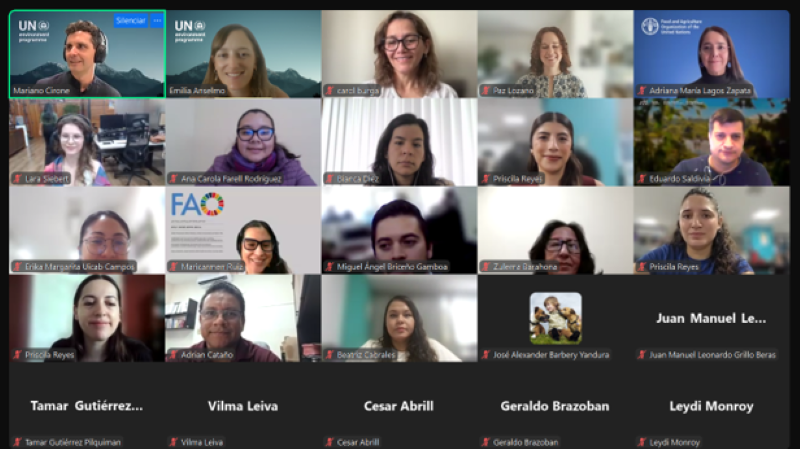
35 participants (73% women, 27% men) |
8 countries represented (Mexico, Bolivia, Costa Rica, Argentina, Panama, Colombia, Dominican Republic, Chile, Peru, Brasil)
|
120-minute session
|


About the Working Group
The UN-REDD Programme Safeguards and Integrity Working Group for Latin America and the Caribbean brings together practitioners and technical experts working on the design, implementation, monitoring, and reporting of REDD+ safeguards across the region. Its objective is to foster the exchange of experiences, good practices, common challenges, and lessons learned in order to strengthen safeguards implementation, monitoring, and reporting, and enhance the environmental and social integrity of REDD+ in Latin America and the Caribbean.
For more information about the Working Group, please contact the UNEP team:Mariano Cirone: [email protected]