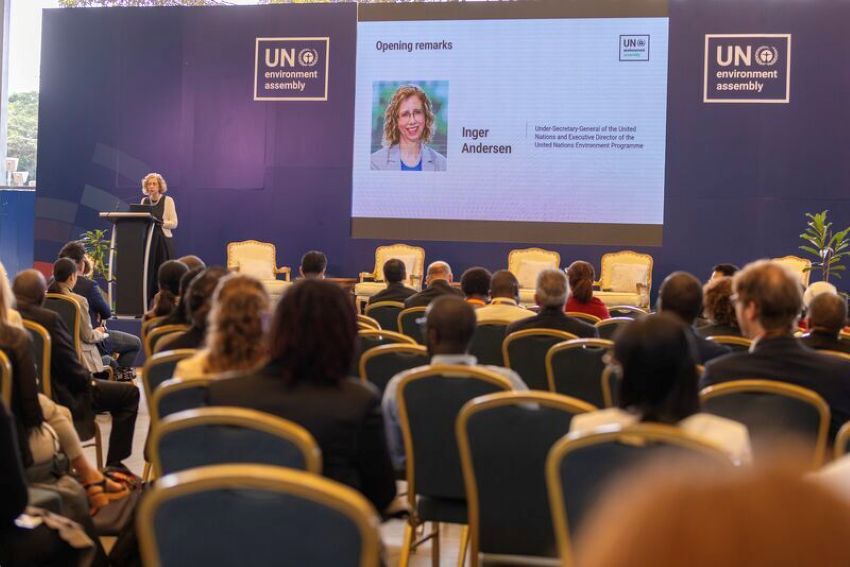
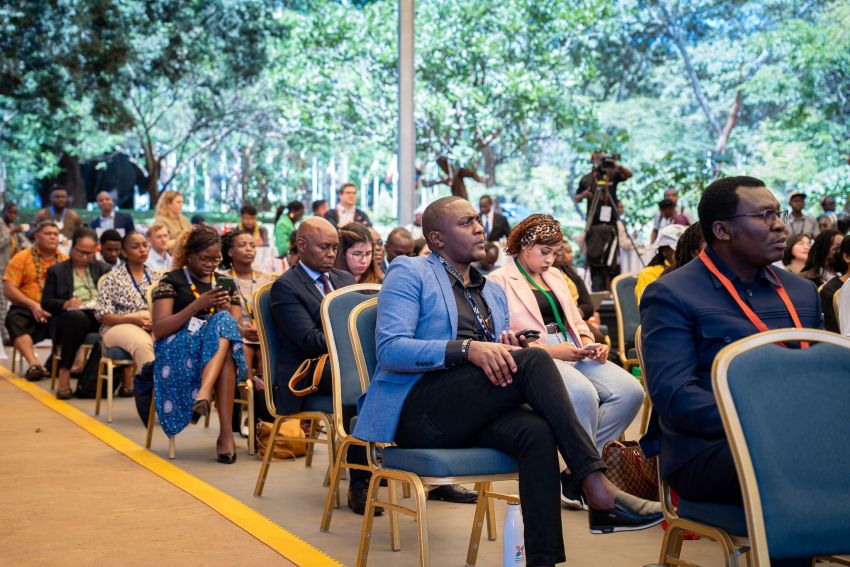
On the margins of UNEA-7 in Nairobi, more than 200 participants came together for a dynamic discussion on one of the most powerful, and debated, tools in climate action: carbon markets.
The associated event, “High-Integrity Carbon Markets: Impact and Path to Accelerated Climate Action,” offered a timely opportunity to examine how carbon markets are evolving, what is working, and how they can scale with integrity to deliver real climate impact.
The event opened with remarks from UNEP Executive Director Inger Andersen, who underscored the urgency of accelerating climate mitigation while ensuring environmental integrity and equitable outcomes. Her remarks set the stage for two in-depth panel discussions: “Current Status and Trends in Carbon Markets” and “Market Dynamics and Finance Mobilization.” Participants also heard an update on the latest developments under Article 6 of the Paris Agreement, highlighting the growing relevance of international carbon cooperation.
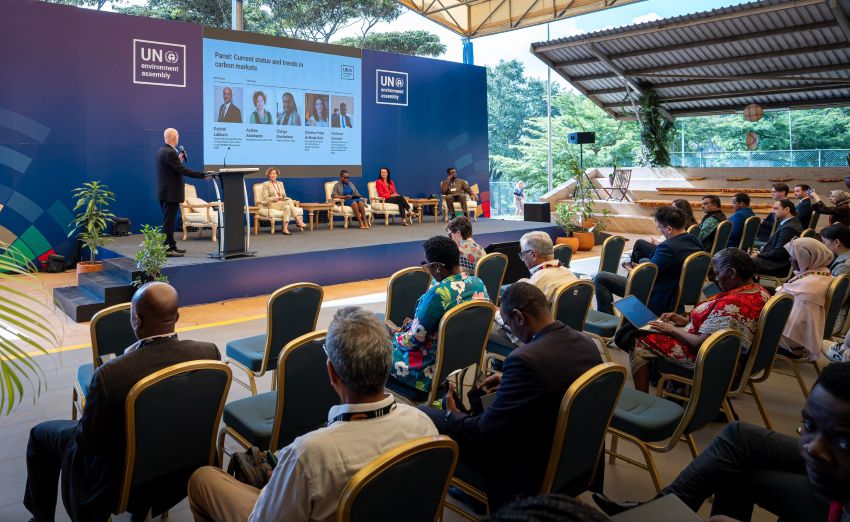
Panel 1: Current Status and Trends in Carbon Markets
Gabriel Labbate, Head of the Climate Mitigation Unit and Global Team Leader of the UN-REDD Programme at UNEP, opened by emphasizing the narrowing window for effective climate mitigation. He highlighted that carbon pricing mechanisms, such as carbon taxes and emissions trading systems, now cover approximately 28 percent of global emissions, with demand for credits under Article 6, CORSIA, and voluntary carbon markets (VCMs) expected to rise sharply.
Labbate noted that carbon markets are undergoing a critical “quality reset,” as buyers, regulators, and standard-setters increasingly align around stronger integrity frameworks to ensure emission reductions are real, measurable, and durable.
Panellists:
-
Andrea Abrahams, Managing Director, VCM, IETA
-
Chinga Mazhetese, Regional Officer, ICAO
-
Cristina Fróes de Borja Reis, Extraordinary Secretary for Carbon Markets, Ministry of Finance, Brazil
-
Olufunso Somorin, Regional Climate Head, African Development Bank
Key takeaways:
-
Governance matters. Clear policies and strong regulatory frameworks are essential for investor confidence and market integrity.
-
Markets are resilient—but fragmented. Lack of standardization and limited interoperability continue to constrain efficiency and liquidity.
-
Blended finance is critical. Public and concessional finance can help unlock private capital and scale high-quality projects.
Panel 2: Market Dynamics and Finance Mobilization
Fundile Maphanga, Policy Lead at Allied Offsets, provided a data-driven overview of current market dynamics. While the voluntary carbon market remains oversupplied, 5.6 billion tonnes issued versus 1.5 billion retired, buyers are increasingly shifting toward high-integrity removal credits, which are shaping value and price signals. Notably, offtake volumes have grown 320-fold since 2020, signalling stronger long-term commitments from buyers.
Looking ahead, Maphanga noted that the VCM could grow from USD 1.3 billion in 2025 to USD 161 billion by 2050, as oversupply declines and prices reflect higher-quality credits.
Panellists:
-
Andrew Weiner, Head of Business Development for Environmental Markets, Emsurge
-
Luke Cillie, Senior Consultant, EY Global Center for Climate Policy
-
Omon Ukpoma-Olaiya, Regional Investment Team Lead (ESA & Arab States), UNCDF
-
Roselyn Adjei, Senior Advisor Consultant, Environmental Defense Fund
Key takeaways:
-
Carbon finance is a real opportunity for developing economies when aligned with national priorities.
-
Public finance unlocks, private finance scales. Governments can de-risk early-stage investments, but long-term impact depends on private capital guided by clear bankability criteria.
-
Integrity drives value. High-quality credits are increasingly shaping price formation and buyer demand.
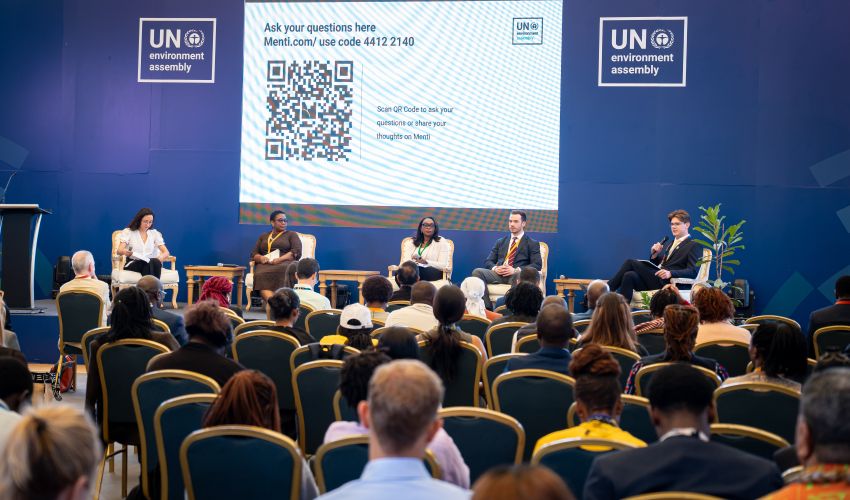
From Dialogue to Action
Beyond market statistics and projections, the discussion focused on practical solutions: how carbon markets can accelerate climate action, support sustainable development, and deliver benefits for communities and economies alike. Speakers emphasized the need for collaboration across governments, the private sector, and civil society to ensure markets deliver both climate ambition and social value.
Whether you are a policymaker, investor, or climate practitioner, the event offered a front-row view into the future of carbon markets—and the role high-integrity approaches must play in achieving global climate goals.
🎥 Missed the event? You can watch the full discussion on the link below;
Want to explore further? Access the event slides here