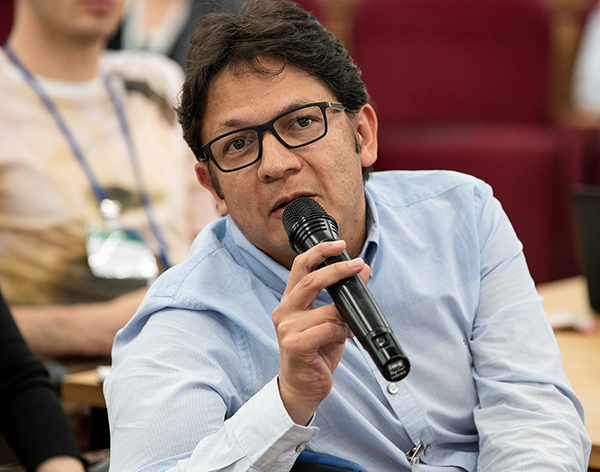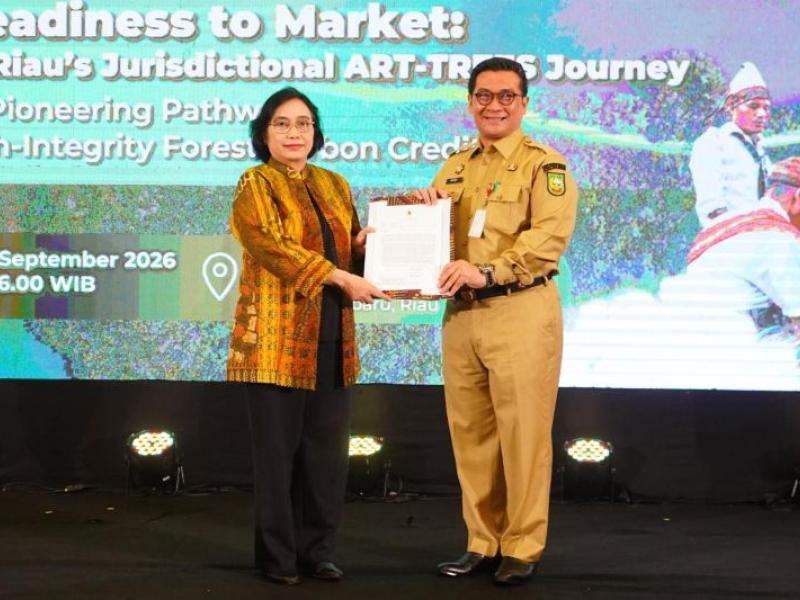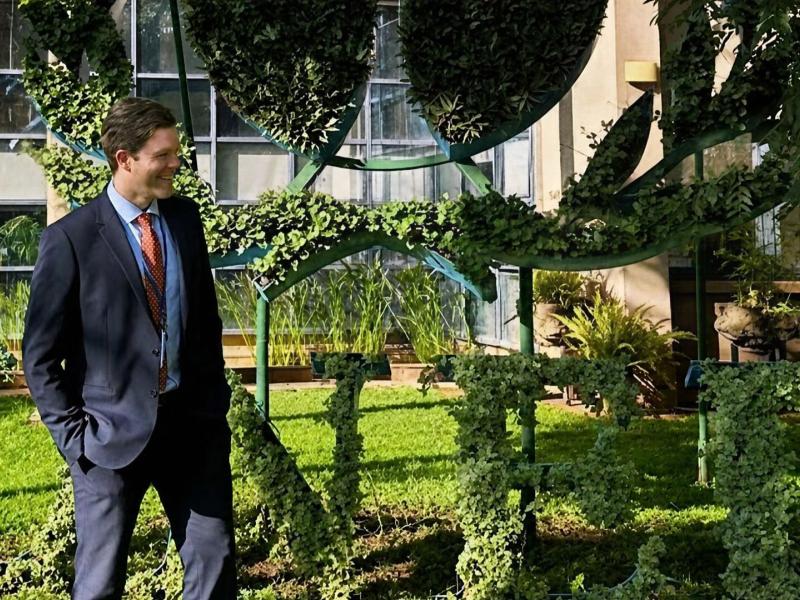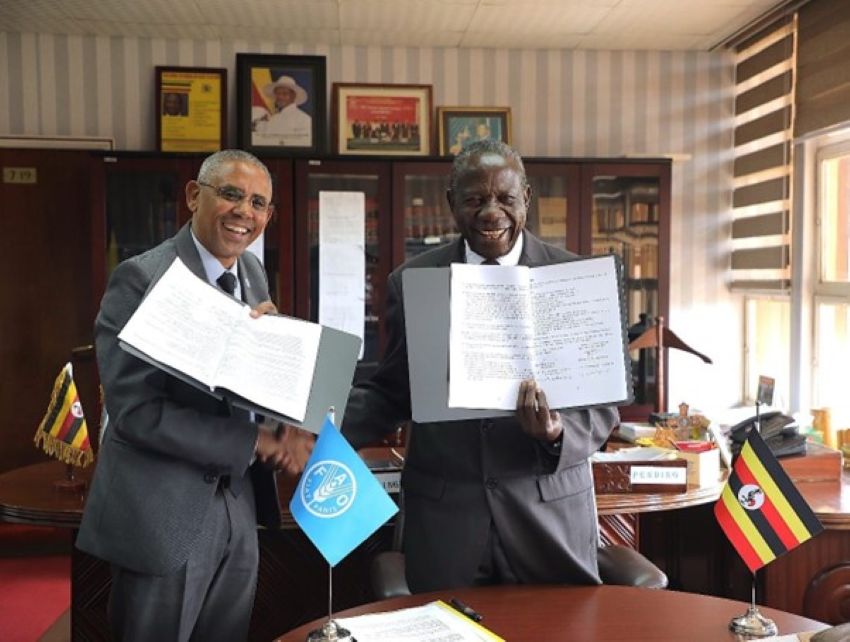
On the left Mr. Yergalem Taages Beraki, FAO Presentative to Uganda (a.i.), On the right Hon. Matia Kasaija, Minister of Finance, Planning & Economic Development @FAO/Agatha Ayebazibwe.
In October 2025, Uganda made history by becoming the first African country to secure results-based payments (RBP) from the Green Climate Fund (GCF), unlocking USD 31 million for verified emission reductions achieved between 2016 and 2017. These reductions - totaling over 8 million tonnes of CO₂ equivalent - were the result of improved forest governance, strengthened policies, international and domestic investments, and sustained technical support from partners such as UN-REDD.
Uganda’s REDD+ journey began in 2008, when it joined the Forest Carbon Partnership Facility (FCPF). Since then, the country has benefited from extensive support under the UN-REDD Programme,adopting a stepwise approach to its National Forest Monitoring System and National REDD+ Strategy (launched at COP23 in Bonn, 2017), and progressing with safeguards, forest accounting, and inclusive stakeholder engagement. These efforts laid the groundwork for Uganda’s transition from readiness to implementation.
UN-REDD’s technical assistance was instrumental in preparing Uganda’s GCF Concept Note and Funding Proposal, supporting the submission of REDD+ results through the Biennial Update Report (BUR), and aligning Uganda’s REDD+ actions with UNFCCC standards. The Programme is also facilitating policy dialogues, capacity building, and the strengthening of a robust Monitoring, Reporting and Verification (MRV) system.
The approved RBP project reinvests in strategic actions aligned with Uganda’s Nationally Determined Contributions (NDCs) and REDD+ Strategy. These include agroforestry, community woodlots, and forest restoration, and enabling areas such as MRV, safeguards, benefit-sharing systems, and institutional capacity building. Special attention will be given to vulnerable groups, including forest-dependent Indigenous Peoples and women, ensuring equitable access to benefits.
According to Mr. Alfred Okot Okidi, Permanent Secretary, Ministry of Water and Environment, Uganda:
“Uganda, being the first African Country to benefit from this window, is a classic example of a job well done by all stakeholders. The use of the proceeds should clearly demonstrate the creation of additional high-integrity credits that may attract higher premiums.
To our Partners during this journey, the World Bank, Austrian Development Fund, UN REDD Programme, and FAO, we say thank you.”
In the words of Mr. Bob Kazungu – Assistant Commissioner for Forestry in charge of Assessment & Monitoring and National REDD+ Focal Point for Uganda:
“It is such a great opportunity for Uganda to see tangible results after a sixteen (16) year journey of REDD+, and from the work of all our country leadership at the MWE, in country experts, the World Bank, Austrian Development Bank and the UN REDD Programme, we want to say thank you for the support. Finally, we have something to show for our efforts.”
Looking ahead, and within the framework of its new National Climate Change Regulation, Uganda is advancing additional jurisdictional-level opportunities, having submitted a concept note in December 2022 under the ART-TREES standard. With support from UN-REDD, the country is developing a TREES-compliant MRV system, refining its methodologies, and leveraging technology to enhance consistency and accuracy. In parallel, Uganda is working on its safeguards system to effectively report progress and compile future mitigation results.
Additionally, the Government of Uganda - supported by FAO - is strengthening the evidence base on halting deforestation actions through a policy coherence analysis across the agriculture and forestry sectors. This analysis will use public expenditure review conducted in collaboration with cross-sectoral ministries. The results, expected in the first half of next year, will support more targeted, evidence-based interventions to reduce deforestation and will inform the design and implementation of the Use of Proceeds.
Uganda’s experience illustrates its growing institutional capacity to enhance climate governance. By aligning with UNFCCC standards, securing reliable funding, and fostering sustained technical cooperation, the country is positioning itself for meaningful engagement in high-integrity carbon finance and, ultimately, for the implementation of its REDD+ strategy by and for its people. As COP discussions turn toward scaling forest-based solutions, Uganda’s journey underscores the urgent need to maintain and expand results-based support systems that reward integrity, ambition, and inclusivity.