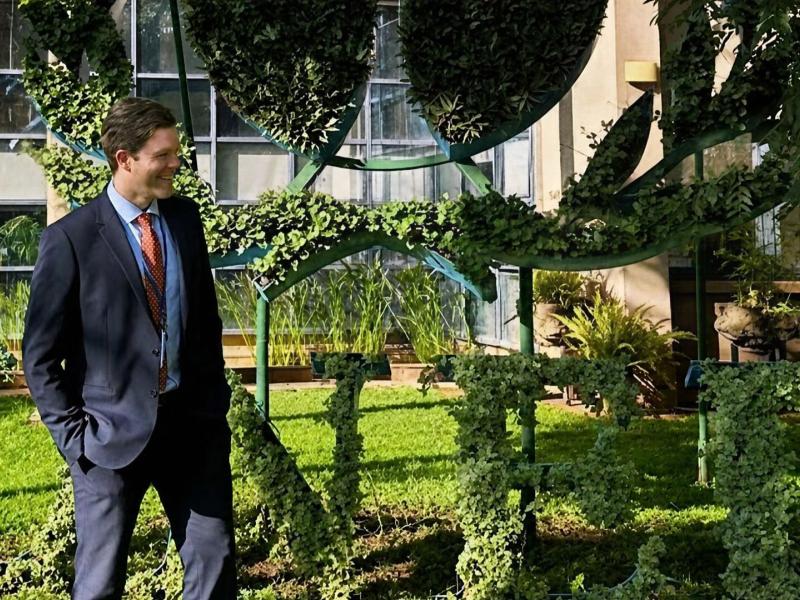
Bob Kazungu’s decades-long conservation journey, which began as a boy collecting fire wood and wild honey from forests near his family’s rural home in eastern Uganda, will take him to the Amazonian city of Belem for COP 30 later this month.
Kazungu, now an Assistant Commissioner for forestry assessment and monitoring at Uganda’s Ministry of Water and Environment, and the country’s national REDD+ focal point, was notably born on 21 March - International Day of Forests – so feels that his upcoming trip to Brazil is a date with destiny.
“Before I went to university, my mother owned a little forest in the eastern part of the country, so I had a lot interactions with forests from an early age,” said Kazungu, who spent a large amount of time in the rural Mbale district as a boy, before going on to complete degrees in forestry at Makerere University in the capital Kampala.
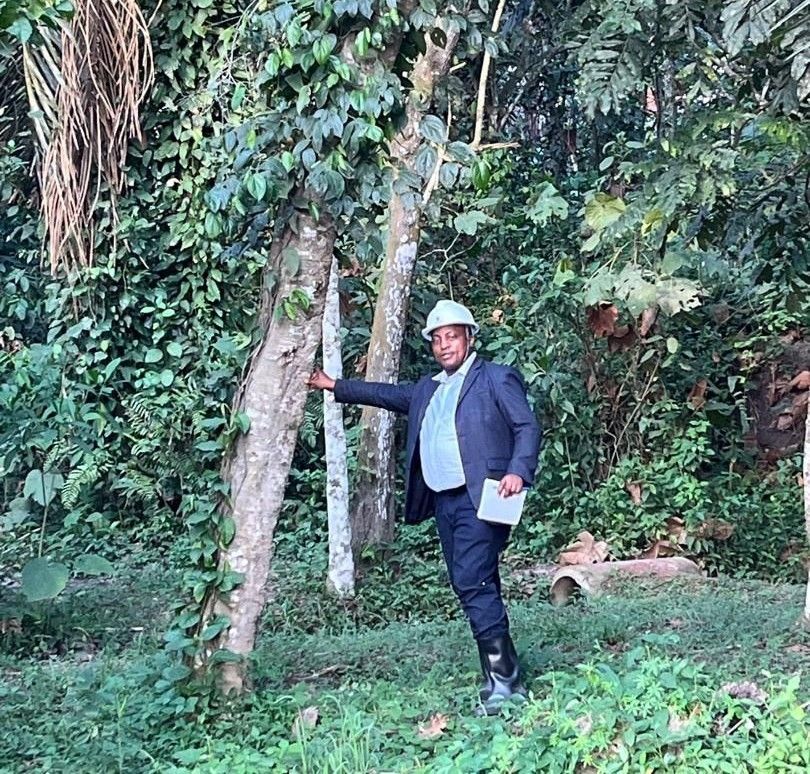
Forty years later, Kazungu now mostly works in a supervisory and administrative role as part of the East African country’s successful forest conservation drive, but he maintains his own forest to act as a constant reminder of the role trees have played in shaping his life and career path.
“The feeling that natural forests are extremely important was planted in my head from very, very early on - I really appreciate nature,” he added.
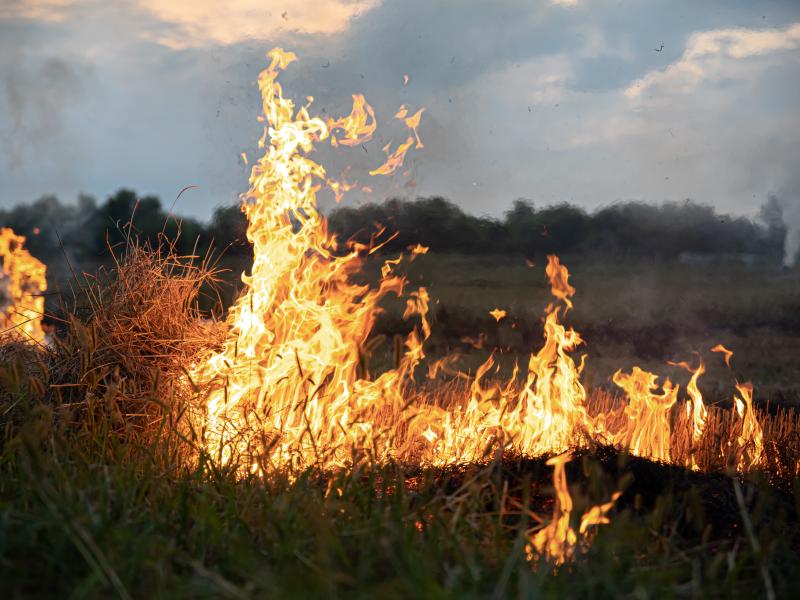
This deep connection with forests is the same for millions of other Ugandans. About 12.6 per cent of the country was covered by forests last year, or approximately 1.84 million hectares. But this is down from 24 per cent in 1990. Drivers of deforestation and forest degradation include expansion of subsistence agriculture, unsustainable harvesting of tree products - mainly for charcoal, firewood and timber, expanding settlements and impacts of refugees, free-grazing livestock, wildfires, artisanal mining operations and oil exploration activities.
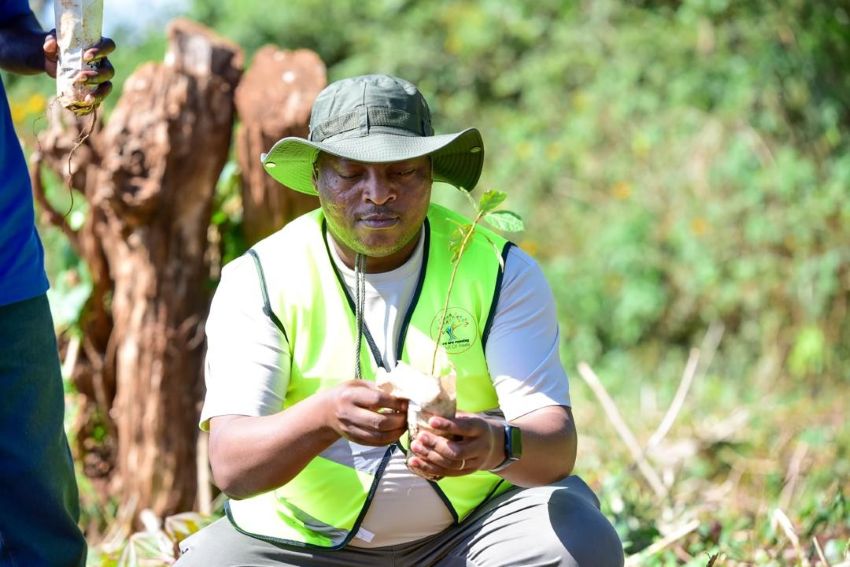
To tackle the decline, the Ugandan government has set an ambitious target of planting 40 million trees per year to get forest cover back to 1990 levels by 2040.
To further bolster its sustainability drive, Uganda also joined the REDD+ mechanism in 2008 when it became a participant of the Forest Carbon Partnership Facility. Since then, the African country has made great progress regarding the Warsaw Framework elements to complete the readiness phase.
A national REDD+ strategy was completed in 2017, a Forest Reference Emission Level was submitted to UNFCCC in 2018, a BUR and a REDD+ Technical Annex in 2020, and a National Forest Monitoring System was available and finalized in the same year.
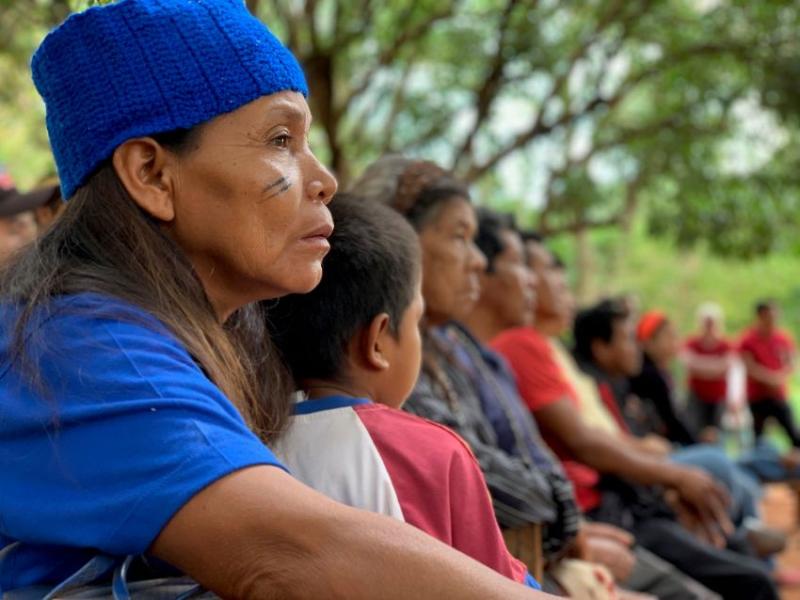
Through REDD+, Uganda also aims to achieve gender balance and improve welfare of communities and Indigenous Peoples - key components for achieving sustainable development.
The country put in place its Safeguards Information System in 2022 - with support from the World Bank and under the leadership of the ministry of water and environment - one of the key requirements to access Results-based Payments (RBP).
With both the readiness and implementation phases now complete, Uganda received a US$ 31 million payment from the Green Climate Fund in late October for reducing deforestation and cutting over 8 million tonnes of CO₂ through sustainable forest management from 2016 to 2017. The country is also exploring several other financing options, including but not limited to aligning to the ART-TREES standard requirements.
“All these processes took about 15 years,” said Kazungu. “We had a huge team from all over the world and we are proud of our achievements as a country.”
Kazungu is now preparing to head to Brazil to attend COP 30 as part of the Ugandan government delegation, hoping to provide advice and expertise to other countries looking to follow Uganda’s successful forest conservation path.
“Belem as a host city in the Amazon is significant because the place itself tells the story of how forests can reduce pollution, provide a cool environment, but are also highly vulnerable,” Kazungu said.
“At COP 30 we want to make sure REDD+ is appreciated … but also inform the world that Uganda as a country, has a lot of potential to deliver high-integrity credits,” he added.
Among the top forest priorities for negotiators in Brazil will be forest financing, including the launch of the Tropical Forest Forever Facility, and further enhancing carbon standards and integrity, said Kazungu. He noted however, that the high cost of attending COP 30 may mean that key African negotiators will be absent this year, he added.
“Forests deliver both mitigation and adaptation benefits. But although forest ambitions are currently very high, the financing needed to deliver these goals is still very low,” said Kazungu.
“But we expect to see some key decisions made. We go there with an open heart.”