As the UN Climate Change Conference (COP30) opens in Belem do Para, Brazil next week, the UN-REDD Programme is underscoring the urgent need to scale up finance and action to protect and restore the world’s forests, our most powerful natural ally in tackling the climate crisis.
Forests absorb an estimated 7.6 billion tonnes of CO₂ each year, about 20 percent of global fossil-fuel emissions, but this capacity is at risk due to ongoing deforestation, degradation, and climate stress. The Amazon alone stores around 123 billion tonnes of carbon, emissions that would be irreversible if released.
Forests provide significant mitigation potential and multiple co-benefits. UN-REDD’s High-Risk Forests, High-Value Returns report finds that protecting nearly 400 million hectares of high-risk tropical forests could avoid US$80 billion in annual climate damages, safeguard 25 million livelihoods, and help stabilize regional rainfall.
This potential is increasingly reflected in policies: UNFCCC’s latest NDC synthesis report shows that more than 80 percent of Nationally Determined Contributions (NDCs) now include land use and forestry targets, reflecting growing global recognition of forests as a cornerstone of climate action.
Yet forest finance remains far below needs. Current flows of US$84 billion per year fall short of the US$300 billion required by 2030, leaving a US$216 billion annual gap, as highlighted in the UN-REDD’s recently launched State of Finance for Forests 2025.
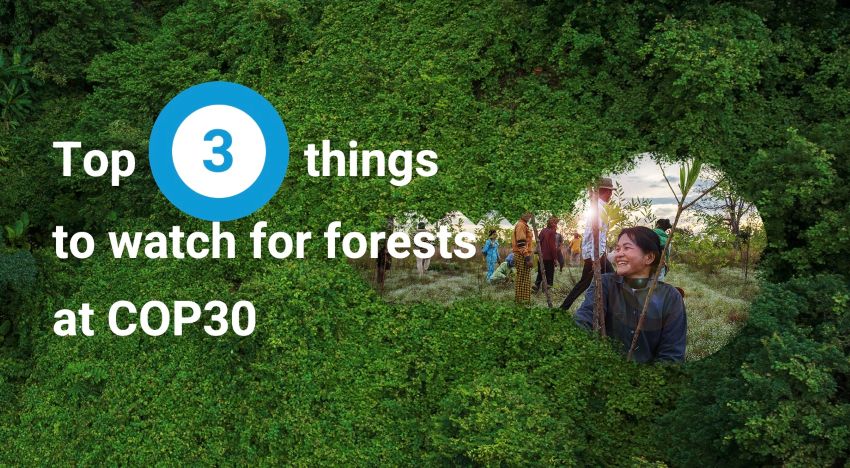
Here are the top three things to watch for forests at COP30
Number 1: Jurisdictional REDD+ will be presented as a key solution to bridge the forest gap
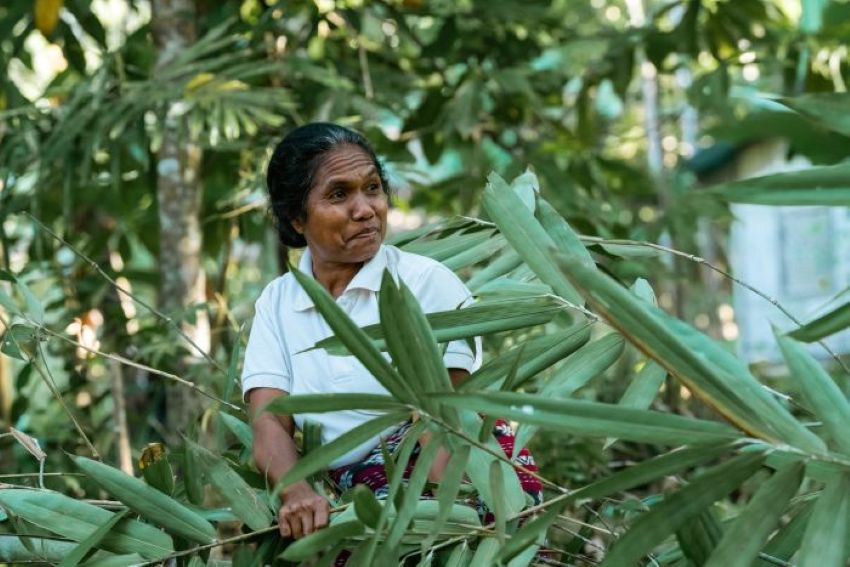
Under the UNFCCC, the REDD+ framework reducing emissions from deforestation and forest degradation while supporting conservation, sustainable forest management, and carbon stock enhancement, continues to show how results-based payments can deliver measurable progress. To date, REDD+ has mobilized more than US$1.5 billion in finance.
In 2024, UN-REDD, jointly implemented by UNEP, FAO, and UNDP, supported 17 jurisdictions with technical and safeguards assistance, representing an estimated 300 million tonnes of emission reductions by 2030.
At COP30, jurisdictional REDD+ (JREDD+) will be presented as a scalable, high-integrity solution that connects national and subnational efforts, aligns supply and demand for verified emission reductions, and channels finance directly to forest protection, restoration, and Indigenous communities.
According to a UNEP supplementary analysis (2025), demand for jurisdictional credits could reach US$3–6 billion annually by 2030, making JREDD+ one of the fastest ways to close the global forest finance gap. Complementing this, the Tropical Forest Finance Facility (TFFF) is expected to mobilize an additional US$4 billion per year. Together, these two mechanisms could cover over half of the US$15.8 billion in annual investment needed to protect tropical forests by 2030, a significant step toward aligning finance with global climate and forest goals.
Number 2. Forests to feature prominently under the COP30 Action Agenda.
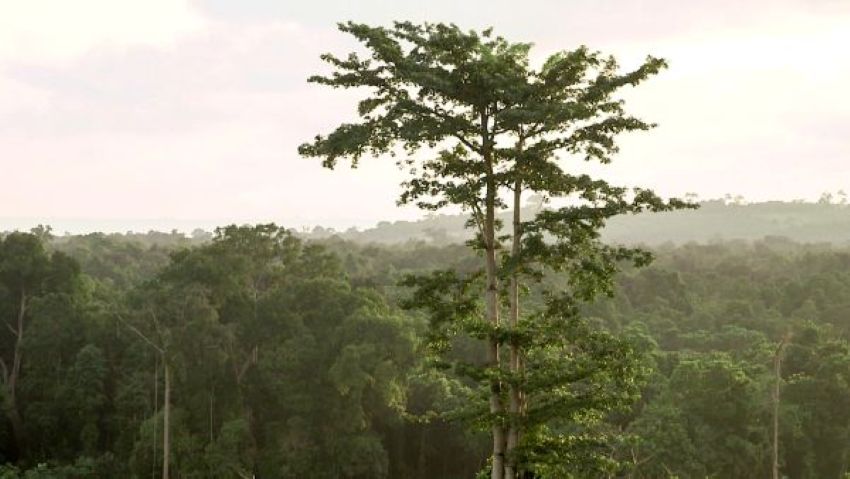
Forests will be a major focus under the COP30 Action Agenda, with new partnerships and financing initiatives aiming to halt and reverse deforestation.
Key announcements and events include:
- The Plan to Accelerate Solutions on REDD+ and Combating Deforestation, led by UN-REDD with the Forest & Climate Leaders’ Partnership (FCLP).
- The launch of the Tropical Forest Forever Facility, expected to mobilize up to US$125 billion for forest protection, with 20 percent allocated to Indigenous Peoples and local communities.
- The launch of the Jurisdictional REDD+ Coalition (JREDD+), designed to strengthen market integrity and investor confidence.
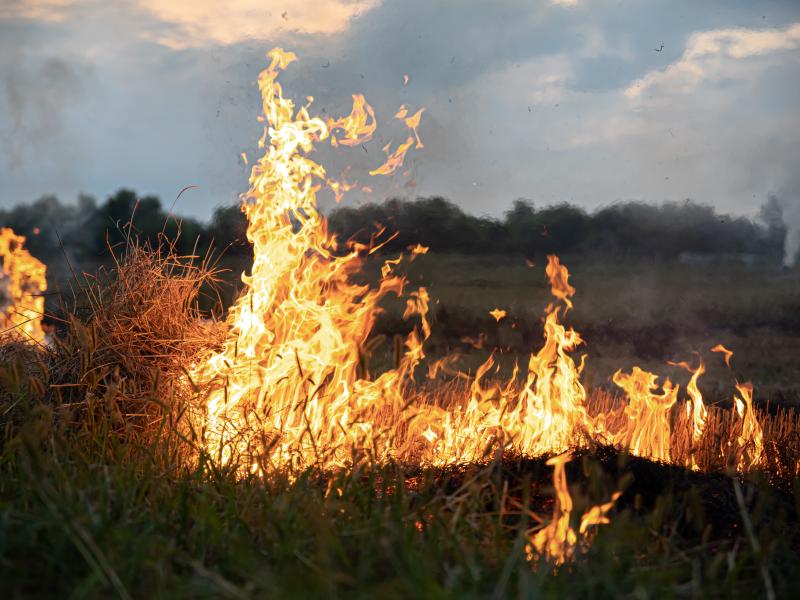
- The COP30 Call to Action on Integrated Fire Management and Wildfire Resilience, expanding collaboration under the Global Fire Management Hub.
Additionally, UN-REDD will also host and support a series of high-level events across the COP30 venue, including:
- Forest Finance and Trade – 13 November 2025, 10:00–12:00, Forest Pavilion
- PAS on REDD+ and Combating Deforestation – 15 November 2025, 9:30–10:30, Action Pavilion
- Unlocking Forest Finance Ministerial – 17 November 2025, 10:30–12:00, UNFCCC Side Event
- Turning the Tide on Deforestation (Flagship Event) – 17 November 2025, 12:00–12:30, UNFCCC Side Event
Number 3. A renewed call to support Indigenous Peoples and local communities
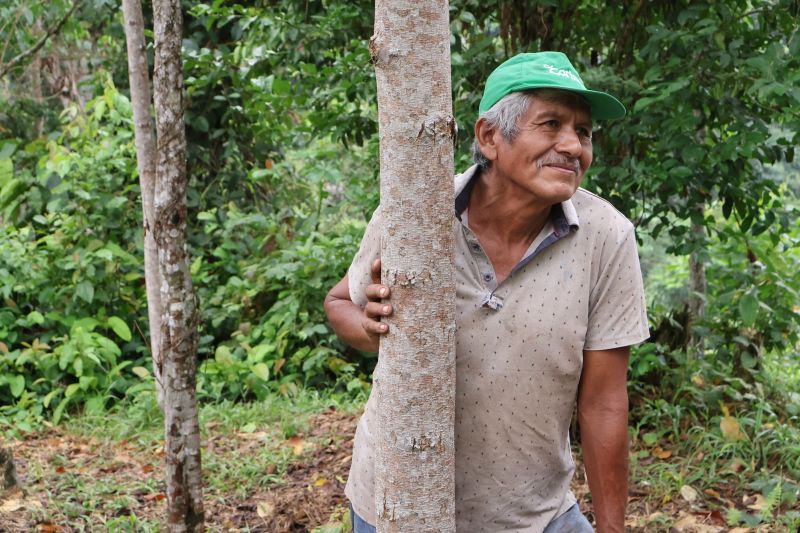
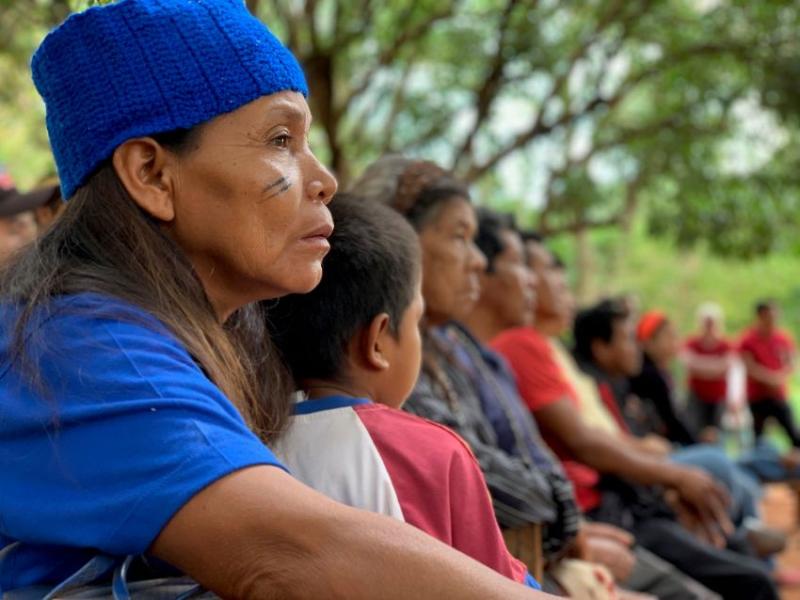
Indigenous Peoples and local communities are among the most effective forest custodians, managing much of the world’s remaining intact forests. Yet they currently receive only US$362 million per year in forest finance.
Strengthening tenure rights, ensuring equitable benefit-sharing, and embedding human rights in climate and forest finance are priorities at COP30. Donors and partners are expected to renew their commitments through the Global Forest Finance Pledge 2.0 and the Forest Tenure Pledge 2.0, reaffirming efforts to channel more direct funding to Indigenous and community-led forest protection and restoration.