Photo credit: Joshua Bratt/FCLP
There is, if you look carefully, genuine progress to report on the world's tropical forests. Deforestation rates have fallen in parts of the Amazon. Community land rights are slowly being recognized in more countries. The financial architecture for forest protection has grown more sophisticated. And yet progress remains uneven, often fragile, and nowhere near fast enough. Something is still missing, and increasingly it looks less like a technical gap than a human one.
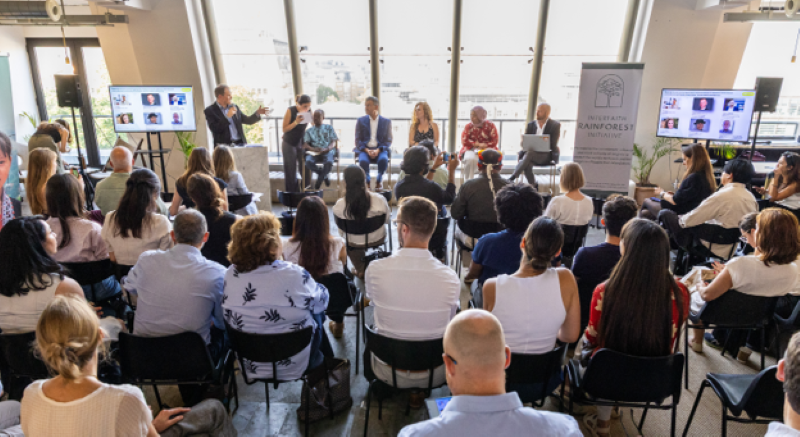
During London Climate Action Week, UNEP and the UN-REDD Programme helped convene two dialogues alongside the Interfaith Rainforest Initiative (IRI) that together probed both sides of that problem: the politics of persuasion, and the technical and legal tools that only work once trust has been built.
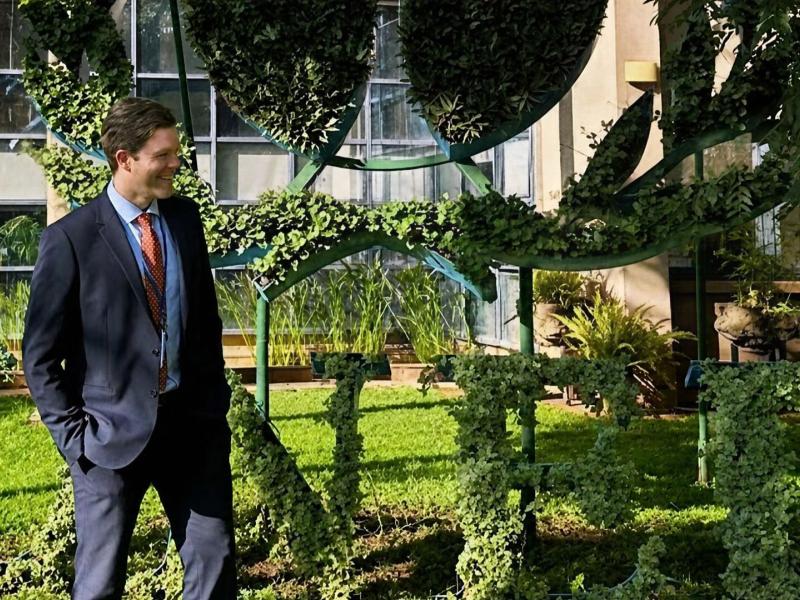
"Creating the conditions for this kind of dialogue, across faiths, across politics, across borders, is itself part of the work," said Gabriel Labbate, Head of Nature and Market-based Solutions at UNEP.
The first session brought together a government minister from Indonesia, a faith leader, a human rights envoy, a peace and security expert, and an Indigenous rights advocate from the DRC. At its heart was a framing of whether protecting tropical forests comes at the expense of development.
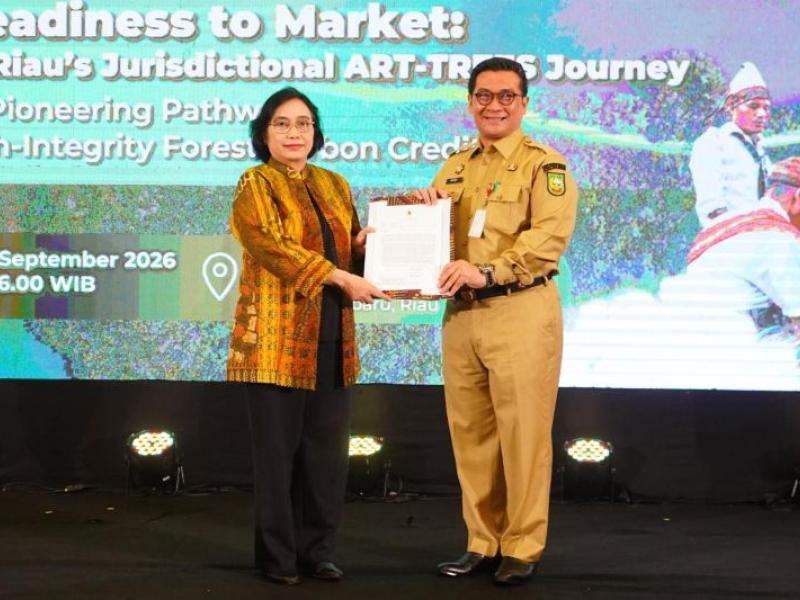
Dr. Ristianto Pribadi from Indonesia’s Ministry of Forestry rejected it outright. "There is no development without nature," he said. "When we strengthen forest governance in Indonesia, we are not slowing the economy, we are protecting the foundation it depends on." Indonesia’s combination of community forestry schemes, moratoriums on primary forest clearance, and rural prosperity programmes offers at least partial evidence that the trade-off is false.
![]]]](/sites/default/files/2026-07/Picture2.png)
Photo credit: Kamran Hussain/UNEP
Climate polarisation, argued Jurema Werneck, Special Envoy of the COP 30 Presidency on Just Transition and Human Rights, is not primarily a battle of ideas. It is a symptom of inequality. "This is not really a debate between people who disagree," she said. "It is a gap between those who have power and those who do not."
Drawing on testimony from frontline Amazonian communities gathered through the Voices of the Biomes initiative, she argued that the communities most exposed to deforestation are already leading solutions, but are systematically denied the funding and political standing to act at scale. Bridging the climate divide is inseparable from the struggle for climate justice.
Peter Prove of the World Council of Churches pressed the point further, noting that where deforestation and extraction accelerate, violent conflict tends to follow, and that faith institutions often retain trust and access in precisely the settings where formal diplomacy runs out of road. In addition, Blaise Mudodosi, from the Congolese organisation APEM, was direct about what follows from that: if Indigenous Peoples and local communities remain excluded from the governance of their own forests, through fortress conservation models, or concessions granted without free, prior and informed consent, no amount of outreach will hold. "Communities only enter the agenda when they are at the table from the start," he said, "not consulted after decisions are already made."
It was a thread that ran directly into the second session of the day, co-hosted by UN-REDD, IRI, FCLP, FAO, Aim4Forests and SEPAL, on forest monitoring, land tenure and community-based conservation. Opening the session, Norway's Minister of Climate and the Environment, Andreas Bjelland Eriksen, highlighted the growing importance of open and transparent data systems in supporting forest countries to make informed decisions and deliver better outcomes for forests and people.
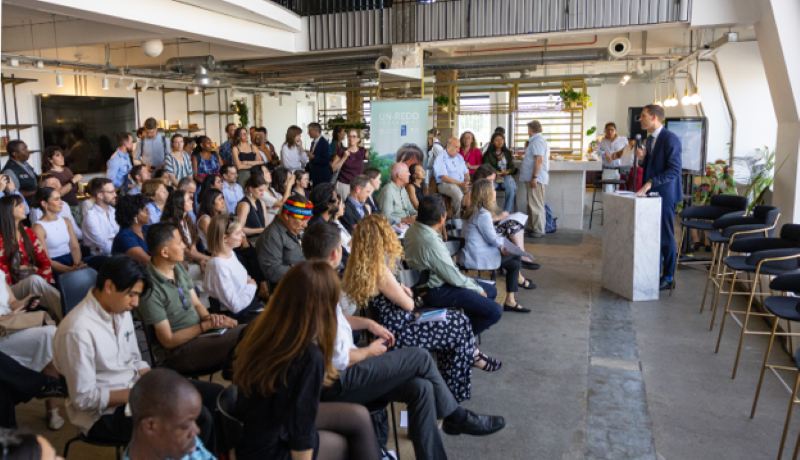
Photo credit: Joshua Bratt/FCLP
Hening Parlan, IRI's National Facilitator in Indonesia, bridged both conversations: the moral authority that faith leaders carry into forest communities is not only a tool for shifting opinion, it builds the trust that makes monitoring technologies and tenure reforms functional once they arrive. Without it, the tools land in a vacuum.
What both sessions made clear is that the ingredients for progress exist, in the reach of faith networks, in the long stewardship of Indigenous communities, in governments beginning to see conservation and prosperity as complementary, in monitoring tools designed with communities rather than over them. The task now is connection: between these actors, these conversations, and these tools.