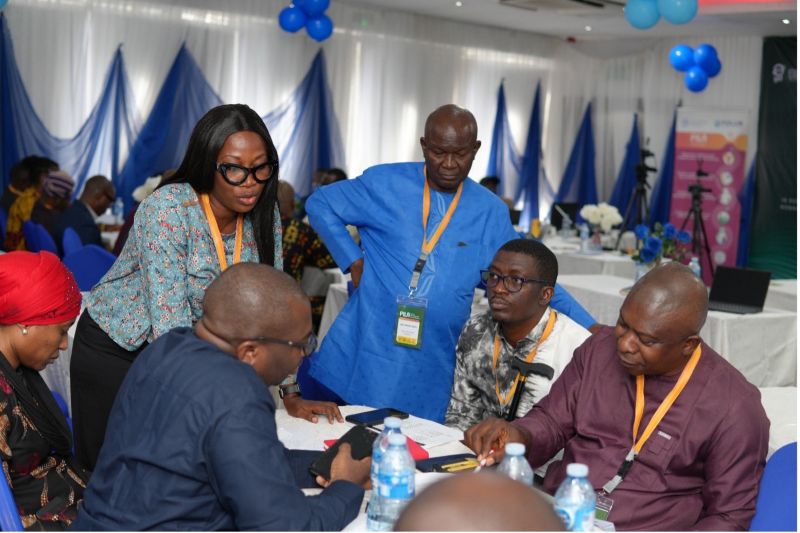
Lagos, Nigeria, 20–21 May 2026 – Key stakeholders from Nigeria’s financial, agricultural, environmental, and development sectors convened in Lagos to advance and mainstream the country’s transition toward deforestation-free finance and sustainable agricultural investment.
The two-day Deforestation-Free Finance Workshop provided a platform for dialogue on integrating sustainability considerations into Nigeria’s financial system and was organized under the Food Systems, Land Use and Restoration (FOLUR) Integrated Program and implemented by the Food and Agriculture Organization of the United Nations (FAO) in collaboration with partners including TRACE, GIZ and Propcom+.
“Advancing Deforestation-Free Finance in Nigeria’s Banking Sector: From Roadmap to Implementation,” workshop brought together over 107 representatives of government ministries and agencies, the Central Bank of Nigeria, commercial and development finance institutions, agribusinesses, farmer organizations, civil society groups, researchers, and development partners.
The event comes at a critical time as global markets increasingly demand sustainable and traceable agricultural commodities. Emerging regulations, including the European Union Deforestation Regulation (EUDR), alongside broader Environmental, Social and Governance (ESG) standards, are reshaping investment and trade requirements for agricultural value chains worldwide.
Participants emphasized that Nigeria’s agricultural sector remains vital to economic growth, food security, employment, and export earnings, but also recognized the lack of financing systems that can support productivity while safeguarding forests, biodiversity ecosystem services, and achieving long-term agricultural growth.
A central focus of the workshop was the role of financial institutions in promoting sustainable agricultural practices through lending and investment decisions. Participants discussed and adopted Nigeria’s emerging Deforestation-Free Finance Transition Roadmap and explored ways to integrate environmental and social considerations into financial systems to support sustainable land-use outcomes.
Participants recognized that climate change, biodiversity loss, land degradation, and deforestation are increasingly becoming material financial risks and agreed on the importance of sustainable finance for maintaining market access, competitiveness, and long-term economic resilience.
The workshop also identified persistent financing gaps across agricultural value chains, particularly in cocoa, oil palm, forestry, and agroforestry sectors. Stakeholders noted that many financial products remain poorly aligned with agricultural realities, limiting access to finance for producers and agribusinesses.
A major outcome of the workshop was the consensus on shifting agricultural finance from broad subsidies to performance-based mechanisms that reward verified sustainability outcomes. Participants highlighted the Eco-Credit mechanism as a practical model to incentivize compliance with ESG standards, deforestation-free production, agroforestry adoption, and traceable value chains.
By linking financial benefits to responsible production practices, such approaches can improve producers’ competitiveness, mobilize private investment, strengthen market access, and support Nigeria’s transition to sustainable commodity production.
Special attention was given to the forestry sector, which participants observed continues to receive inadequate financing despite its environmental and economic importance. Discussions also highlighted the risk of excluding smallholder farmers, women, and youth from emerging sustainability-focused markets unless targeted inclusion measures are adopted.
To address these challenges, participants explored innovative financing mechanisms capable of supporting climate-smart and deforestation-free agricultural development. These included blended finance, Eco-Credit financing, Result based payment models, credit guarantees, insurance products, and export-linked commodity finance. Experiences from Ghana and other countries demonstrated how strategic partnerships, technical assistance, and risk-sharing arrangements can unlock investment in sustainable production systems.
The workshop further underscored the importance of strengthening geospatial monitoring, traceability systems, and environmental data infrastructure. Participants noted that reliable sustainability data is essential for risk assessment, compliance, and verification, particularly as financial institutions increasingly integrate ESG considerations into their operations.
Recognizing existing capacity gaps, stakeholders also called for enhanced technical support and knowledge development to enable financial institutions to better understand sustainability risks and opportunities within agricultural lending portfolios.
At the conclusion of the workshop, participants adopted a series of resolutions aimed at accelerating the implementation of Nigeria’s Deforestation-Free Finance Transition Roadmap. Key commitments included strengthening ESG risk management practices, promoting climate-smart and deforestation-free investments, supporting inclusive financing for smallholder farmers, women, and youth, and developing specialized financial products for cocoa, oil palm, forestry, and agroforestry value chains.
Participants also committed to investing in traceability and geospatial monitoring systems, strengthening collaboration among regulators and financial institutions, mobilizing resources for pilot initiatives, and advancing the Eco-Credit model as a performance-based financing mechanism that rewards verified ESG compliance, sustainable production practices, and deforestation-free value chains.
The workshop concluded with a call for stronger collaboration and commitment among government, financial institutions, development partners, agribusinesses, civil society organizations, and farmer groups to build a sustainable financial ecosystem that promotes responsible agricultural production, protects forest resources, strengthens rural livelihoods, and enhances Nigeria’s competitiveness in global markets.
By fostering dialogue, strengthening technical understanding, and building consensus around practical actions, the workshop marked an important step in advancing sustainable finance solutions that can support both agricultural transformation and environmental sustainability.
Participants reaffirmed their commitment to continued engagement under the FAO-FOLUR Nigeria Project and related national initiatives as Nigeria progresses toward a more resilient and deforestation-free economy.