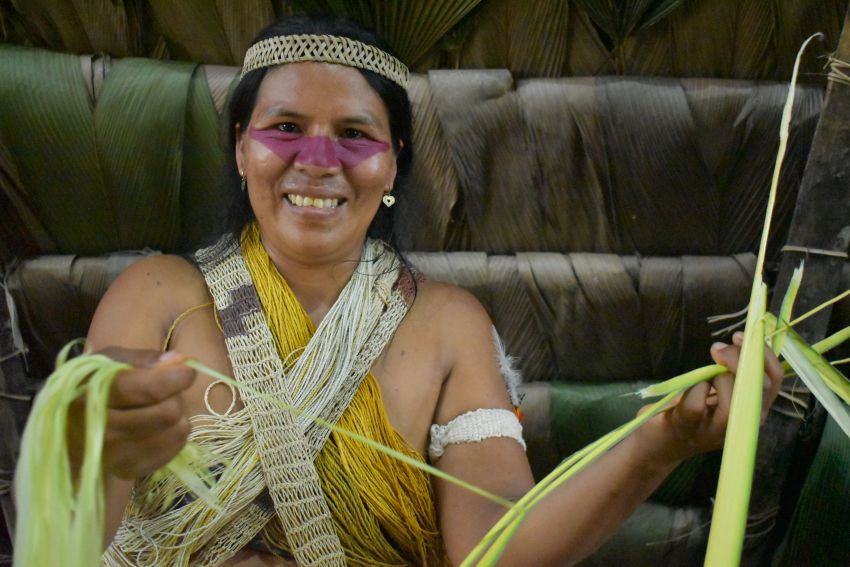
Would you like to design and implement actions that equitably and actively involve participation of women, Indigenous Peoples, local communities and youth?
Have you ever been unclear about gender and social inclusion terminologies and concepts? Do you have questions about how to analyse an intervention with a social inclusion and gender lens or monitor gender and social inclusion aspects in your project?
If these questions resonate, you are not alone. Many REDD+ practitioners are navigating complex and challenging concepts while striving to design and implement fair, inclusive and equitable REDD+ actions as well as measure their impacts effectively.
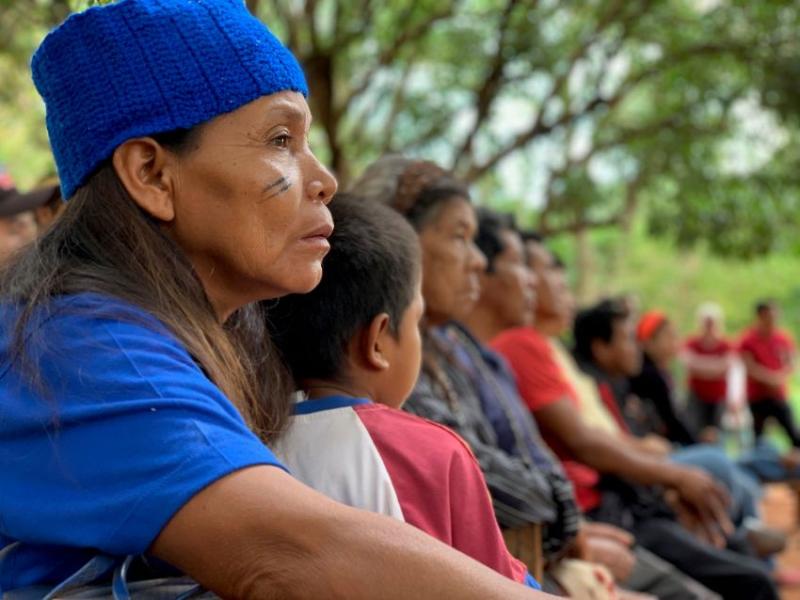
At the heart of these challenges is a simple truth: Forests are protected not only by policies and finance, but by people. Across the world, Indigenous Peoples, local communities, women, and youth, amongst others, are on the frontlines of forest conservation—safeguarding ecosystems, sustaining livelihoods, and passing on knowledge that has protected forests for generations.
Recognizing and strengthening their role is essential for the success of REDD+ action. To support this vision, the UN-REDD Programme has launched a new REDD+ Learning Journal on Social Inclusion and Gender.
Adopting a socially inclusive and gender-responsive approach in REDD+ is a foundational condition for delivering REDD+ outcomes that are legitimate, durable, and consistent with human rights commitments. Deep-rooted social and gender inequalities shape who controls land and forest resources, who participates in decision-making, and who ultimately bears the costs or receives the benefits of REDD+ action. When these realities are overlooked, REDD+ risks reinforcing existing power imbalances, increasing tenure insecurity, and generating conflict—weakening both its credibility and its long-term impact.
The UN-REDD Programme takes these risks seriously. It works to ensure that the invaluable contributions of Indigenous Peoples, local communities, women and other underrepresented groups are fully recognized as rights holders, and that REDD+ decisions, actions, and benefits meaningfully and equitably involve them, amplifying their voices rather than sidelining them.
This new Learning Journal responds directly to these challenges. It supports efforts to promote socially inclusive and gender-responsive REDD+ outcomes and to address the structural inequalities that continue to influence access to land, forests, livelihoods, decision-making, and benefits. In many local, sub-national, and national contexts, these intersecting forms of exclusion remain a major barrier to effective and sustainable REDD+ action.
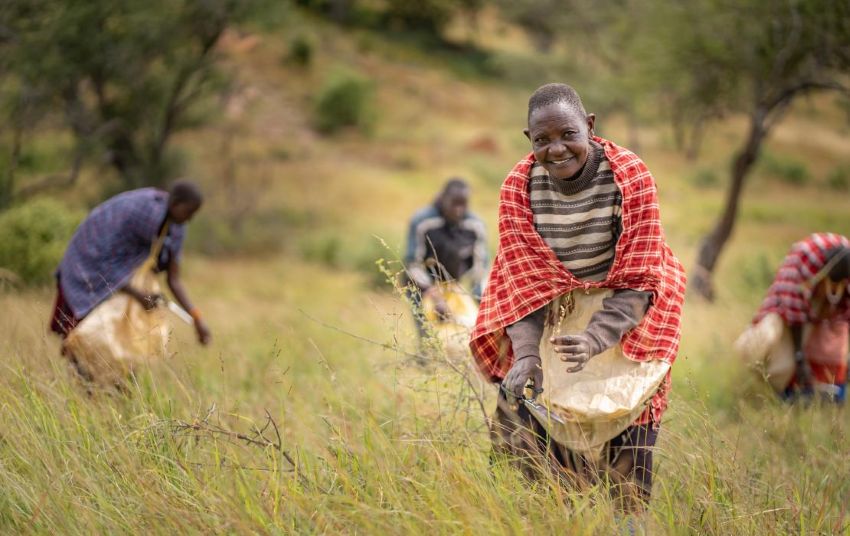
At the same time, experience from UN-REDD-supported countries shows what is possible. Even in unequal contexts, women, Indigenous Peoples, local communities, and other underrepresented groups consistently emerge as powerful agents of change in forest protection. Their equitable and meaningful participation, both as partners in REDD+ action and finance, is not only fair, but vital to achieving lasting results.
Building on these experiences, this new REDD+ Learning Journal brings together practical tools, guidance, and real-world examples to help integrate social inclusion and gender considerations into every stage of REDD+ design, implementation, monitoring and reporting.
Its goal is to support collaboration across government sectors, civil society, development practitioners, the private sector, and forest-dependent communities—bringing diverse actors together to develop, implement, and monitor forest solutions that are effective, equitable and just.
Featuring good practices from around the world, the Learning Journal shows how socially inclusive and gender-responsive approaches strengthen REDD+ outcomes. By accounting for the distinct knowledge, perspectives, needs, and contributions of all stakeholders, across genders, identities, and social groups, REDD+ processes become more accurate, efficient and resilient.
Placing social inclusion and gender equality at the center of REDD+ helps ensure that forest-based climate action delivers more than emission reductions. It strengthens rights, expands agency, builds local ownership, and reinforces the integrity and permanence of REDD+ results. In the fight against forest loss, protecting rights and valuing the knowledge and leadership of those closest to forests helps create a healthier, more resilient future for everyone.
Click here to access the full Learning Journal and explore its microlearning tools on the UN-REDD Academy Platform