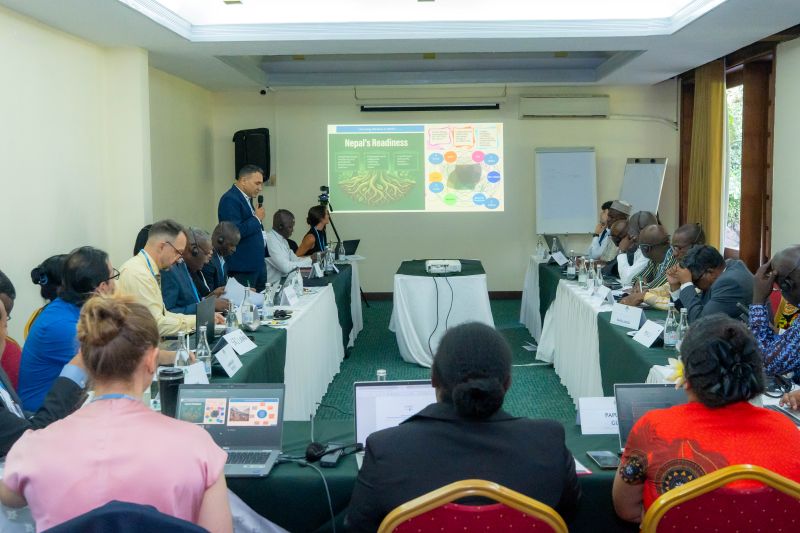
The United Nations Framework Convention on Climate Change (UNFCCC) brought together forest countries, donors, and multilateral partners in Nairobi, from 19-21 May 2026, to take stock of REDD+ achievements and remaining gaps and to chart the path toward 2030.
The REDD+ Summit, attended by 59 countries and partner organisations, provided a key opportunity to reflect on progress and identify actions needed to accelerate implementation before 2030.
The UN-REDD Programme facilitated three breakout sessions titled “Navigating complexity: country perspectives on multiple REDD+ finance and integrity requirements.” Across all sessions, participants shared practical implementation experience, identified structural barriers, and explored how countries, donors, and multilateral programmes can work more effectively together.
A track record worth recognising
Progress under REDD+ is significant. Twenty-one countries have reported verified REDD+ results through the UNFCCC Lima REDD+ Information Hub. The Forest Carbon Partnership Facility (FCPF) has supported 47 countries in establishing national frameworks, with 15 Emission Reduction Payment Agreements signed, representing a total value of USD 721 million — of which over USD 234 million has already been disbursed in results-based payments. Seven countries have exceeded their contracted emission reduction volumes.
The Architecture for REDD+ Transactions (ART) has channelled over USD 353 million to participating countries, while the LEAF Coalition has mobilised USD 1 billion for jurisdictional REDD+. Norway noted that 25 countries have now achieved verified results, with some entering second or third rounds of verification.
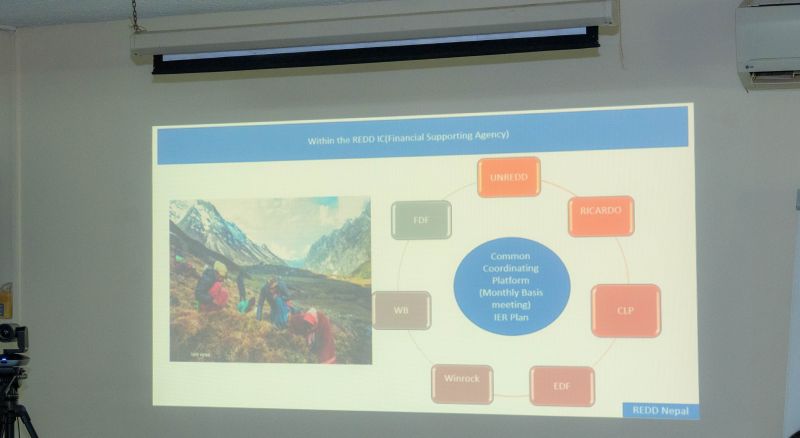
Country experiences illustrated what sustained implementation looks like in practice. Nepal has built a decentralised governance system with embedded safeguards, benefit-sharing mechanisms, and strong community engagement, becoming the first Asian country to sign a LEAF Coalition agreement. Ghana has navigated multiple financing windows simultaneously, developing harmonised MRV systems and inclusive benefit-sharing plans. Brazil is revising its National REDD+ Strategy to align with emerging carbon market rules and jurisdictional approaches, supported by structured technical coordination mechanisms.
Challenges that need to be addressed
Progress has taken place against a backdrop of growing complexity. Countries must now navigate multiple REDD+ finance windows, including FCPF Carbon Fund ERPAs, GCF results-based payments, LEAF, bilateral programmes, Article 6 arrangements, and CORSIA — each with its own eligibility criteria, reference periods, MRV methodologies, and safeguard requirements.
For smaller countries with limited institutional capacity, these parallel requirements create significant strain, as they face the same compliance burden as larger countries but with fewer technical and human resources.
Participants highlighted shared concerns: high certification costs that can outweigh returns, rapidly evolving methodologies that outpace national systems, and loss of institutional knowledge when projects end and technical staff move on. Misalignment between forest policy and national budget allocations also continues to limit the ability to reduce dependence on donor funding.
Germany, speaking as both a major donor and a long-standing partner in forest finance, noted that funding flows differ in timing, scale, and standards. Strengthening institutional resilience across political transitions, economic shifts, and staff turnover is essential. Donors also have a responsibility to reduce fragmentation and better align their requirements. It was also noted that countries should carefully assess opportunity costs, as managing multiple standards can create significant administrative burden — in some cases, doing less may be more effective
What participants recommended
Across all sessions, a consistent set of recommendations emerged. Countries called for a more unified REDD+ integrity framework to align standards and reduce duplication in reporting and verification. They also emphasised the need to expand the pool of accredited Validation and Verification Bodies, given current capacity constraints.
Participants further highlighted the importance of early investment in legal clarification, nesting arrangements, and safeguards — not as end-stage requirements, but as foundational elements of effective implementation.
Donors acknowledged the need for stronger coordination, including joint planning processes that enable countries and partners to design long-term financing strategies together rather than in parallel.
Norway noted that demand for high-integrity jurisdictional REDD+ credits now exceeds supply across both voluntary and compliance markets. The constraint, it was emphasised, is not ambition but the administrative and technical overhead created by fragmented systems.
Looking ahead
The conditions to scale REDD+ are already in place. Demand for high-integrity jurisdictional credits is growing, political momentum has been reinforced through COP processes and updated NDC cycles, and countries have built the institutions, MRV systems, safeguards frameworks, and verified results needed to deliver at scale.
What is now required is clearer recognition of what has been achieved, stronger communication of results, and greater coordination across systems. Countries are not starting from scratch — they are now positioned to move faster, together.