Thirty years ago, Nepal began transferring forest management to local communities. Few imagined that this shift would eventually support a national carbon economy. But in January 2026, that long arc became visible when Nepal signed a landmark agreement to sell millions of tonnes of emission reductions—marking the moment when community forestry moved from conservation achievement to climate-finance engine.
On 23 January, the Government of Nepal concluded an Emission Reductions Purchase Agreement (ERPA) with the LEAF Coalition for up to four million tonnes of verified emission reductions from its jurisdictional REDD+ programme in Gandaki, Bagmati, and Lumbini provinces. Valued at up to US$55 million, the deal makes Nepal the first forest country in Asia to secure a LEAF purchase agreement, and the first globally to offer correspondingly adjusted credits to private-sector buyers—allowing potential use under compliance mechanisms such as Singapore’s carbon tax and CORSIA.
For Nepal, this is not simply a carbon transaction. It is the culmination of three decades of institutional experimentation in community-based forest governance.
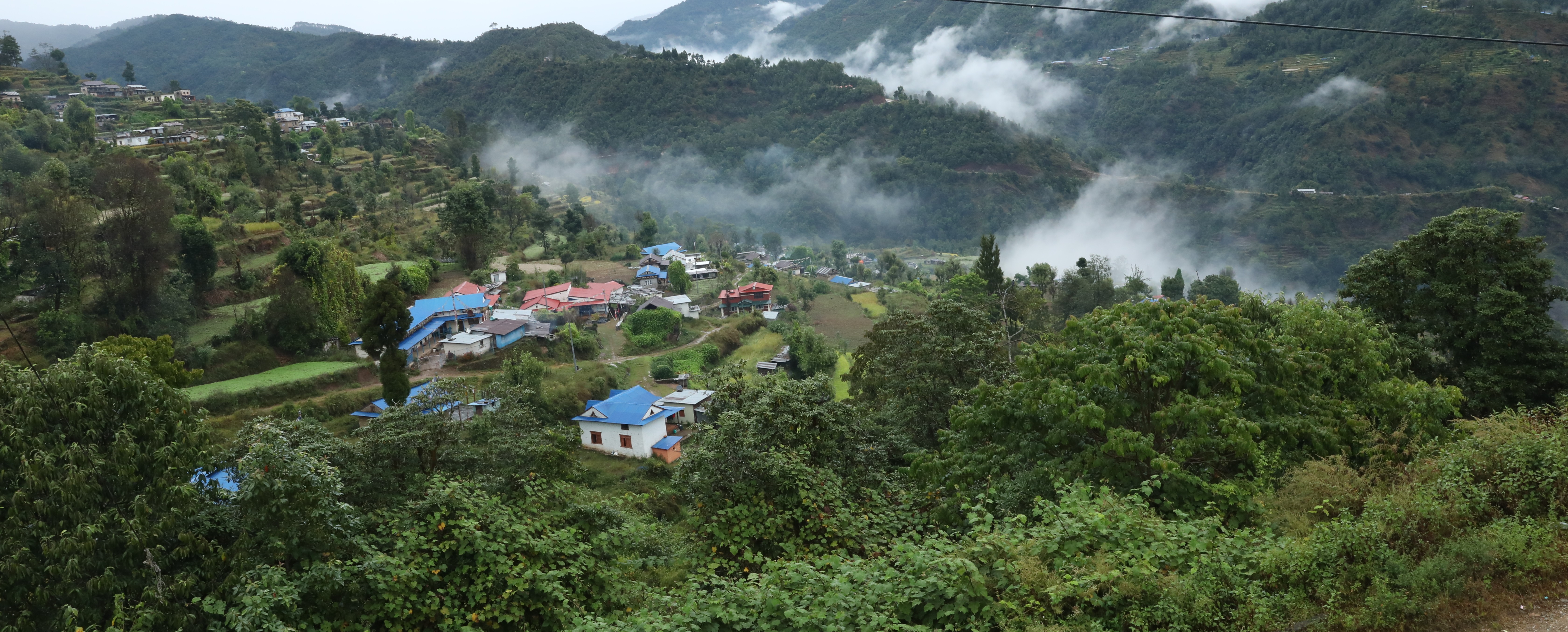
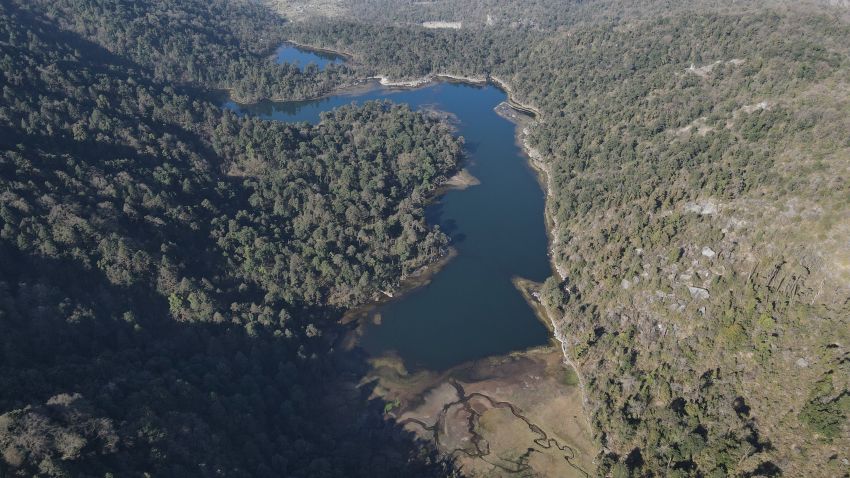
In the early 1990s, facing rapid deforestation and weak state capacity, Nepal adopted a bold policy shift: forests would be managed by local communities rather than exclusively by the state. Over time, this approach scaled nationally. Today, forest cover has increased from roughly 29 percent of the country’s land area to around 46 percent. More than 22,000 community forest user groups—over 30,000 community-based forest management groups in total—now manage forests and other natural resources.
The most important outcome has been social, not technical. Community forestry created dense networks of local institutions capable of collective decision-making. Leadership opportunities expanded, particularly for women, Indigenous peoples, Dalits, Madhesi, and other historically marginalized groups. Around 73,000 women now hold leadership positions within community forestry structures.
These institutions did more than protect trees. They learned to manage forests as productive assets under sustainable use principles. Revenues from timber, non-timber forest products, and forest-based enterprises finance schools, health posts, drinking water systems, and rural roads. Community forestry, in effect, became a parallel system of local development governance.
This social and institutional foundation is what makes Nepal’s entry into carbon markets different from many project-based experiments elsewhere.
Over the past decade, Nepal has invested heavily in the technical and regulatory architecture for jurisdictional REDD+ (Reducing Emissions from Deforestation and Forest Degradation). Under the World Bank’s Forest Carbon Partnership Facility, Nepal has completed its first Monitoring, Reporting, and Verification cycle. Of 2.3 million tonnes of reported emission reductions, 1.88 million tonnes have been independently verified, unlocking approximately US$9.4 million in results-based payments.
The LEAF Coalition ERPA builds on this foundation. The government has also decided to expand jurisdictional REDD+ nationwide. From this fiscal year, Koshi, Madhes, Karnali, and Sudurpashchim provinces will join existing jurisdictions, pushing near-term carbon finance potential toward US$100 million.
Crucially, REDD+ is no longer treated as a donor-driven project. Nepal’s REDD Implementation Center and Forest Research and Training Center now run MRV and reporting largely in-house. A Carbon Management Center is being established to anchor future carbon market operations.
Benefit-sharing is central to political legitimacy. Nepal’s policy framework allocates 80 percent of carbon revenues to implementing entities and communities, and 20 percent to the national treasury. Revenues will be channeled through the Forest Development Fund, with community and Indigenous representation in oversight bodies. Free, Prior, and Informed Consent is mandatory for carbon activities under forest regulations.
Nepal is also finalizing a Carbon Trading Regulation aligned with Article 6 of the Paris Agreement and developing a national carbon registry. International framework agreements with Sweden and the Republic of Korea are already in place.
Challenges remain. Local capacity is uneven. Forest fires and climate stress are increasing. Coordination across agencies and rights-based organizations requires constant attention. Benefit-sharing must work in practice, not only on paper.
But Nepal’s experience already offers a clear lesson for global climate policy: large-scale carbon finance does not start with markets. It starts with institutions, trust, and community ownership.
Three decades ago, Nepal chose to give forests back to communities. Today, those same communities are becoming actors in global carbon markets. The road has been long. But it is beginning to pay off.