As the world moves closer to the 2030 forest and climate targets, REDD+ countries are no longer at the beginning of their learning journey.
Over more than a decade, they have built institutions, strengthened forest monitoring systems, developed national policies, and tested a wide range of implementation approaches.
The question now, as repeatedly echoed during the UN-REDD Kenya reception held on the margins of the Global REDD+ Summit in Nairobi, is how this accumulated experience can be systematically translated into impact at scale.
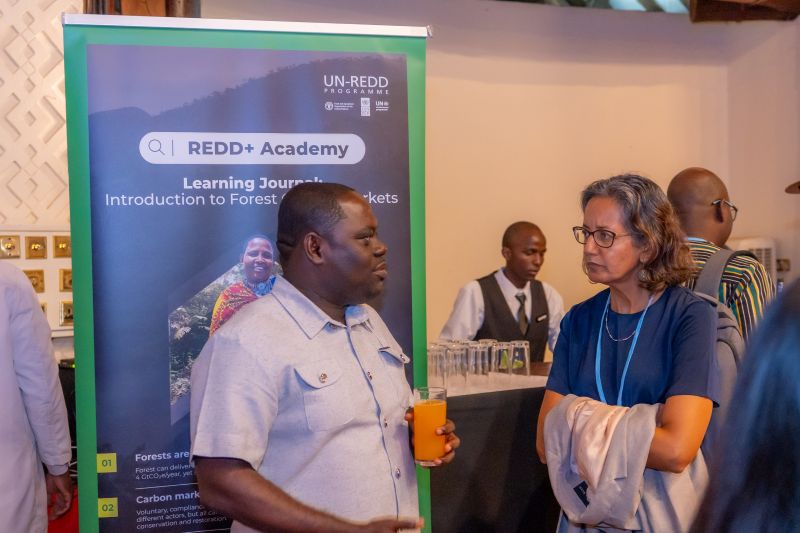
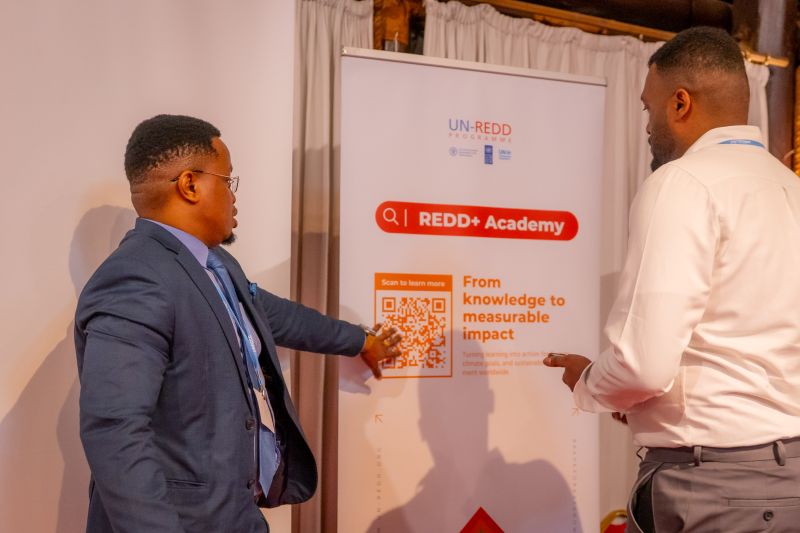
The reception, held on 19 May 2026, brought together 59 country representatives alongside development partners and technical experts. It served as a complementary and deliberately informal space to showcase this evolving learning agenda. Unlike the technical sessions of the Summit itself, the evening created room for dialogue, storytelling, and reflection, highlighting not only what countries have achieved, but also how those experiences can be better connected, shared, and scaled.
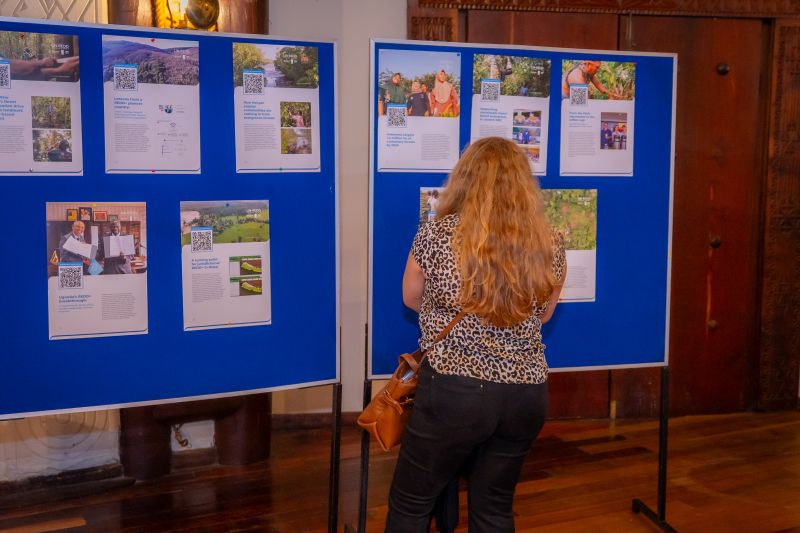
On 19 May, the UN-REDD Programme, together with the Government of Kenya, delivered a reception in the margins of the Global REDD+ Summit. The event gathered 59 countries, donors, and partner organisations working on REDD+. It served as a complementary and deliberately informal space to showcase the REDD+ Academy and impact stories from forest countries supported by the UN-REDD Programme. The evening created room for dialogue, storytelling, and reflection, highlighting not only what countries have achieved, but also how those experiences can be better connected, shared, and scaled.
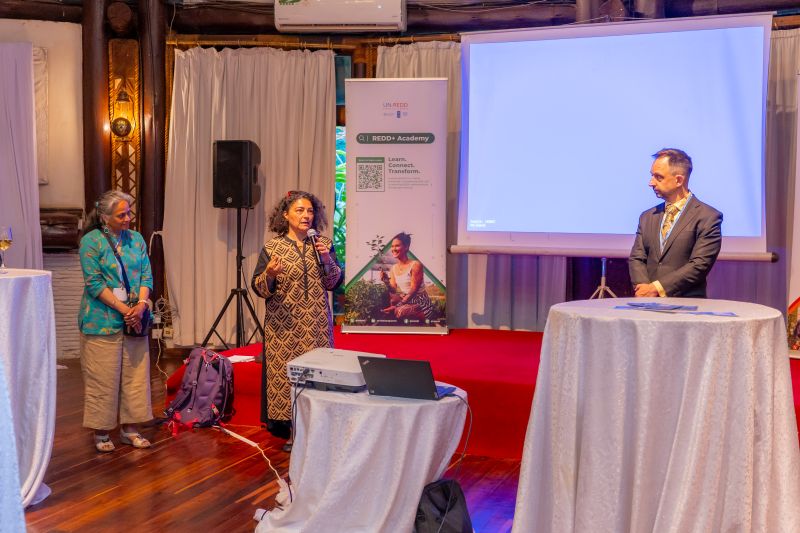
In her opening remarks, Mirey Atallah, Head of the Adaptation and Resilience Branch at UNEP, highlighted the importance of systematic knowledge management and capacity building in forest and climate action, particularly in strengthening institutional capacity and addressing staff turnover in government institutions.
She emphasized that while countries have made important progress in REDD+ implementation, the next frontier is not the production of more reports or data, but the transformation of existing knowledge into sustained impact.
She further highlighted that the REDD+ Academy is not only a training space, but a living ecosystem of exchange where countries can learn from one another’s successes and challenges in real time.
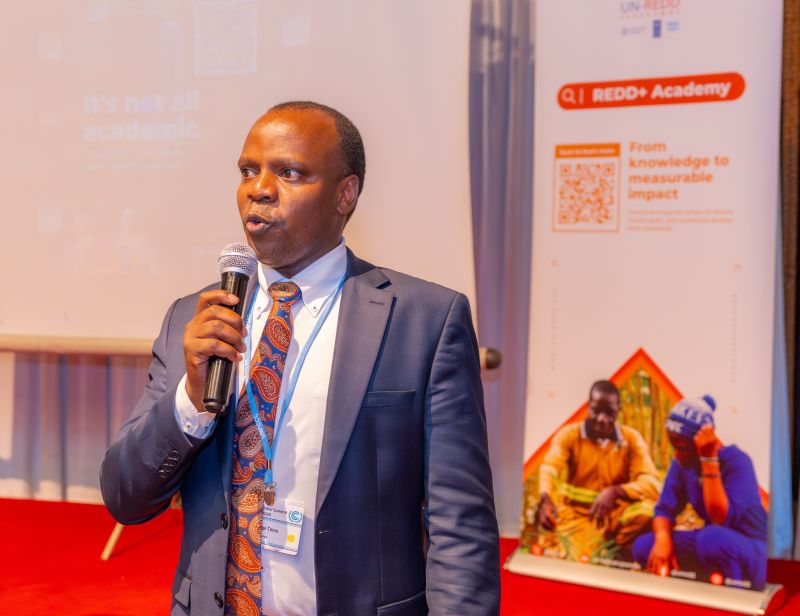
Echoing this message, the Forest Development Secretary at the Ministry of Environment, Climate Change and Forestry of Kenya, George Tarus, noted that knowledge exchange plays a key role in accelerating impact. He added that Kenya was pleased to host participating countries and would continue to play a major role in global forest conservation and sustainable forest management efforts.
Throughout the evening, participants reinforced these perspectives through shared experiences. Nepal’s representative described how lessons from another country’s jurisdictional REDD+ approach directly influenced improvements in subnational planning. Ghana’s representative highlighted how documenting field experiences had significantly improved community engagement strategies in remote forest landscapes.
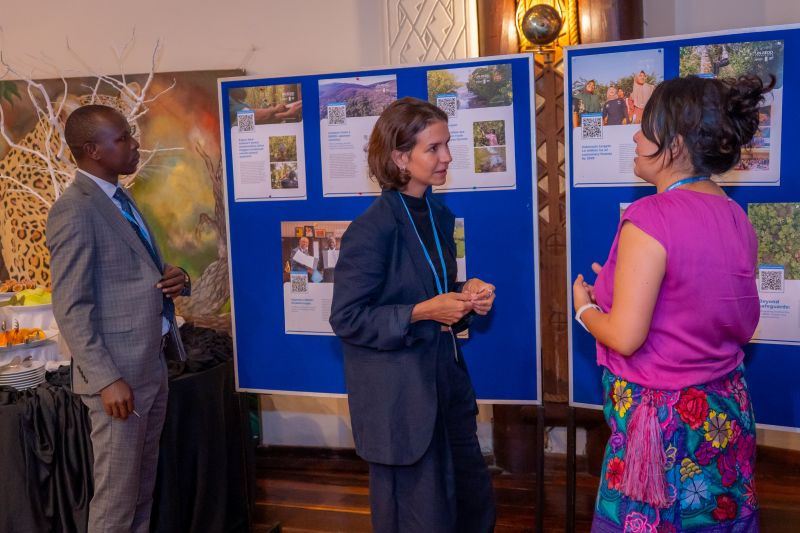
The evening ended on a shared understanding among participants: as REDD+ countries approach 2030, the defining factor of success will not only be financial resources or technical tools but also the ability to systematically learn from experience, retain institutional memory, and convert knowledge into scalable, on-the-ground action.
The REDD+ Academy is the UN-REDD flagship learning platform, supported by the Korea Forest Service. Designed as an open-access, peer-oriented system, the Academy provides modular, country-validated resources that support the core pillars of REDD+ implementation.
Through its Learning Journals, Learning Labs, and Communities of Practice, it enables countries to exchange experiences, refine approaches, and translate technical knowledge into practical action.