Photo credit: PROAmazonía
As the world faces unprecedented planetary and social crises caused by nature loss and climate change, REDD+ can catalyse social and environmental transformations, including greater gender equality. In the lead up to the 30th Conference of Parties to the United Nations Framework Convention on Climate Change in Belém, this is the key message of a new case study report developed by the UN-REDD Programme.
Titled “The Power of Gender: New Generation of REDD+ Action in the LAC Region”, this publication spotlights the good practices from innovative REDD+ actions in the Latin American and Caribbean (LAC) region that have successfully placed gender equality and women’s empowerment at the heart of the design and implementation of their REDD+ action. With this publication, the UN-REDD Programme is helping to address the global continued need to support efforts to design and implement high impact REDD+ actions that jointly deliver for forests and gender equality. The report includes in-depth case studies from Green Climate Fund (GCF)-financed REDD+ results-based payments (RBP) projects within five Latin American countries – Brazil, Chile, Costa Rica, Ecuador and Paraguay.
The case studies provide new evidence that highlights that gender-responsive REDD+ action not only improves climate and environmental outcomes but also effects positive change in women and children’s lives. The experiences from the countries also showcase the value of women’s environmental stewardship and the multiplier effect of their contributions to forest conservation and sustainable management. Furthermore, they present additional evidence on how women’s and men’s differentiated roles and their use and knowledge of forests are critical elements that shape their unique contributions to forest conservation and sustainable use, which in turn then shape the long-term success of climate action on the ground, including REDD+.
As a snapshot, here are a few key good practices and results illustrating how these five countries are charting a new path forward through transformative REDD+ initiatives that promote gender-responsive approaches to project design, implementation and decision-making processes and tackle larger systematic gender inequalities within complex sectors. These examples clearly demonstrate that promoting gender equality is no longer only a requirement but has become a central contribution to the success of REDD+ projects, with greater impacts and results.
Brazil
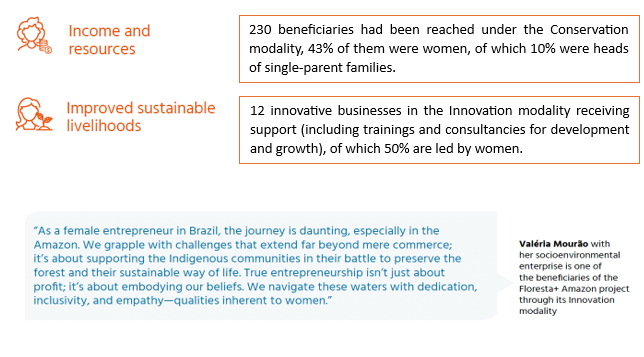
Through the use of gender targets, criteria and requirements, the GCF-financed “REDD+ results-based payments for results achieved by Brazil in the Amazon biome in 2014 and 2015” project has successfully been able to improve women’s equitable access to and control of benefits associated with the project. As of the end of 2023:
Chile
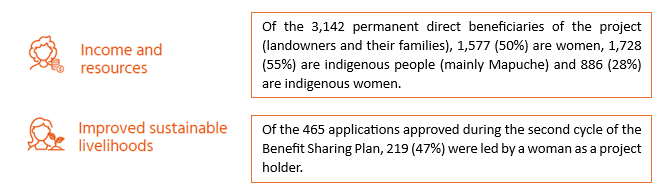
Through its use of gender prioritization criteria and requirements, the GCF-financed “REDD+ RBP for the 2014, 2015 and 2016” project has had a direct impact in that it has increased women’s access to REDD+ benefits around land, natural resource management and employment opportunities. As of the end of 2024, key achievements in this regard include the following:
Costa Rica
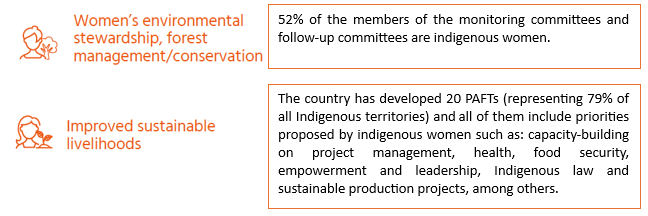
Through the development of gender-responsive Environmental, Forest and Territorial Plans (PAFTs), the “GCF-financed REDD+ Results Based Payments for 2014 and 2015” project successfully involved indigenous women in decision-making processes regarding their forests and territories and ensured that their priorities were included among the activities that could access payments for environmental services (known as CREFs in Costa Rica). As of 2024:
Ecuador
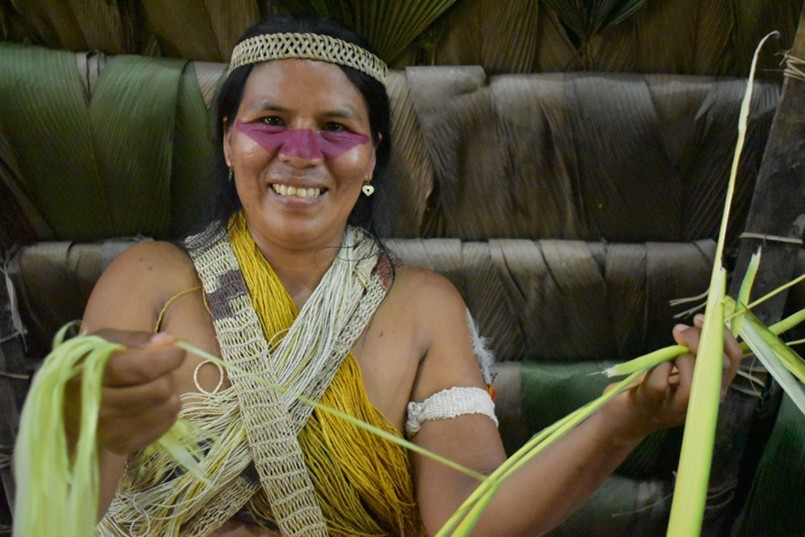
Through improving women’s access to finance for incentivizing sustainable and deforestation-free production, women’s financial and economic empowerment within the project area of the GCF-financed “PROAmazonía” and “REDD+ RBP for results period 2014” projects have been improved, creating positive change in the protection of natural resources and in their livelihoods and well-being. Some illustrative results and impacts of these activities are noted below.
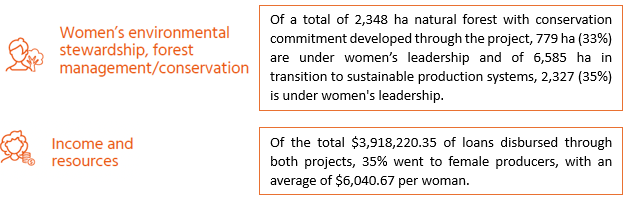
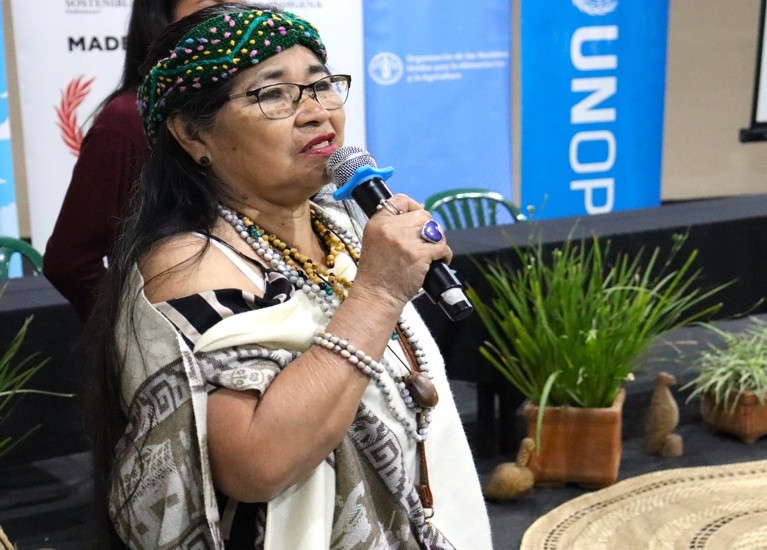
Photo credit: Paraguay’s REDD+ Results-Based payment Project - Paraguay + Verde
Paraguay
By including indigenous women equitably and actively in decision-making processes regarding their forests and territories, the “GCF-financed REDD+ RBP, Paraguay + Verde” project is helping to ensure their priorities are included in financial incentives associated with the country’s Environmental Services Regime. As of the end of 2024, key achievements in this regard include the following:
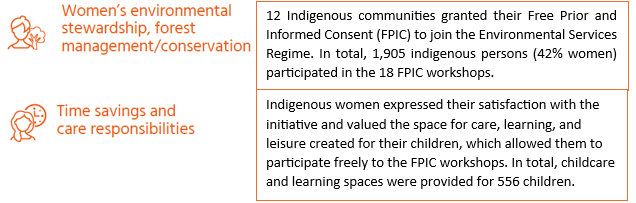
As illustrated above, these countries have integrated innovative gender actions into REDD+ initiatives and demonstrated how implementing these gender-responsive actions has led to greater social and environmental impacts as well as positive climate outcomes. The case studies in the publication aim to inspire and inform this next generation of climate and biodiversity action and encourage future REDD+ initiatives to include a new generation of innovative gender-responsive actions that go beyond data collection and participation to:
- Address ongoing, deep-rooted gender barriers and inequalities,
- Equitably increase women’s and men’s access to resources and power of decisions regarding them,
- Recognize and engage relevant actors fully and equitably across all genders in all actions,
- Value the unique and complementary knowledge and skills of women and men,
- Improve women’s livelihoods and economic empowerment, and
- Generate new sustainable livelihood, productive and economic opportunities for women in the forestry, agriculture and land-use sectors.
With this publication, the UN-REDD programme is looking to scale up and encourage further gender action across the regions by demonstrating the power of integrating a gender approach and its essential role in achieving an equitable, just, low-carbon, sustainable future for everyone, across all genders and in all their diversity.
The report has been released in English, with Spanish and Portuguese to follow shortly.