A forest and climate initiative in Paraguay is demonstrating what inclusive and transformative environmental governance can look like. The “Paraguay + Verde” project is not only addressing deforestation and biodiversity loss—it is reshaping how climate action is planned and led, by placing Indigenous Peoples, youth, and women at the heart of its governance.
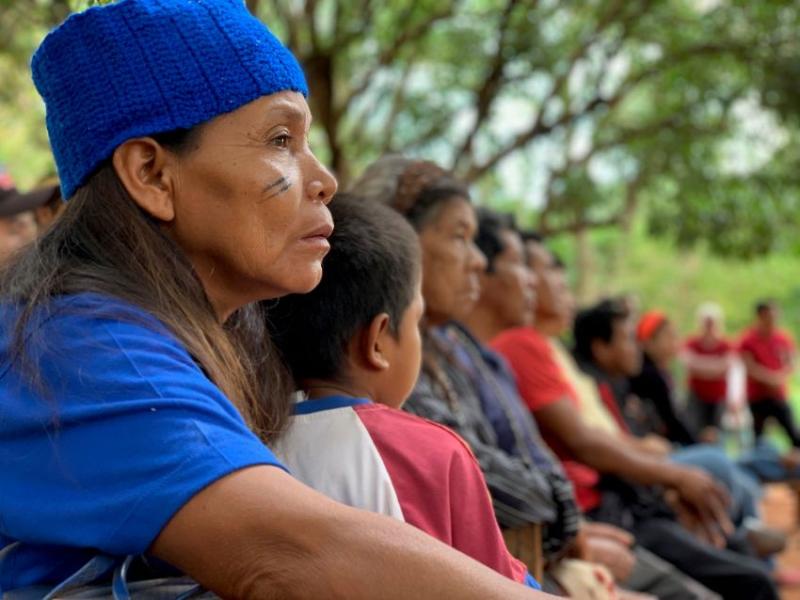
Ana Romero, a Guaraní leader and long-time advocate for indigenous rights, is one of the voices shaping this vision. As a youth representative in the Indigenous Council of the Chaco and alternate member of the Paraguay + Verde Board, her role exemplifies how the project bridges decision-making with the lived realities of communities most affected by climate change.
"This is already my third term with the project," Romero said. “I participate both as a woman and as a young person, bringing visibility to indigenous perspectives on how the climate crisis is affecting our communities—politically and socially.”
From consultation to co-leadership
What sets Paraguay + Verde apart from many conventional forest and climate initiatives is its approach to governance. Indigenous Peoples are not seen as passive recipients of support but recognized as rights-holders, leaders, and knowledge keepers with the authority to shape the agenda. From the outset, they have had both a voice and vote on the project board—co-defining priorities, guiding actions, and influencing territorial strategies.
Romero describes this as a shift from consultation to co-construction: “Before, our role was more about contributing ideas. Now we are part of the actual decision-making. We’re helping build the project together—with equal weight, institutionally and from within the communities.”
This model challenges traditional hierarchies in environmental governance, ensuring that the voices of those on the frontlines of climate change are not only heard but also integrated into operational planning, budgeting and monitoring.
Capacity building that stays in the community
In parallel with its institutional mechanisms, Paraguay + Verde invests in the long-term capacities of indigenous youth, women, and local leaders. One recent example is the “On the road to COP30” workshop - a series of trainings designed to prepare indigenous participants for international climate negotiations.
For Romero, these experiences go far beyond the formal content. “These trainings are crucial, because we bring new concepts—like climate crisis—into dialogue with our own ancestral knowledge,” she said. “It’s not just about learning from others, but about building together. We translate this learning into our own languages, and we share it within our communities,” Romero added.
Importantly, the impact of these trainings extends beyond the scope of the project itself. Participants become community educators, trainers and advocates, ensuring that the knowledge multiplies and adapts locally.

Grounding global agendas in local realities
Paraguay + Verde also connects national and global agendas with community-based knowledge. By including indigenous leaders in official delegations and negotiations, the project is ensuring that Paraguayan climate diplomacy is representative and just.
During the workshop, Romero shared how indigenous definitions of climate impact differ from Western scientific frameworks. “We talked about how we define ‘climate crisis’ from our perspective. For us, it’s about changes in how we live and what we see in our territories. It’s not abstract—it’s visible, and it’s urgent,” she said.
This grounding in lived experience allows Paraguay + Verde to bring substance and credibility to global discussions.
Innovation rooted in culture and ecology
The project’s inclusive governance also supports culturally appropriate climate solutions. Romero cited traditional practices such as sustainable, small-scale cattle rearing using native tree fodder—like the algarrobo tree—as examples of regenerative land management already in place.
“We’re not against development,” she said. “We just question models that destroy ecosystems without giving anything back. We want to develop in ways that regenerate, that include us, and that protect future generations.”
This approach reflects a deep interconnection between nature and culture—a principle that lies at the heart of many indigenous cosmovisions and is essential to long-term sustainability.

A model for others to follow
Paraguay + Verde is not only a national success—it is emerging as a model for participatory environmental governance across the region. It demonstrates how inclusive structures, when backed by meaningful capacity-building and respect for indigenous knowledge, can lead to stronger, more just climate action.
As Romero reflects: “Nothing is static—life changes, time changes. We, as youth, are part of a generational handover. Our challenge is to carry forward the knowledge of our elders, while also creating space for innovation. It’s not easy but it’s necessary.”