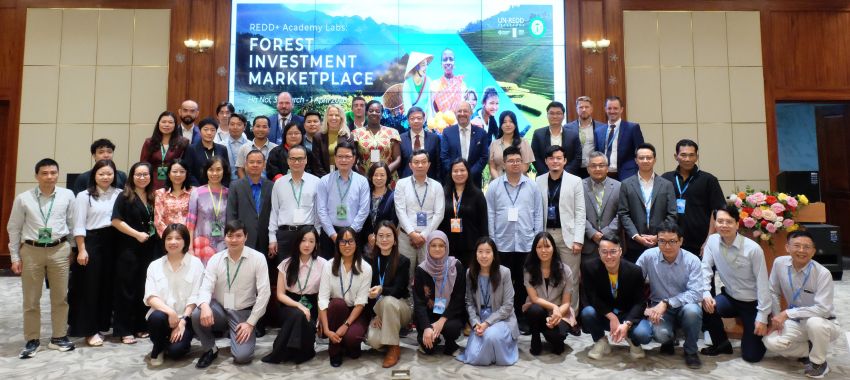
Between March 31 and April 1, UN-REDD convened more than 60 participants, government officials, practitioners, SMEs, investors, and facilitators, from Asia, Africa, and elsewhere in Hanoi, Vietnam to examine a question increasingly central to climate and development policy: how to finance forests not merely as protected spaces, but as economic systems with viable market demand.
The discussion went beyond mobilizing more capital. It focused on how mechanisms such as jurisdictional REDD+ and forest carbon finance can help create a virtuous cycle—where carbon finance lowers risk, market-linked enterprises generate revenue, and those revenues reinforce both forest outcomes and future investment.
In its most optimistic version, jurisdictional REDD+ provides the enabling conditions: governance frameworks, safeguards, monitoring systems, benefit-sharing, and verified emissions reductions. These can generate carbon revenue and reduce risk. In theory, that should help unlock wider investment into forest-based economies supporting enterprises, expanding sustainable value chains, and making standing forests economically more valuable than cleared ones. Over time, the cycle should become self-sustaining and reinforcing.
Yet this cycle remains structurally incomplete.
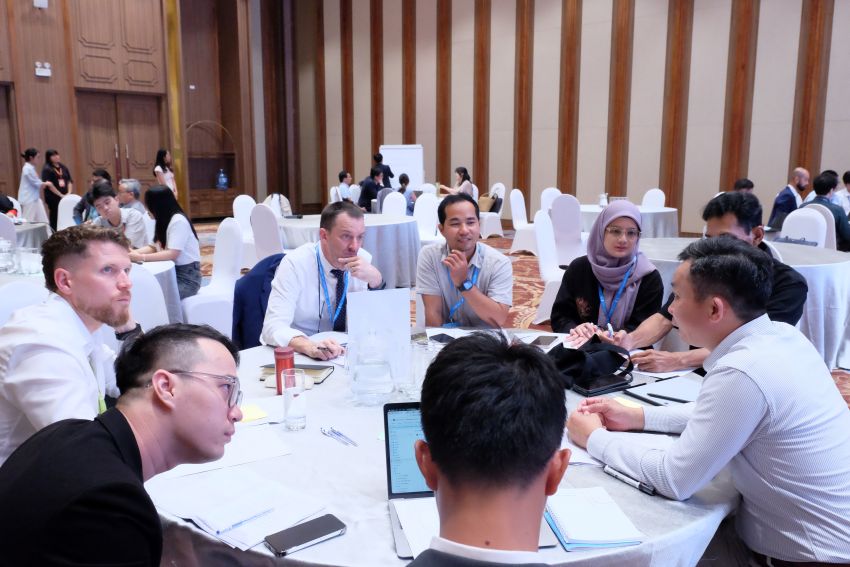
One investor, Son Nguyen, Vice President of IIX, had a sharp observation: the capital is there, available and interested, but there is no reliable market demand. That remark captured the central paradox. The problem is no longer simply how to mobilize finance. It is how to connect finance to viable, investable opportunities with real market demand.
The architecture exists
The foundations of forest carbon finance are no longer purely conceptual. Over the past decade, countries have invested heavily in readiness: forest monitoring systems, safeguards, benefit-sharing arrangements, and results-based payment frameworks. In several contexts, those systems are beginning to deliver.
Still, readiness is not the same as deployment and does little to solve the cost and time required to make enterprises investment ready.
If carbon finance remains largely at the jurisdictional or institutional level, it may generate revenue, but it will not by itself create the broader cycle of sustainable investment that many now expect from it.
If jurisdictional REDD+ and forest carbon finance are meant to seed sustainable forest economies, then forest-based SMEs are the actors most likely to translate that promise into actual economic activity. They sit at the interface between forests and markets: processing products, organizing supply chains, generating income, and linking communities to broader commercial networks.
Yet this central role is not matched by integration.
In practice, SMEs remain weakly embedded in both system design and investment pipelines. Many REDD+ and results-based finance frameworks are still built primarily around government systems and high-level readiness structures.
Panha Suon of Impact Hub Cambodia framed the issue in practical terms. From his perspective, enterprises face two linked tests. First, they have to demonstrate that they are genuinely creating impact in forest landscapes. Second, they have to show that their businesses have growth potential.
That investor logic is understandable. But from the perspective of many SMEs, the hurdle begins much earlier.
Ugyen Tshering of Pure Bhutan described a reality that is likely familiar to many forest enterprises: “Mainly we do not have the necessary paperwork in place. We also do not have compliance or the standard and certification in place for us to be able to be assessed on the impact that we’re creating as the outcome of the project. So that seemed to be the main hurdle for us to access this type of funds.”
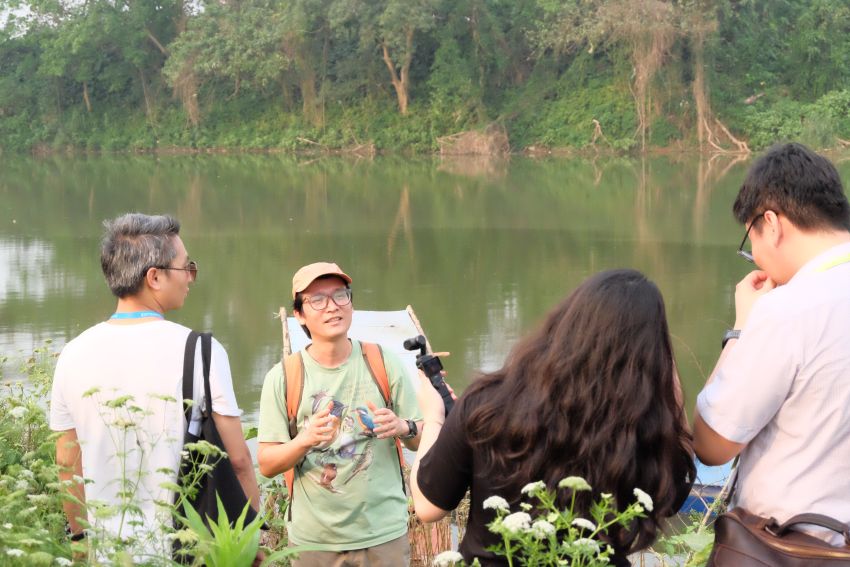
There is an expectation for SMEs to present themselves in investor-ready forms, but there is very limited support to absorb the cost, time, and capability required to get there.
Experiences from countries such as Ghana illustrate emerging efforts to bridge this gap through government programs that support compliance, certification, and sustainable production, while strengthening linkages between producers, enterprises, and markets.
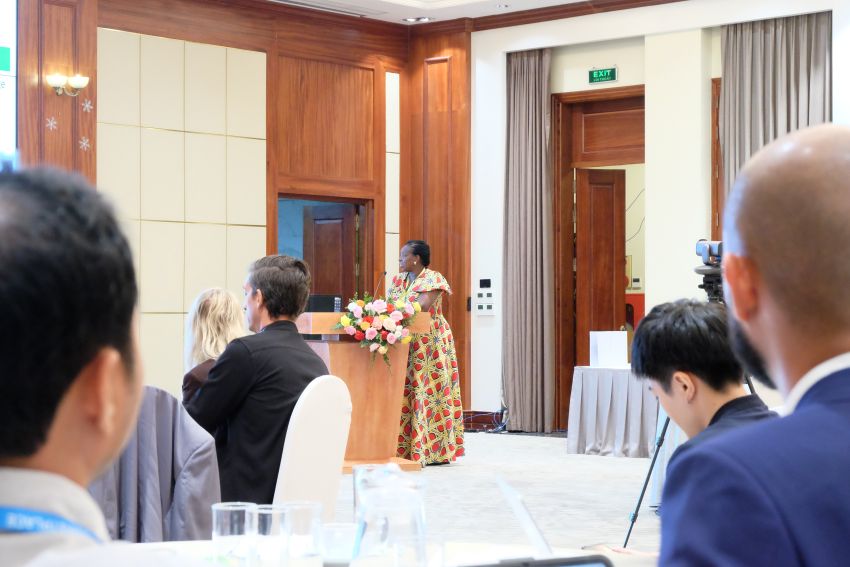
Valerie Lomokuor Fumey Nassah of Forestry Commission of Ghana, underscores the need for stronger enabling architectures that improve transparency, enhance enterprise viability, and progressively ease structural barriers to finance.
The bottleneck is no longer just finance, it is market formation
Interest in nature-based solutions is growing. Public and private financiers are exploring instruments ranging from blended finance to guarantees and concessional windows. What remains weak is the market structure needed to absorb that capital and translate it into investable opportunities.
Kinley Dem from Bhutan argues that the central challenge is not that we fail to understand the value of forests, but that forest value is still not sufficiently visible or de-risked within economic systems. This helps explain why so many promising conversations stall at the point of investment. Forests generate climate, biodiversity, and livelihood benefits, but those benefits are not yet consistently translated into pricing, revenue models, or bankable demand.
From this perspective, the question shifts. How can forest-based SMEs and other actors actually benefit from REDD+ systems in practice?
Building on this, Tom Cadogan from Farm Africa emphasized that unlocking this potential requires moving beyond project-level interventions toward integrated models that connect SMEs directly to jurisdictional REDD+ frameworks. This entails strengthening MRV systems while creating clear pathways for SMEs to participate in emissions-linked and forest-positive value chains. Without such integration, SMEs remain peripheral—constraining both their access to finance and REDD+’s ability to deliver scalable, on-the-ground impact.
Part of the answer lies in whether those frameworks can offer more than carbon accounting—whether they can provide benefit-sharing arrangements, safeguards, and a policy landscape that reduces risk and makes participation meaningful for enterprises, not just governments. This also suggests that JREDD+ should not be treated only as a platform for reductions of emissions, but as part of the enabling environment that enables sustainable investment.
Convening stakeholders is valuable, but alignment is still missing
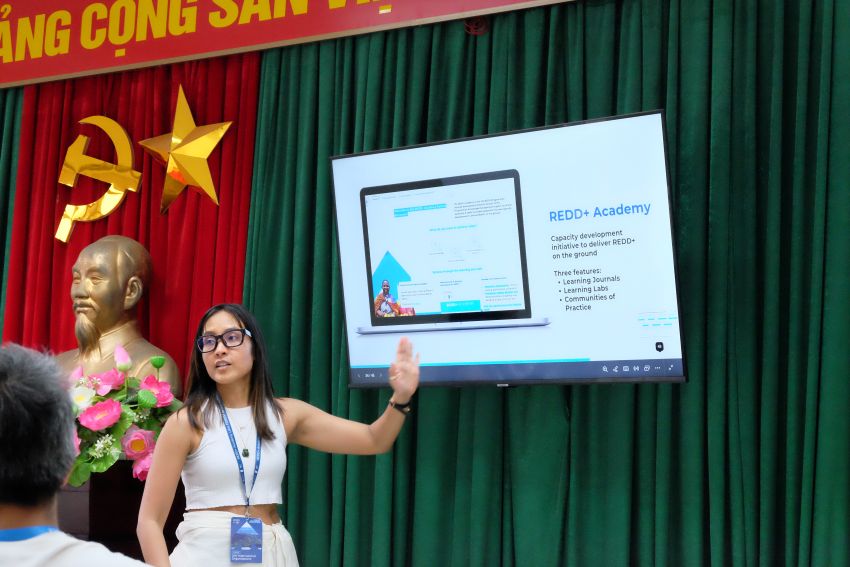
Chau Le of Tundra Fonder reflected on how rare and valuable it was to see stakeholders from different backgrounds, regions, and problem sets gathered around a common purpose. That diversity matters because the transition to forest-based economies will not be driven by any single actor.
But bringing actors together does not automatically align them.
Investors are looking for scale, predictability, and credible risk mitigation. SMEs often operate in early-stage, fragmented, and context-specific conditions. Governments, meanwhile, are building frameworks around safeguards, compliance, and public accountability. These are structural misalignments.
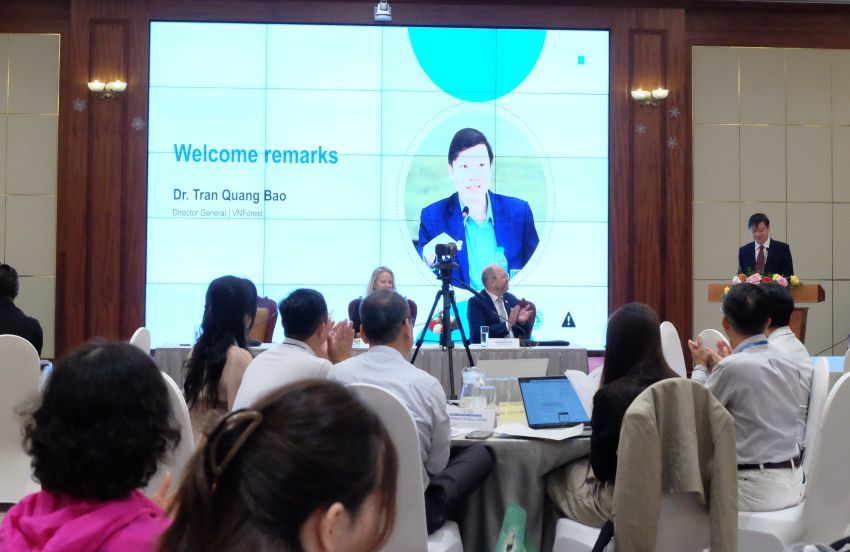
Dr. Tran Quang Bao, Director General of the Viet Nam Forest Administration, argues that addressing these constraints requires strengthening the enabling environment for investment—improving policy frameworks, enhancing transparency, and fostering stronger linkages between businesses, investors, and jurisdictional REDD+ programmes.
Even so, the system’s evolution is uneven. It is increasingly connected but not yet aligned around a shared market logic.
Chansong Kim from Korea Forest Service outlines the conditions for accessing public finance: “I think the most important part is to have measurable impact, especially to access public finance.”
The next phase will be judged by whether this cycle becomes real
All of this points to the need for a more fundamental reset in how we sequence support for SMEs—so they become investment-ready—and how we build frameworks that can adequately and measurably assess their impact.
The real test is whether JREDD+ and forest carbon finance can move beyond being sources of revenue and become platforms that help organize a broader forest economy.
Swiss Ambassador to Vietnam, Thomas Gass, notes that the challenge of mobilizing finance is both structural and conceptual. While financial instruments and mechanisms are important, they are insufficient without a corresponding shift in narrative—one that frames forests as essential to development rather than peripheral to it.
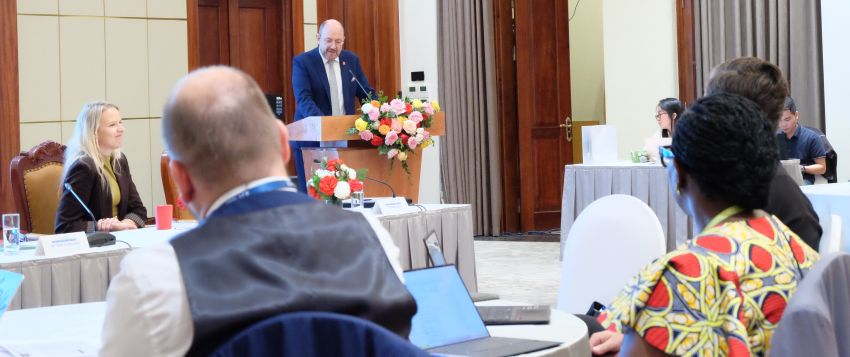
Capital may be ready, but the harder task is building the market and institutional systems that make it deployable.
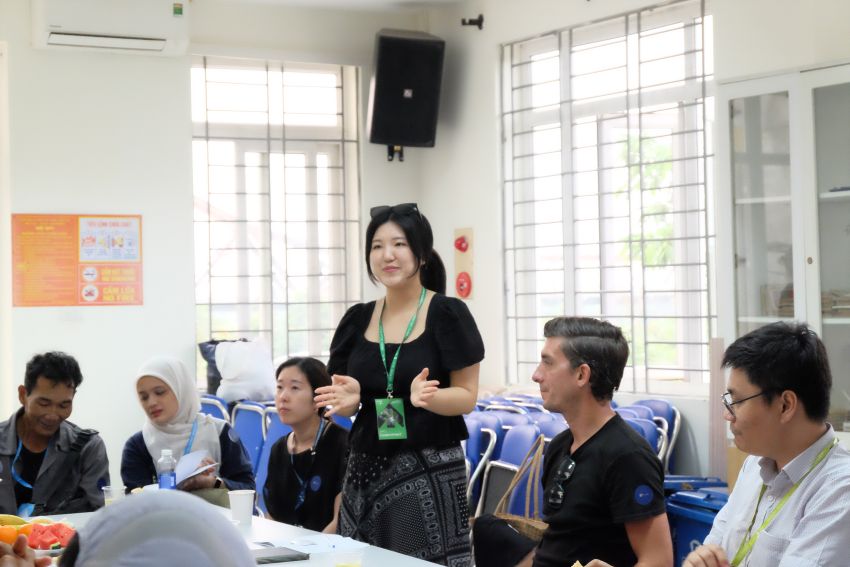
“The good news is that we are not starting from zero. The building blocks are already in place. The task now is to connect them, scale them, and sustain them,” says Head of UN-REDD Programme secretariat Mario Boccucci. “We will continue to convene these dialogues aimed towards building stronger synergies to better align finance flows, policy frameworks, and narratives so they reinforce each other and deliver impact at scale.”