Forests are central to climate mitigation—and increasingly to the planet’s habitability. They regulate rainfall, stabilize ecosystems, store vast carbon stocks, and sustain livelihoods through forest products, ecosystem services, and nature-based value chains worth trillions globally.
Yet investment remains far below their value: forest finance was US$84 billion in 2023, but must rise to US$300 billion by 2030, leaving a US$216 billion annual gap (UNEP’s State of Finance for Forest 2025 report). How can countries and the international community close this gap—so forests are protected, restored, and expanded as a critical global asset?
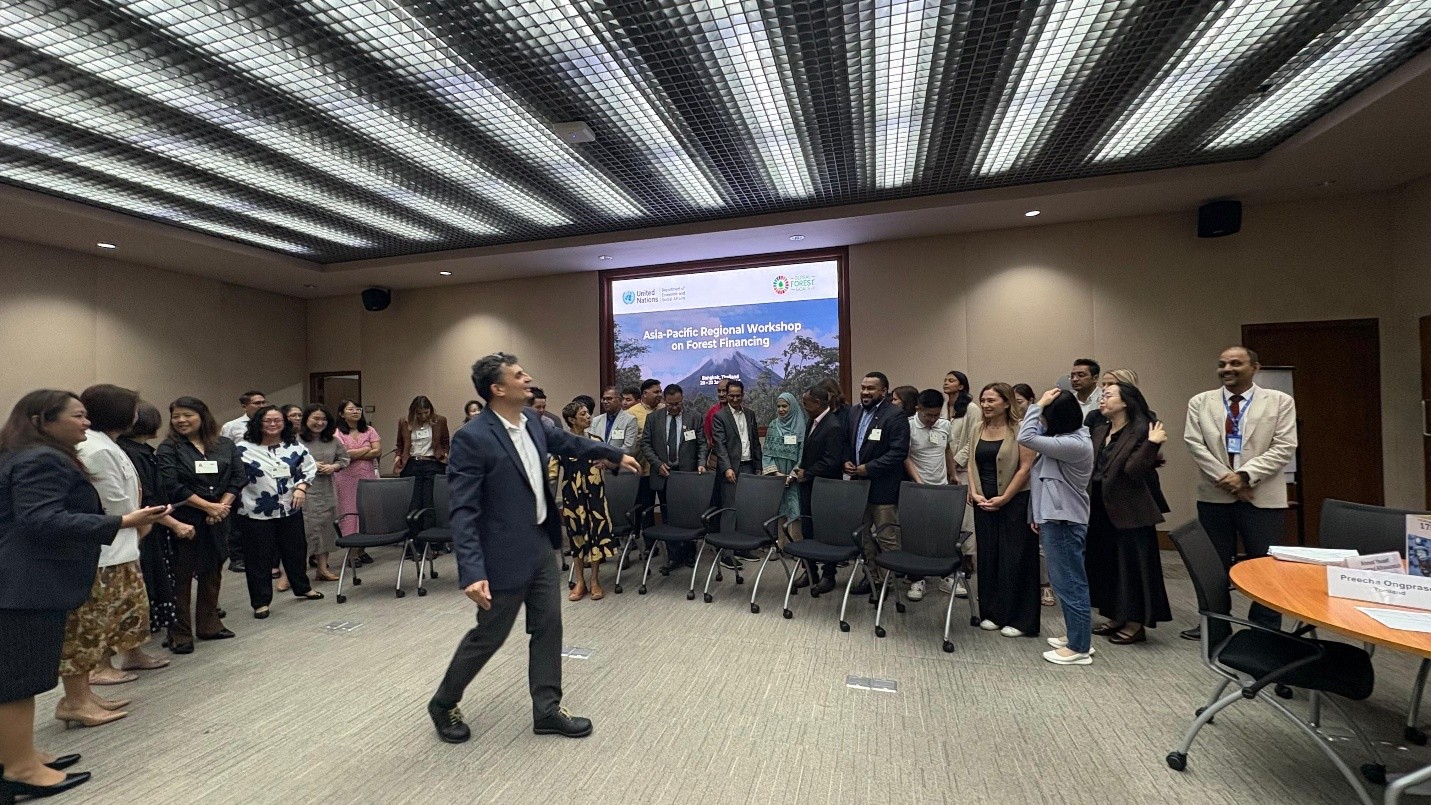
That question shaped the first Asia-Pacific regional capacity-building and training workshop on forest financing, convened in Bangkok by the UN Forum on Forests Secretariat (UNFFS) under the Global Forest Financing Facilitation Network (GFFFN). Government representatives from across Asia and the Pacific joined UN agencies, multilateral funds, development partners, technical institutions and finance experts to strengthen practical skills and partnerships for mobilizing resources—at a time when expectations for forests are rising faster than financing flows.
From the outset, discussions acknowledged a shared reality: forests are widely recognized as essential to addressing climate change, biodiversity loss and land degradation, while supporting rural livelihoods—yet financing to protect and restore them remains far below what is needed. In her opening message, UNFFS Director Juliette Biao Koudenoukpo underscored the urgency of these interconnected challenges and emphasized that financing is critical to reducing deforestation and forest degradation and scaling sustainable forest management.
That urgency was echoed by Sheam Satkuru, Executive Director of the International Tropical Timber Organization (ITTO), who emphasized that forests, particularly tropical forests, offer win-win solutions to today’s global challenges, yet remain consistently undervalued. She stressed that current investment levels still fall short of what forests truly warrant, given their economic, environmental, and social importance.
Forests are now expected to deliver across climate mitigation and adaptation, biodiversity goals, livelihoods, and sustainable production—while value chains expand for timber, wood-based construction, energy and fuelwood, and non-timber forest products. For many countries, the question is no longer whether forests matter, but whether financing systems can keep pace with what forests are being asked to deliver.
World Bank expert Klas Sander brought the debate down to fundamentals: forest finance is not only about money, but about the conditions that make finance move—governance, institutions, risk, and long-term investment logic. Where governance is weak, mobilizing private investment becomes far more difficult. Sander also stressed the social reality behind forest finance: 90 percent of people living in extreme poverty rely on forests in some way for their livelihoods—underscoring that forest financing is inseparable from rural security and resilience.
Sander noted that public, domestic, and private domestic finance account for the largest share in practice, often mobilized through communities, smallholders, cooperatives, banks and national institutions. In practice, progress depends on what governments can strengthen: coherent policies, workable incentives, clear tenure, credible pipelines, and institutions trusted to manage finance over time.
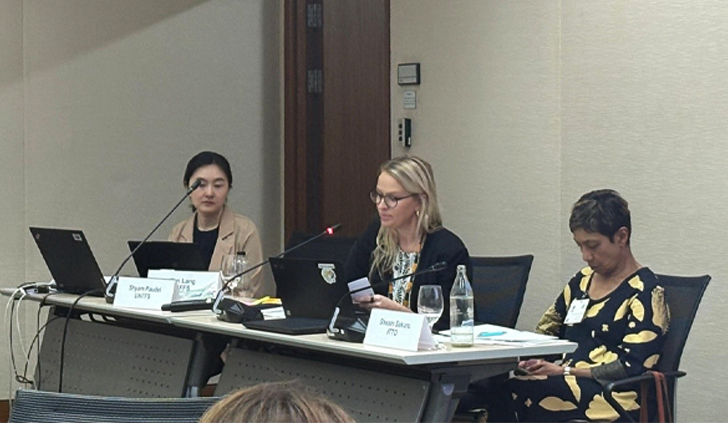
Annette Wallgren, UNEP Regional Coordinator for the UN-REDD Programme in Asia and the Pacific, emphasized that forest finance discussions increasingly hinge on countries’ readiness to access emerging opportunities in REDD+ and forest carbon markets. She noted that UN-REDD—implemented jointly by UNEP, UNDP and FAO—supports governments to strengthen enabling conditions for credible carbon market engagement, and to steer investment toward priority landscapes such as high-risk forests—where threats are high but potential returns are also substantial. Referring to UN-REDD’s High-risk Forests report, she underscored that targeted finance could generate high-value returns not only for climate mitigation, but also for biodiversity, ecosystems, and livelihoods—making workshops like this essential for aligning financing instruments with country priorities, capacitie,s and readiness pathways.
UN-REDD’s Annette Wallgren (UNEP), Lucio Santos (FAO), and Mathieu van Rijn (FAO) also presented on global carbon market trends, noting accelerating growth and stronger linkages between voluntary and compliance pathways (including Article 6 and CORSIA). They stressed that forests remain central to achieving the Paris goals—requiring halting and reversing deforestation by 2030 and scaling forest finance more than threefold by 2030—and outlined how Asia-Pacific countries can access REDD+ finance through both non-market results-based payments (e.g., GCF) and market mechanisms (e.g., ART-TREES/LEAF, Article 6.2, JCM), supported by stronger readiness frameworks.
A consistent theme emerged: finance is often constrained not because funding windows do not exist, but because countries struggle to access them. Turning national priorities into investable projects requires foundations, clear baselines, MRV systems, workable institutional arrangements, and governance conditions that reduce risk and build investor confidence. In this context, forest finance is best understood not as a single mechanism, but as an ecosystem of enabling conditions, instruments, and partnerships.
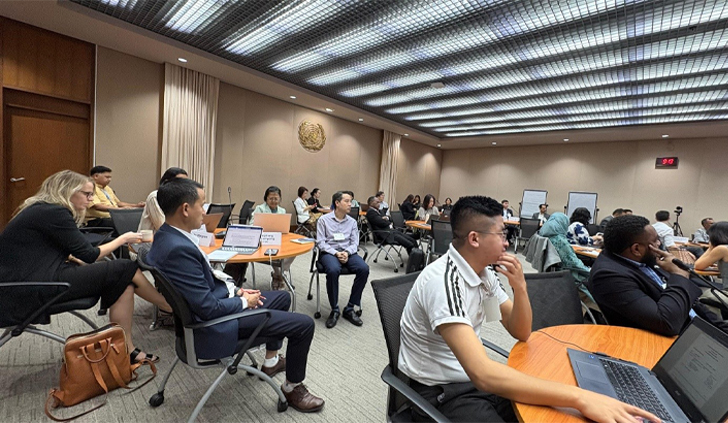
Over four days, the workshop covered the full forest finance landscape—linking global trends with the practical steps countries must take to develop fundable projects. Sessions explored enabling factors for mobilizing resources at scale and examined multilateral and regional pathways, including financing opportunities and requirements under mechanisms such as the Global Environment Facility (GEF) and the Green Climate Fund (GCF). Participants also reviewed regional perspectives from ADB, JIC,A, and ITTO, alongside technical discussions on carbon finance, REDD+ results-based payments, and Article 6 approaches.
The program also addressed the growing role of private finance, including evolving instruments such as debt-for-nature swaps and green bonds, as well as emerging biodiversity finance approaches. It concluded with interactive country dialogues that helped participants clarify priority needs, assess implementation barriers, and begin mapping financing sources and instruments to support National Forest Financing Strategies.