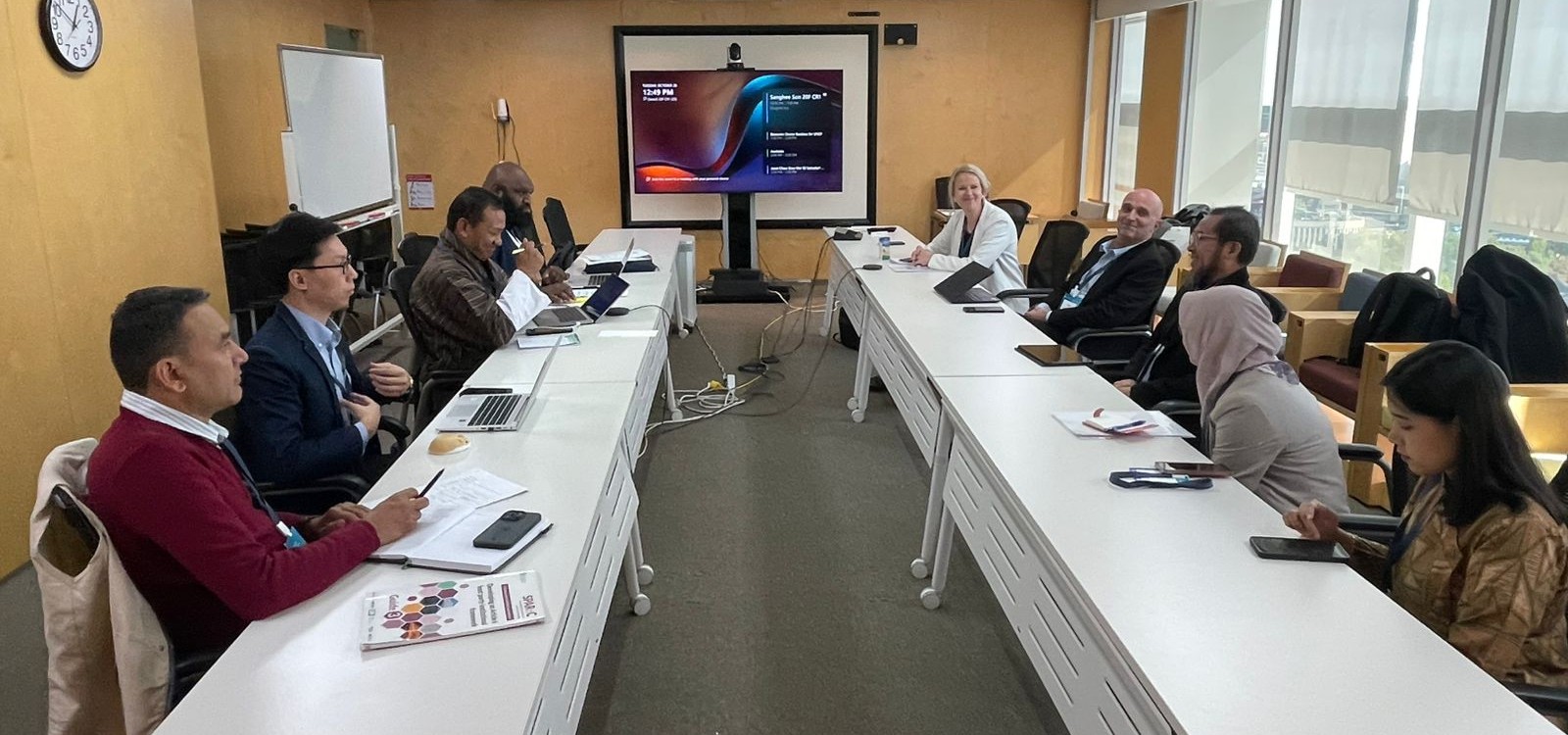
SEOUL, October 2025 - The UN-REDD Programme organized a high-level REDD+ Investment Roundtable this month in Seoul, Republic of Korea, bringing together governments, corporate buyers, and investors to move from REDD+ readiness to results-based finance and Article 6 implementation under the Paris Agreement.
Building on the momentum from the first-ever REDD+ Investment Roundtable held in London in July, which marked a breakthrough in connecting countries and projects with private-sector players, the October event shifted the focus from exploration and trust-building to implementation and real transactions.
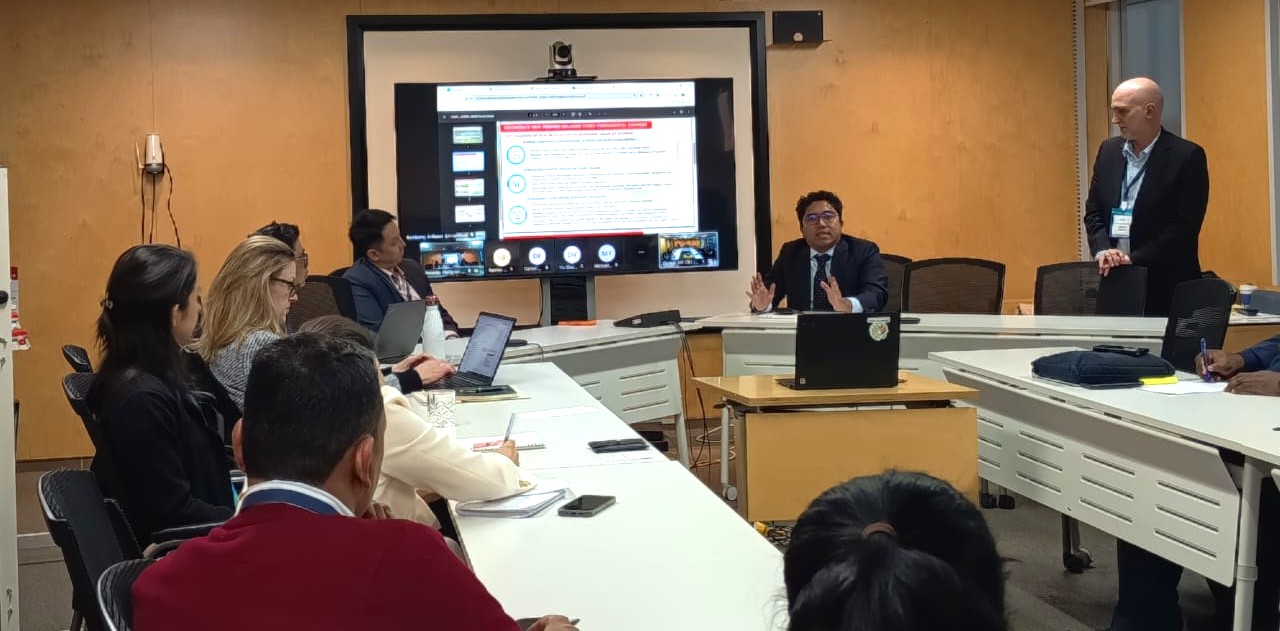
Held at the Global Green Growth Institute (GGGI) as part of Global Green Growth Week, senior forestry officials from Indonesia, Viet Nam, and Nepal joined private-sector partners and climate finance experts to chart next steps for scaling up high-integrity forest carbon transactions across the Asia-Pacific.
“Countries in the Asia-Pacific are demonstrating that protecting forests and building credible carbon markets are two sides of the same coin,” said Gabriel Labbate, Head of UNEP’s Climate Mitigation Unit and Global Team Leader of UN-REDD.
“They are moving from readiness to results - building systems that not only store carbon but also sustain livelihoods, restore ecosystems, and build trust in the markets that finance them,” he added.
Across Indonesia, Viet Nam, and Nepal, more than 230 million tonnes of CO₂ equivalent (tCO₂e) in potential mitigation results are being readied for verification or issuance—signaling a major pipeline of forest-based climate outcomes linked to community resilience and green investment. Representatives from all three countries gave brief presentations on progress made and the challenges faced.
Indonesia leads the region with a jurisdictional REDD+ pipeline with a high indicative potential, complemented by national and provincial programmes in East Kalimantan, Jambi, and multiple verified projects. Viet Nam is advancing validation for emission reductions across 11 provinces, while Nepal is preparing to issue or verify emission reductions under its subnational ART-TREES and FCPF programmes.
Yet amid this momentum, the conversation in Seoul highlighted that buyers still struggle to define and trust high-quality credits, especially across jurisdictions.
“What does “high quality” universally mean for nature-based solutions? That is still undefined for now. In the absence of this definition, most buyers, who do not have in-house expertise have to rely on rating agencies and consultants to judge carbon credit quality. Moreover, there are also nuanced views even amongst sophisticated buyers on what high quality means.” said Jack Chong, Director, Asia-Pacific Carbon Infrastructure at S&P Global.
Turning Dialogue into Direction
The dialogue in Seoul featured remarks by Fenella Aouane, Managing Director and Head of Carbon Pricing at GGGI; Edo Mahendra, Principal Carbon Markets Advisor to the Indonesian Minister of Forestry; and Marc Dumas-Johansen, Agriculture and Food Security Specialist at the Green Climate Fund.
Participants also included government REDD+ programme leads, corporate buyers with net-zero commitments, carbon-market investors, insurance providers, and legal and financial advisors—each signaling that a more structured, credible REDD+ market is taking shape.
Much of the deliberation centered on practical, country-led steps to accelerate verified issuance, clarify national positions ahead of COP30, and explore how the proposed Tropical Forest Forever Facility (TFFF) - an endowment-style, non-offset mechanism offering per-hectare payments for standing forests - could complement domestic efforts to attract long-term, high-integrity investment into forest landscapes.
Discussions highlighted the need for clear rules on corresponding adjustments to ensure environmental integrity under Article 6.2. Japan’s Joint Crediting Mechanism (JCM) was noted as a flexible approach to bilateral cooperation under Article 6, offering opportunities for innovation in crediting.
“JCM predates the Paris Agreement but has now been aligned with Article 6.2. It’s based on bilateral agreements and allows project-specific methodologies, which brings flexibility but also makes it harder to explain what JCM is,” said Julia Dohner, Carbon Specialist, sustainacraft, inc. (Tokyo, Japan).
Participants emphasized that robust governance, national registries, and mutual recognition of standards will be essential to scaling trust and investment.
“High-integrity credits require high-integrity finance. This entails aligning national ambition with buyer accountability, underpinned by long-term, predictable support mechanisms,” said Basanta Gautam, Global Associate Director, Nature-based Solutions, South Pole.
Forests offer one of the most cost-effective, immediately available, and scalable climate solutions, capable of delivering up to a third of global mitigation needed by 2030. Investments in jurisdictional REDD+ go beyond carbon—they protect biodiversity, secure Indigenous and community rights, generate rural livelihoods, and build climate resilience.
The Seoul event came at a crucial moment ahead of COP 30 in Belém, Brazil, where countries and partners will assess global progress on forest and land-use goals under the Paris Agreement. The insights and partnerships forged in Johannesburg and Seoul are expected to inform and strengthen discussions on scaling high-integrity jurisdictional REDD+ as a cornerstone of nature-based climate action.
Key Takeaways:
- REDD+ supply is real—and growing—but needs responsive capital.
- Market trust remains fragile, especially post-2023 scrutiny.
- Corresponding adjustments and Article 6 readiness are not optional—they are core to price and credibility.
- Buyers want simplicity. Fragmented standards risk shrinking demand.
As momentum builds toward Belém, one message is clear: jurisdictional REDD+ is moving from policy concept to market reality, with tangible pathways now emerging for large-scale, high-integrity forest finance.