Papua New Guinea has achieved an important milestone under the Paris Agreement with the submission of its First Biennial Transparency Report (BTR1) to the United Nations Framework Convention on Climate Change (UNFCCC).
The report represents the country's first submission under the Enhanced Transparency Framework and demonstrates growing national capacity to monitor, report and communicate climate action.
The BTR1 provides a comprehensive overview of PNG's greenhouse gas emissions and removals, mitigation measures, adaptation efforts, support received and support needed. It also highlights progress towards implementing the country's Nationally Determined Contribution (NDC) and broader climate objectives.
For forested countries such as PNG, transparency systems are critical. Reliable data and reporting mechanisms support national decision-making, improve accountability, and provide evidence of progress towards climate commitments. Strong reporting systems also help countries access international support and climate finance opportunities.
The report was coordinated by the Climate Change and Development Authority with contributions from multiple government agencies, technical experts, and development partners. The preparation process brought together government agencies, technical experts and development partners, helping to strengthen inter-agency coordination and national reporting systems. It also reinforced national systems for data collection, quality assurance, and greenhouse gas inventory development.
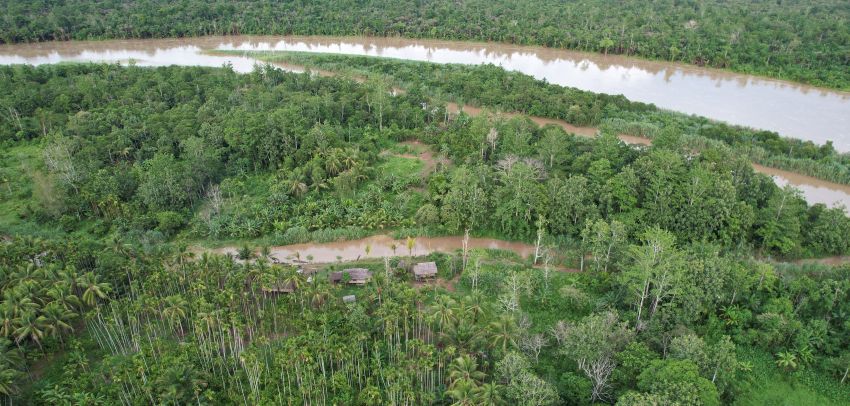
An important component of the report is the inclusion of information related to REDD+ implementation and the land-use sector. PNG's extensive forests remain one of the country's most important climate assets and play a significant role in national mitigation efforts.
The preparation of the BTR was supported by Papua New Guinea's National Forest Monitoring System (NFMS), which was established through the UN-REDD Programme with technical support from the Food and Agriculture Organization of the United Nations (FAO). The NFMS provided the robust forest data and monitoring tools needed to generate reliable greenhouse gas emission and removal estimates for the Land Use, Land-Use Change and Forestry (LULUCF) sector. It also enabled the country to report accurately on REDD+ activities, strengthening the transparency, consistency, and credibility of PNG's climate reporting under the Paris Agreement.
The integration of forest-related information into transparency reporting demonstrates the strong link between forest conservation and climate action. By providing reliable data on forest resources and associated emissions, the NFMS continues to support evidence-based decision-making and the implementation of PNG's climate and forest conservation commitments.
The successful submission of BTR1 highlights the progress PNG has made in strengthening transparency systems while providing a foundation for future climate planning, investment, and reporting. The experience may also offer useful insights for other countries working to operationalize the Enhanced Transparency Framework under the Paris Agreement.
Contact information
Michael Evoa, National Communications Specialist