In the hills of Serra Malagueta, on Santiago Island in Cabo Verde, keeping soil on the slopes is part of keeping farming possible. Long dry periods make it difficult to grow crops and establish young trees. When rain does fall, it can wash away exposed soil. For families who depend on small farms and livestock, caring for the land is closely tied to earning a living.
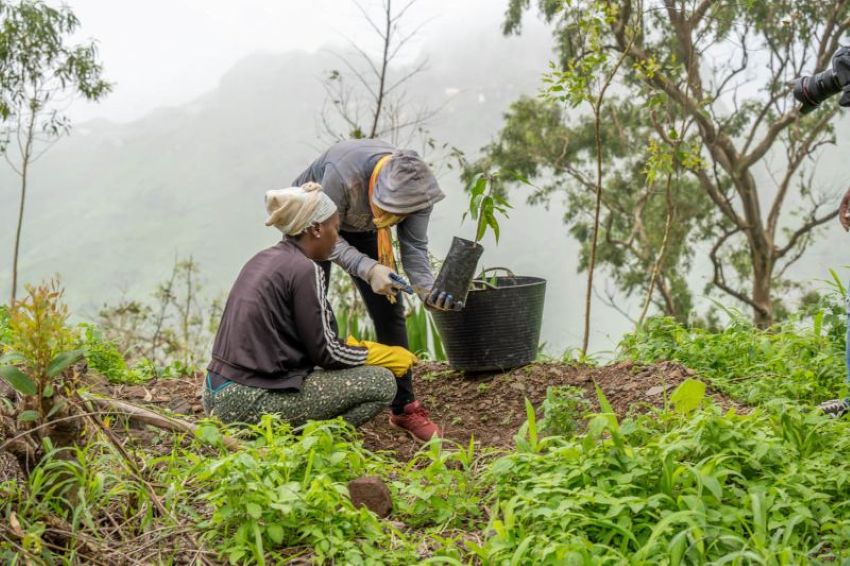
In Curral Velho, Pedra Cumprida and Achada Longueira, community members are tackling these problems through work in nurseries, tree planting and soil and water conservation. Women raise seedlings and organize daily tasks. Farmers build stone barriers and half-moon-shaped earthworks to hold rainwater around plants. Local leaders bring neighbours together to decide what to plant and where.
The initiative began in July 2023 and is implemented by the Associação dos Amigos para o Desenvolvimento da Comunidade de Serra Malagueta (AADCSM), with support from the Food and Agriculture Organization of the United Nations (FAO), engaging 128 direct participants across the three communities.
The support came through the project “Global Transformation of Forests for People and Climate: A Focus on West Africa”, implemented by FAO in collaboration with the Economic Community of West African States (ECOWAS) and funded by the Government of Sweden through Sida. In Serra Malagueta, the work combines training and practical support for restoration with opportunities to earn income.
For project coordinator José Evaldino Pereira, the connection between the two is visible in household spending.
“Families now use the income they earn for health care, their children’s education, home repairs and income-generating activities.” 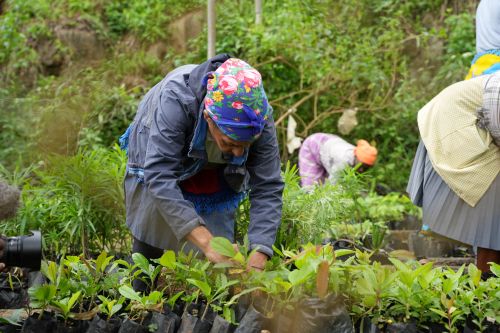
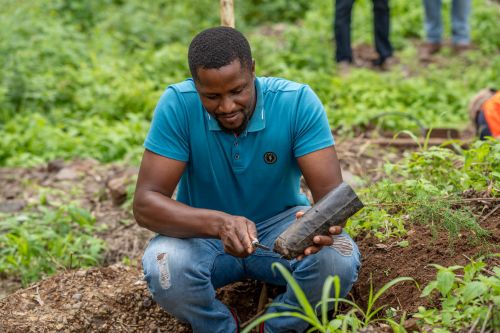
Much of the daily work starts in the nursery. Women tend seedlings of endemic species and fruit trees, preparing plants for restoration sites and for sale to neighboring areas. The work requires regular attention, long before a seedling is ready to leave the nursery.
For some participants, it has brought a new source of earnings in a place where paid work is limited and often seasonal. Women described using their income to buy animal feed, meet household expenses, and put money aside. These are practical gains: being able to cover a cost now or prepare for one that is coming.
Women also help shape the work. Their participation in planning has brought attention to needs such as planting fruit trees near homes. Trusted local leaders coordinate tasks and mobilize neighbours, rather than working through a formal community forestry committee. Community meetings give participants a place to discuss species, planting days, and responsibilities.
Those choices draw on people’s knowledge of the land. Farmers know which slopes lose soil, where water collects, and which sites are difficult to cultivate. Training in erosion control adds techniques they can use alongside that experience.
On the hillsides, stone barriers and half-moons help slow runoff and retain water. Community members have begun using these methods on their own plots, taking the work beyond the project’s planting sites. The profile reports early signs of vegetation recovery in restored areas. Young trees will still need care through dry periods before their survival, and longer-term contribution can be assessed.
Fruit trees bring a different timescale. Participants have planted mango, papaya, and guava with future food and sales in mind. They hope to use the harvests at home and sell surplus. Some are interested in making juices or dried fruit, but these remain plans. Trees need time to produce, and processing and selling fruit will require equipment, transport, and access to buyers.
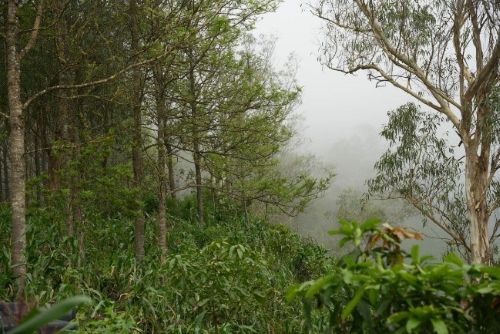
The forest also connects to another source of income: visitors who come to walk in Serra Malagueta Natural Park and experience the area’s food and culture.
Christina, a local host and ecotourism entrepreneur, began welcoming guests with a few rooms. Her work shows why the condition of the park matters beyond farming and tree planting.
“Tourism in the Serra is very important to us. It brings not only income but also helps develop the entire region. It encourages us to protect the park and live more sustainably.”
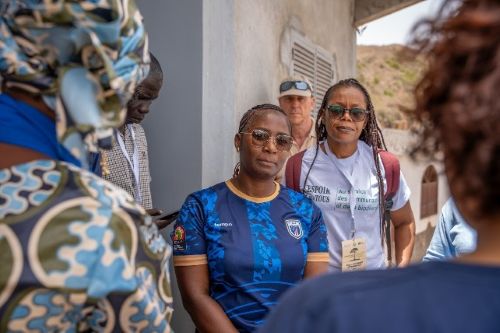
The relationship between conservation and local livelihoods also shapes cooperation among institutions. AADCSM shares premises with municipal offices and the Serra Malagueta Natural Park Museum. This proximity helps the association and local authorities discuss field activities and solve problems together. Visits from schoolchildren and tourists create opportunities to connect the restoration work with learning about the park.


Cooperation cannot remove every obstacle. Delays in funding have interrupted fieldwork and affected motivation in some communities. Planting follows the rain, so the timing of support matters. A missed planting period can mean a long wait for suitable conditions to return.
Water scarcity, grazing pressure, and erosion remain concerns. Limited transport and marketing options also make it difficult to turn plans for seedling and fruit sales into dependable businesses. Nursery earnings are a useful start, but sustaining them will take continued care, reliable support, and customers.
Community members have clear priorities for the next stage. They want to maintain the nurseries, protect planted areas, see fruit trees reach maturity, and receive further training. They also want younger people to take part and neighbouring communities to benefit from the experience.
The next step is to turn these early gains into something that can last. Continued investment in water management, nursery production, skill development and market access will help communities build on what they have achieved and create new opportunities for the future. Supporting restoration in Serra Malagueta means supporting the people who will be responsible for it long after the project ends.
Contact information:
- Maria RuizVillar, Programme Officer
- Maryia Kukharava, Project Officer