REDD+ Non-Carbon Benefits in Safeguards Systems
Virtual session held on 03 December 2025, coordinated by UNEP
Introduction
On 03 December 2025, the 12th Session of the Safeguards and Integrity Working Group (GTS) of the UN-REDD Programme was held, focusing on the exploration of non-carbon benefits (NCBs) and their relevance for strengthening the environmental and social integrity of REDD+ in Latin America and the Caribbean. The session was facilitated by the UNEP UN-REDD team, with presentations by Judith Walcott, Mariano Cirone and Emilia Anselmo, and included a panel discussion with experts from the World Bank, CONAF Chile and ART.
NCBs, also referred to as co-benefits or multiple benefits of REDD+, refer to the social, environmental and governance outcomes that can be generated through the effective implementation of REDD+, beyond its primary objective of reducing greenhouse gas emissions. While the traditional safeguards approach emphasizes avoiding harm (“do no harm”), NCBs reflect a complementary vision of REDD+ safeguards that also seeks to actively generate positive and lasting impacts for people and ecosystems. In this sense, there is a close relationship within REDD+ between the effective implementation of safeguards and the generation of NCBs.
NCBs can manifest across three interrelated dimensions: environmental, social and governance. In practice, there are often REDD+ activities and implementation areas where these NCBs significantly overlap. This convergence of co-benefits has been leveraged by several countries to guide their strategies, prioritizing areas and activities with greater potential to generate multiple positive impacts. Identifying such territories not only strengthens REDD+ environmental and social performance, but also optimizes resource use and improves the effectiveness of on-the-ground interventions.
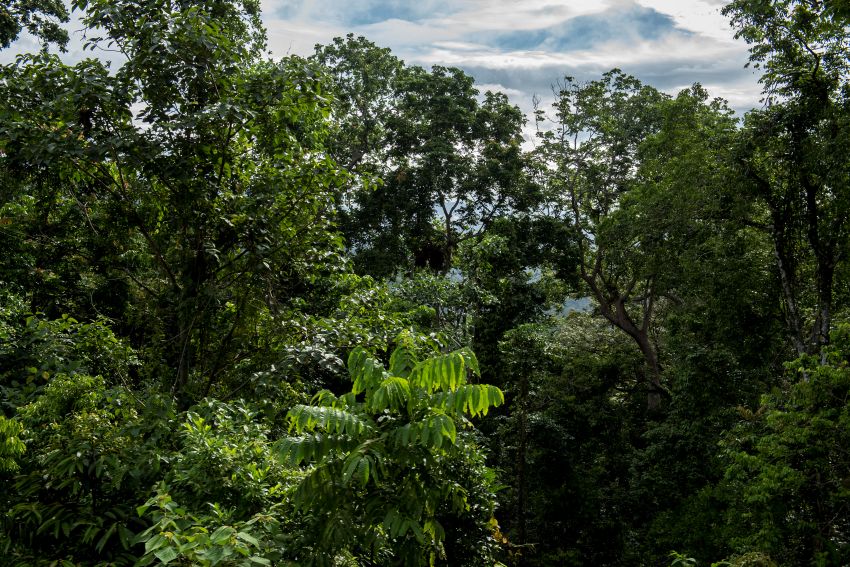
Judith Walcott opened the session with a conceptual explanation of what is meant by NCBs in the REDD+ context. A typology was presented including biophysical benefits (erosion control, water regulation, biodiversity), sociocultural benefits (livelihoods, cultural values, gender, participation), and governance benefits (institutional strengthening, transparency, grievance mechanisms).
Conceptual framework on non-carbon benefits
It was emphasized that the way REDD+ activities are implemented (with whom, where and under which institutional arrangements) can determine the type and magnitude of benefits generated, and that participatory processes have been essential for identifying national and territorial priorities.
Judith also shared regional examples where spatial analysis methodologies have been applied to identify areas with a high convergence of benefits, thereby informing the strategic planning of REDD+ policies, actions and measures (PAMs). These experiences demonstrate that planning based on NCBs contributes both to climate effectiveness and social impact.
International incentives and their link to safeguards
Mariano Cirone delved into the relationship between NCBs, forest governance and access to international finance. He presented how the United Nations Framework Convention on Climate Change (UNFCCC), the Paris Agreement and results-based payment mechanisms—including the Green Climate Fund—recognize the added value of non-carbon benefits. In particular, he highlighted that the GCF allows for increased financing if it can be demonstrated that resources will be reinvested in the generation of NCBs.
However, independent reviews of the GCF show that while countries are generally effective at describing potential benefits linked to specific actions or geographic areas, gaps remain in demonstrating and reporting the actual benefits generated through REDD+ implementation. This underscores the need to strengthen monitoring systems and applied methodologies.
Technical presentation on indicators and methodologies used in LAC
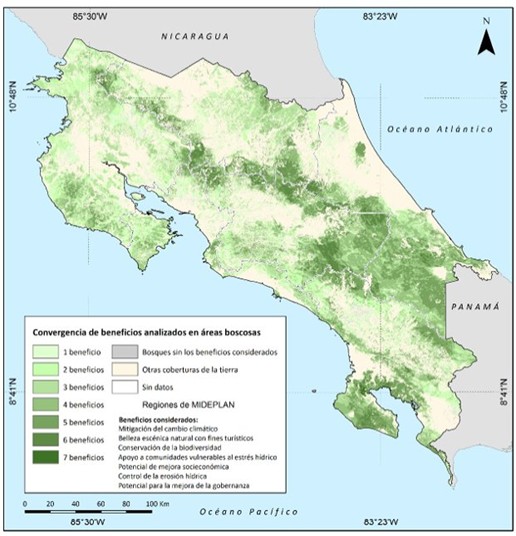
Emilia Anselmo presented a detailed overview of the types of indicators that several countries in the region have defined to measure non-carbon benefits. Drawing on examples from Costa Rica, Argentina and Paraguay, she showed how countries have made progress in defining indicators that reflect their territorial priorities and information capacities.
Emilia also explained the two core methodologies underpinning NCB measurement in the region:
- Geospatial analysis and multicriteria evaluation, where multiple spatial layers (biophysical and social) are standardized and combined to generate maps of benefit convergence or vulnerability.
Ecological and hydrological models, used to quantify complex processes that cannot be estimated through simple mapping, such as water erosion or aquifer recharge.
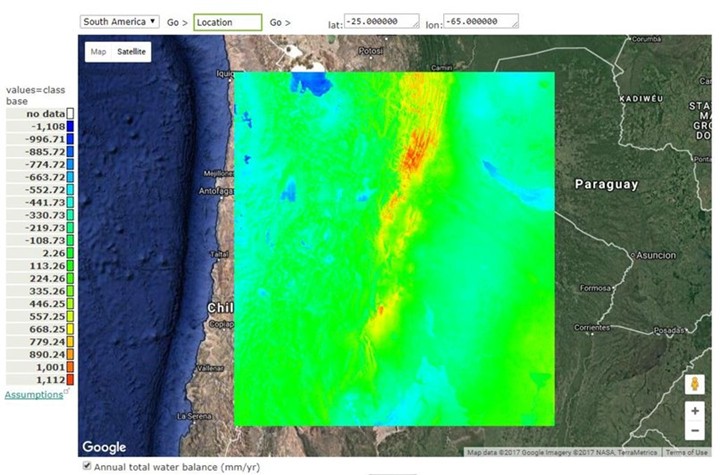
It was highlighted that both approaches are complementary: models generate derived layers that can subsequently be integrated into broader spatial analyses for territorial prioritization.
Expert panel: national and international experiences
Experience from Chile
Chile’s experience, presented by María José Sandoval, Safeguards Expert at CONAF, stands out for the implementation of one of the most advanced NCB monitoring systems in the region, which robustly integrates biophysical and social indicators. Through the use of satellite technology, the country assesses the effectiveness of its interventions in protecting soils from erosion, as well as improving ecological connectivity and biodiversity in restoration and forest management areas. On the social dimension, the system incorporates participants’ perceptions of improvements in their livelihoods and allows for the identification of critical gaps, such as gender disparities in the forestry sector, to inform more inclusive public policies. This comprehensive approach not only mitigates risks but also demonstrates verifiable positive impacts that strengthen the socio-environmental integrity of the national strategy.
World Bank approach
Cynthia Arévalo, Social Development Specialist at the World Bank, explained how, within the framework of the Forest Carbon Partnership Facility (FCPF), jurisdictional emission reduction programs and Emission Reduction Payment Agreements (ERPAs) integrate non-carbon benefits into planning, implementation and benefit-sharing frameworks. Based on a review of 15 programs globally, it was noted that the most frequently reported non-carbon benefits are environmental, economic and forestry-related, while dimensions such as gender, land tenure and direct social benefits appear less frequently, reflecting implementation gaps. Cynthia emphasized that under the FCPF, the identification of benefits must be directly linked to the REDD+ actions undertaken and national priorities, as these benefits not only complement emission reductions but also strengthen resilience, social inclusion and the long-term sustainability of interventions.
Costa Rica was presented as an illustrative example of how to operationalize additional benefits within an ERPA. The country has developed a broad basket of indicators including biodiversity, scenic beauty, water stress, poverty, erosion and governance, reflecting an integrated approach that combines community well-being, conservation and water resource management. Key instruments were highlighted, such as territorial environmental plans for Indigenous Peoples (which have generated indirect effects on governance, local organization and land-use planning) and inclusion funds aimed at people without formal land tenure. This approach demonstrates that non-carbon benefits can enhance REDD+ socio-environmental outcomes when they are explicitly integrated into safeguards systems, benefit-sharing agreements and community participation mechanisms.
ART and the Beyond Carbon Benefits (BCB) Certification
Lucía Madrid, Associate Director of Policy at the ART Secretariat, presented the progress status of ART’s new certification entitled Beyond Carbon Benefits (BCB), designed to recognize and verify positive non-carbon benefits generated by jurisdictional REDD+ programs registered under the TREES Program, also managed by ART. The BCB certification aims to measure, demonstrate and accredit real positive impacts such as improvements in biodiversity, ecosystem services, community well-being, governance strengthening, and respect for the rights of Indigenous Peoples and local communities.
Lucía explained that the certification is structured around three main modules—Forest Services, Biodiversity and Sociocultural Outcomes—all of which are mandatory, although there is flexibility in selecting specific indicators within each module depending on the national context. The logic of BCB is to allow TREES credits to obtain an additional high-value label reflecting the certified program’s verified social and environmental contributions, thereby increasing the market value of TREES+BCB credits.
Lucía highlighted that the BCB certification is compatible with national safeguards information systems, as it prioritizes quality and auditability criteria over specific methodologies. Developed in collaboration with Indigenous organizations, the standard is currently under revision following its first public consultation held in 2025. By protecting collective rights and environmental defenders, the certification strengthens TREES and improves countries’ positioning in high-integrity carbon markets.
Closing of the session
The session concluded by highlighting that the measurement and communication of non-carbon benefits are increasingly becoming essential components for strengthening the integrity and effectiveness of REDD+ actions on the ground. Countries are advancing with diverse but convergent approaches that integrate spatial analyses, biophysical models, sociocultural indicators and governance frameworks. The experiences shared by Chile, the World Bank and ART demonstrate that the region has growing technical capacities and a solid foundation for further developing safeguards systems that not only mitigate risks but also demonstrate verifiable positive impacts.
Nevertheless, it was acknowledged that this remains a relatively new area in which, despite regional leadership, only a pioneering group of countries has begun to incorporate these benefits into their national strategies, and even fewer have concrete methodologies in place to effectively monitor and report them. This represents an opportunity area for countries in the region, given the growing trend among donors and high-integrity carbon markets to require the demonstration of verifiable positive impacts.
The GTS reaffirmed its commitment to continue supporting these processes and to consolidate a technical exchange space among countries, announcing a final end-of-year session to synthesize lessons learned and define next steps for joint work.
The twelfth session at glance:
|
|
|
|
|
54 participants (34 women; 18 men; 2 unspecified/other)
|
9 countries represented
|
120-minutes Session
|


About the working group
The Safeguards and Integrity Working Group of the UN-REDD Programme in Latin America and the Caribbean is a space made up of practitioners and experts working on the design, implementation, and monitoring of REDD+ safeguards in the region. Its objective is to share experiences, good practices, common challenges, and lessons learned, with a view to improving the implementation, monitoring, and reporting of safeguards and strengthening the environmental and social integrity of REDD+ in LAC.
For more information about the Group’s work, please contact the UNEP team through Mariano Cirone at: [email protected]