Evidence on forest finance and co-benefits
helps shape post-COP30 climate action
By the close of UNFCCC COP30 in Belém, forest finance had moved from a largely technical issue to a central element of climate and development negotiations. The debate was no longer about whether forests matter but about how to finance their protection at the scale required.
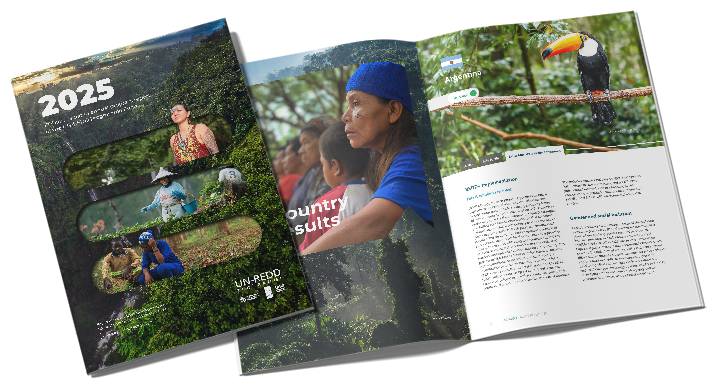
Two UN-REDD analytical reports released ahead of the conference, State of Finance for Forests 2025 and High-Risk Forests, High-Value Returns, helped inform that shift by grounding discussions in evidence rather than general commitments.
The finance report clarified the scale of the challenge. It estimated that global forest-related finance would need to increase from roughly US$84 billion annually to around US$300 billion per year by 2030 if climate, biodiversity and land restoration goals are to remain within reach. It also highlighted a roughly US$67 billion annual financing gap in tropical forest countries, a figure that featured regularly in preparatory discussions ahead of COP30.
Having a quantified gap helped move discussions toward questions of financial architecture — how capital flows, over what time horizon, and with what incentives — rather than isolated pledges.
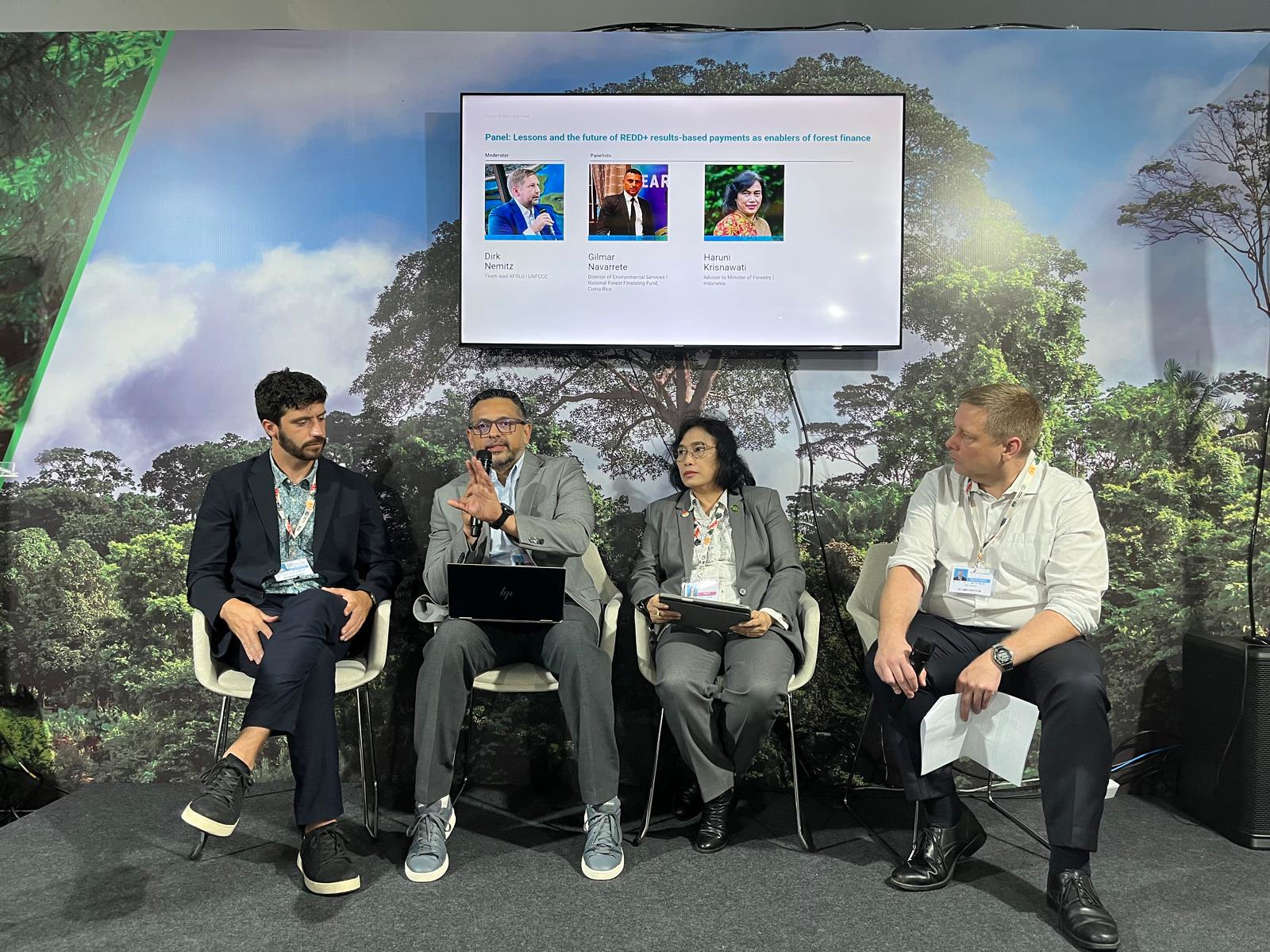


The analysis fed directly into policy design. Brazil drew on this evidence as it advanced the Tropical Forest Forever Facility (TFFF), which secured US$5.5 billion in pledges during COP30 to support long-term tropical forest protection. André Aquino, lead economist at Brazil’s Ministry of Environment, has noted that clearer financing analysis helped shift discussions beyond short-term project funding toward mechanisms better suited to sustaining forest conservation over decades. The findings also informed a Forest Finance Roadmap endorsed by more than 30 countries and were referenced in technical dialogues, ministerial discussions and several Plans to Accelerate Solutions under the COP30 Action Agenda.
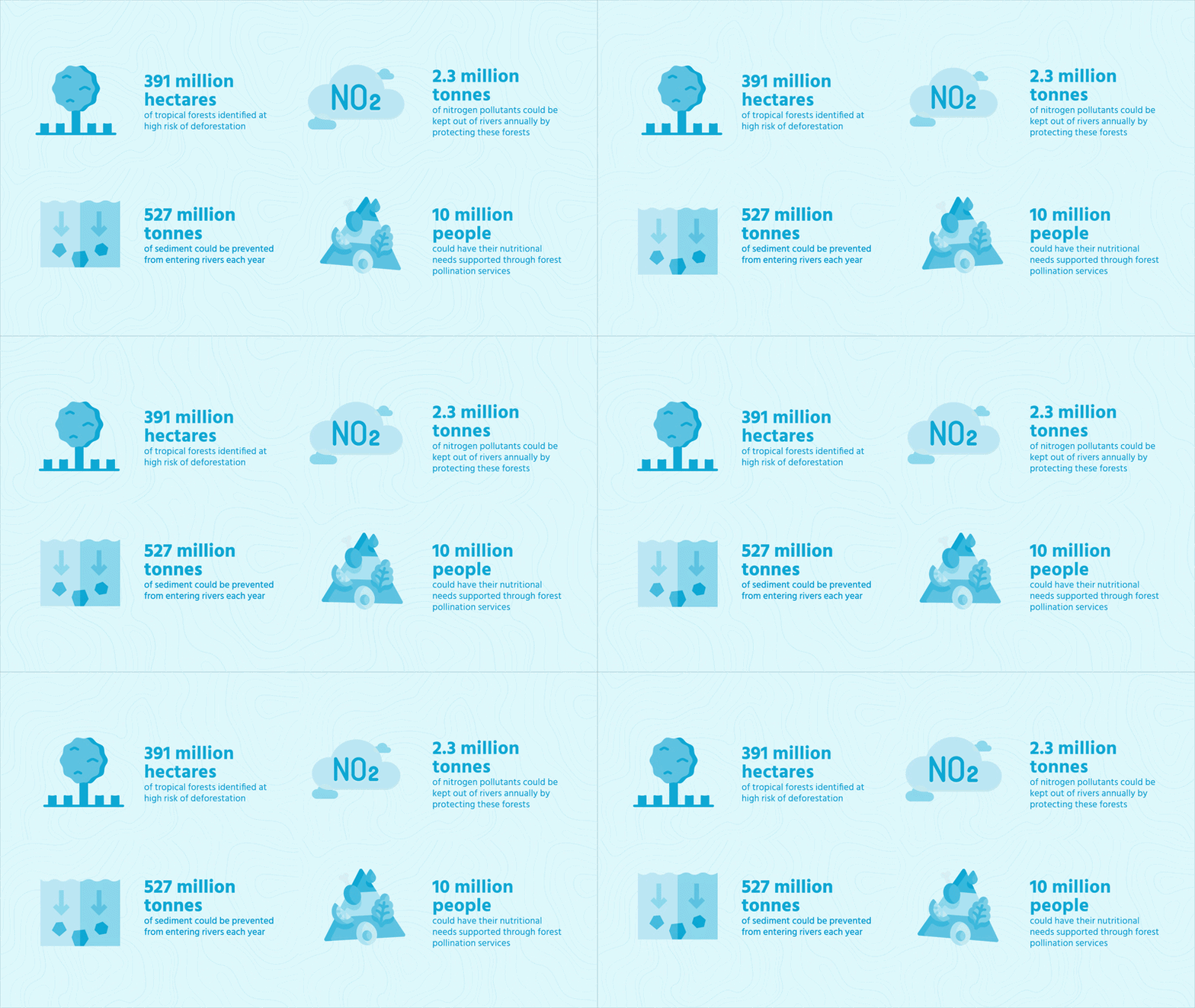
The companion co-benefits report broadened the economic case for forest investment. It identified around 391 million hectares of tropical forests at high risk of deforestation, roughly a quarter of global tropical forest area, and showed that protecting these landscapes can deliver substantial environmental, economic and social returns. Conserving these forests could keep an estimated 2.3 million tonnes of nitrogen pollutants and 527 million tonnes of sediment out of rivers annually, support the nutritional needs of roughly 10 million people through pollination services, and sustain forest-based livelihoods for about 25 million low-income people.

Forests as Infrastructure
Researchers involved in the assessment, including work led by the National University of Singapore, have emphasized that recognizing these wider benefits helps correct persistent undervaluation of forests in financial decision-making. The analysis also estimated that protecting high risk forests could help avoid around US$81 billion annually in climate- and disaster-related losses, reinforcing the case for treating forests as economic infrastructure rather than solely carbon assets. This framing proved particularly relevant in COP30 discussions where governments were weighing climate ambition alongside development and resilience priorities.
Overall, the reports strengthened the evidence base available to policymakers to design financing mechanisms, inform investment decisions and articulate the economic case for forest protection.
Media coverage further broadened awareness beyond specialist policy circles, helping bring forest finance constraints into wider public and investor discussions.