Connecting carbon and capital:
The Green for Riau–Dinfra approach
By the close of UNFCCC COP30 in Belém, forest finance had moved from a largely technical issue to a central element of climate and development negotiations. The debate was no longer about whether forests matter but about how to finance their protection at the scale required.
In mid-2025, Indonesia launched two closely linked initiatives, GREEN for Riau and the DINFRA Climate Resilience Fund (DINFRA-CRF)—to tackle a persistent bottleneck in forest and peatland protection: how to convert emissions reductions and restoration efforts into steady, large-scale finance.

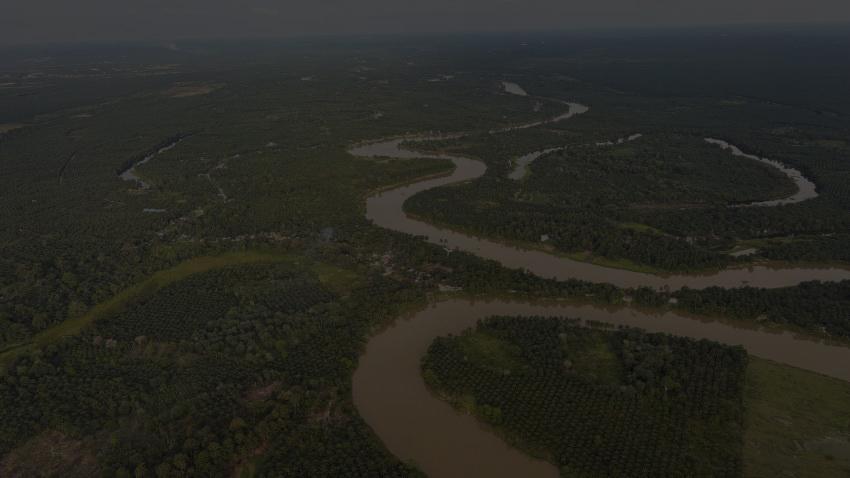
GREEN for Riau is a jurisdictional REDD+ programme led by the Riau Provincial Government with national direction and technical support from the UN-REDD Programme (UNEP and FAO). It focuses on an indicative 2.6 million hectares of forested landscape, dominated by peatlands but also including mangroves and mineral soils. The programme spans 12 districts, 769 villages, about 2.1 million people, and 14 customary law forests, reflecting the scale at which land-use change must be addressed.
The objective is to make Riau eligible for high-integrity, jurisdictional-level results-based payments under the ART-TREES standard. To reach this, the province is establishing forest reference emission levels, strengthening MRV systems, operationalizing safeguards and grievance mechanisms, and designing a benefit-sharing system. These components allow emissions reductions from deforestation, forest degradation, assisted natural regeneration, and peat decomposition to be quantified, verified, and registered for international transactions.
3 Stages of Implementation:

Implementation is structured in three stages: readiness (2025–2027), pre-investment, and payment. During readiness, Riau is completing technical documentation, aligning provincial systems with national regulations, and building institutional capacity through working groups on MRV, safeguards, carbon pricing and finance, registration, and benefit sharing. The aim is to shift from fragmented projects toward a province-wide accounting and management system that can host multiple public, community, and private interventions under one framework.
While GREEN for Riau builds the supply of verified emissions reductions, DINFRA-CRF addresses the financing side.
DINFRA-CRF is a pooled investment vehicle regulated under Indonesia’s KIK-DINFRA framework and issued by the state-owned asset manager PT BRI Manajemen Investasi. It mobilizes capital for verifiable nature-based solutions such as peatland and mangrove restoration, social forestry, eco-tourism infrastructure, and sustainable commodity value chains. Investors receive periodic interest and principal at maturity, like other capital-market instruments.
A portion of DINFRA-CRF proceeds can be allocated to initiatives like GREEN for Riau. Returns are expected from a mix of carbon credits, eco-tourism revenues, and natural product sales. Public institutions provide policy alignment and oversight, while partners such as UNEP and UNCDF support safeguards, MRV systems, and risk-sharing mechanisms.
This linkage matters because many forest and peatland programmes stall after producing plans and pilots, without generating predictable cash flows. By connecting a jurisdictional REDD+ platform to a regulated investment vehicle, Indonesia is testing a way to move beyond small, stand-alone projects toward province-level climate finance.
Green for Riau: Turning a resource-rich province into a green economy
For decades, Riau’s wealth has come from beneath and above the ground—its oil and gas fields, palm plantations, and rich forest resources.
For Riau, this could mean sustained funding for peat rewetting, fire prevention, forest protection, and community livelihoods.
For Indonesia, it offers a practical model for combining public policy, carbon markets, and capital markets in a single financing chain.
The approach is not a cure-all. But it clarifies a central point: large-scale forest protection will not be delivered by carbon markets alone, nor by public budgets alone. It requires both, linked through systems that are credible, transparent, and workable for governments, communities, and investors.