Brewing change:
How Colombia’s coffee sector is helping reduce deforestation
In Antioquia, Cauca, and Huila, two coffee companies are changing how deforestation risks are managed in their supply chains. Between November 2023 and 2025, Green Coffee Company, Comepcafé, and Cóndor Specialty Coffee tested concrete measures to strengthen traceability, improve governance, and work more closely with producers to prevent forest loss linked to coffee production.
The pilots focused on practical actions. Companies mapped direct and indirect suppliers, reviewed sourcing areas, clarified internal responsibilities and integrated deforestation risk analysis into routine operations. Monitoring and verification systems, including digital traceability tools, were expanded to cover more farming families, helping companies better understand where risks may occur and how to address them. These actions catalyzed deforestation-free coffee production with tangible results.sults featured in the publication.
The five-step due diligence framework

“We can have a better understanding of the regulations, not just in terms of deforestation, but also in relation to human rights, indigenous communities, and legal compliance”, Carlos Alberto Gómez Ramírez, Chain of Custody Assurance Specialist, Cóndor Specialty Coffee
The coffee sector operates at national scale. It supports close to 500 000 coffee-producing families in Colombia, represents around 15 per cent of agricultural GDP, and generates an estimated 2.5 million direct and indirect jobs. Because coffee is grown in forest-rich landscapes, how it is produced and sourced has direct implications for forests, rural livelihoods and climate commitments.
Coffee-producing families in Colombia
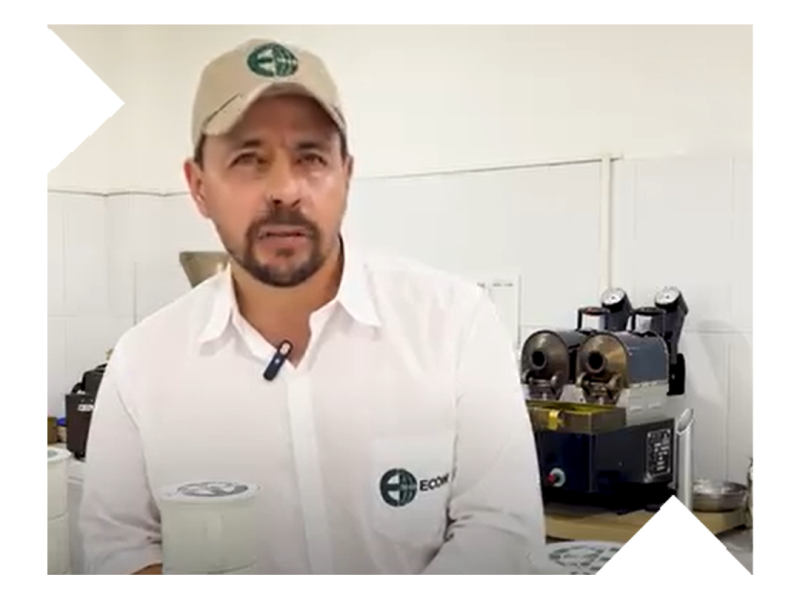
We can have a better understanding of the regulations, not just in terms of deforestation, but also in relation to human rights, indigenous communities, and legal compliance.
Carlos Alberto Gómez Ramírez | Chain of Custody Assurance Specialist, Cóndor Specialty Coffee
The pilot was implemented with technical support from the UN-REDD/FAO and WWF Colombia in Antioquia and Huila, and UN-REDD/UNDP in Cauca in collaboration with the Ministry of Agriculture and Rural Development and the National Federation of Coffee Growers of Colombia.
The work applied the OECD-FAO Business Handbook on Deforestation and Due Diligence in Agricultural Supply Chains, published in 2023 with support from the Government of Germany. The handbook provides a five-step framework that helps companies establish deforestation policies, identify risks, design mitigation measures, verify actions, and report on progress. Through this approach, due diligence moved from a compliance requirement to a management tool, supporting better decision-making across sustainability, logistics, legal and management teams.
Building on the results, FAO – under UN-REDD technical assistance – has initiated cooperation with the National Federation of Coffee Growers of Colombia to develop a due diligence process that can benefit more than 500 000 coffee-producing families nationwide, In Cauca, UNDP-UN-REDD’s support resulted in Comepcafé exporting 26,630 tonnes of deforestation-free coffee to the United Kingdom, complying with stringent environmental traceability standards. In addition, UNDP has piloted a digital platform ‘MonBO’ with Colombia, Costa Rica and Ecuador, that helped local cooperatives analyze deforestation-free at the farmland level. The platform operationalizes OECD-FAO’s approach using technology for enhanced territorial governance.
Using the five-step approach of the OECD-FAO handbook, the Federation is documenting deforestation risks and mitigation measures across its operations, while aligning coffee production with Colombia’s commitments under the Paris Agreement.
“It’s useful to know the traceability of the farm or the coffee we collect, so we can really know its origin, where it comes from and the processes it has undergone up to the point of collection in our warehouses”, Milena Figueroa Hernandez, Administrative and Financial Coordinator, Association of Agricultural Producers of Timaná
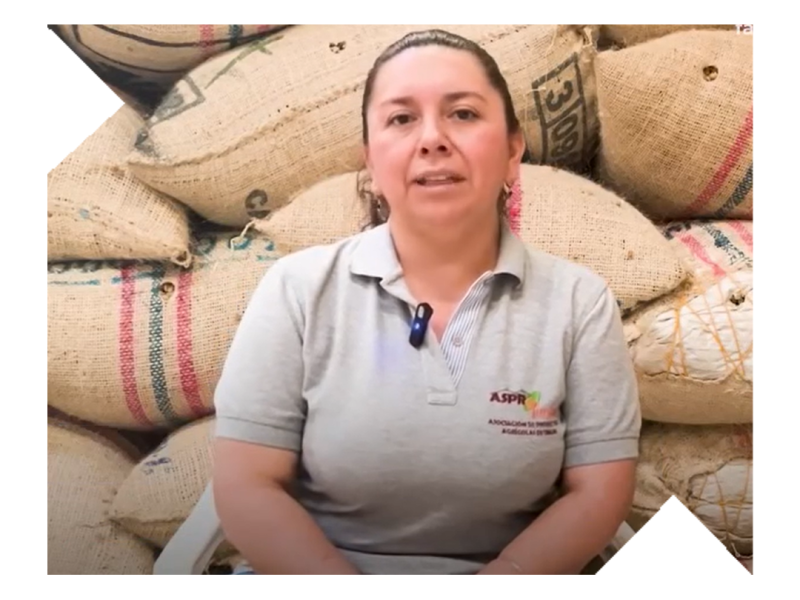
It’s useful to know the traceability of the farm or the coffee we collect, so we can really know its origin, where it comes from and the processes it has undergone up to the point of collection in our warehouses.
Milena Figueroa Hernandez | Administrative and Financial Coordinator, Association of Agricultural Producers of Timaná
Since early 2024, this work has contributed to the development of the Federation’s corporate environmental sustainability policy, including a clear commitment to zero deforestation, sustainable land use, and forest protection.